What Jesus Teaches Us About Love

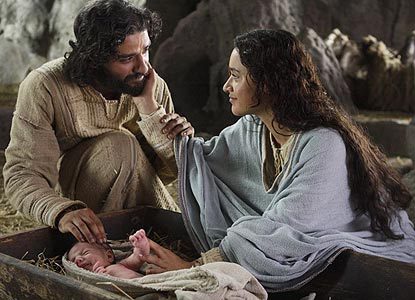
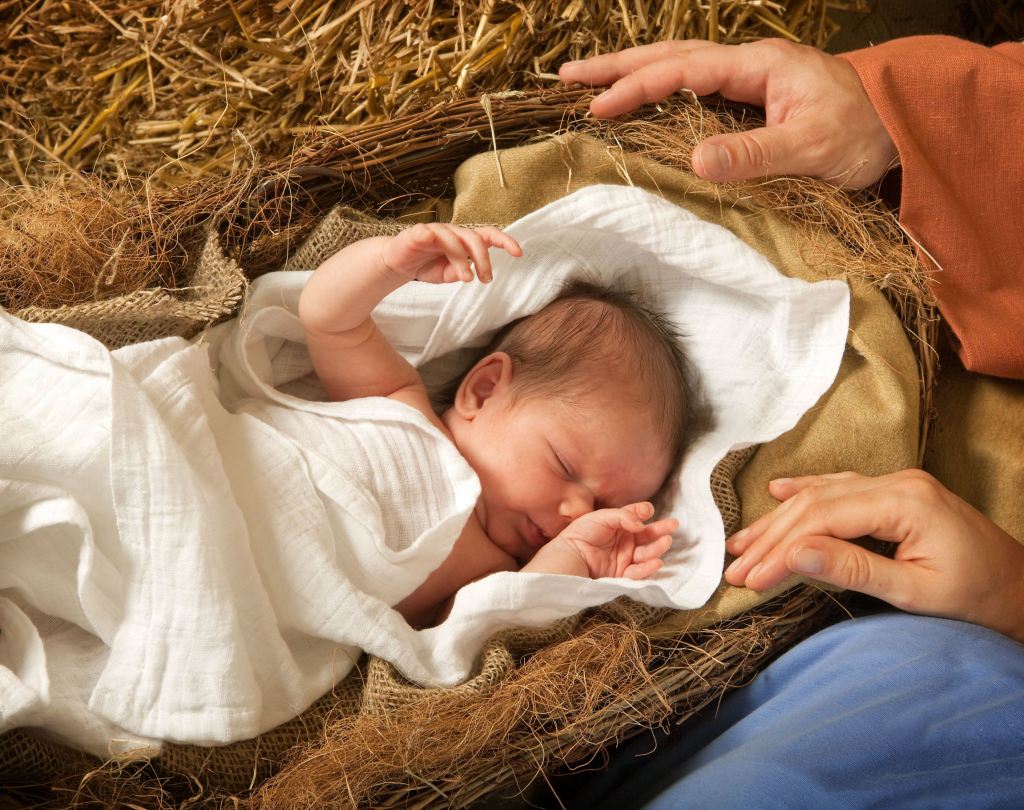
Baby Jesus in the Manger

So if there is any encouragement in Christ, any comfort from love, any participation in the Spirit, any affection and sympathy, complete my joy by being of the same mind, having the same love, being in full accord and of one mind. Do nothing from selfish ambition or conceit, but in humility count others more significant than yourselves. Let each of you look not only to his own interests, but also to the interests of others. Have this mind among yourselves, which is yours in Christ Jesus, who, though He was in the form of God, did not count equality with God a thing to be grasped, but emptied Himself, by taking the form of a servant, being born in the likeness of men. And being found in human form, He humbled Himself by becoming obedient to the point of death, even death on a cross. Therefore God has highly exalted Him and bestowed on Him the name that is above every name, so that at the name of Jesus every knee should bow, in heaven and on earth and under the earth, and every tongue confess that Jesus Christ is Lord, to the glory of God the Father.

(Philippians 2:1-11)

The Holiness of God

Sometimes I think the doctrine of the incarnation — that God in Christ took on flesh and became a human being like you and me — can obscure our view of God’s holiness. Many rightly accept Jesus as proof that God loves them, but they totally misunderstand what love actually is. As a result, God’s nearness and desire for a personal relationship end up making God a little squishy or even weak in their eyes. Some go so far (often unconsciously) as to twist their picture of God into some kind of benevolent grandfather, who would let them get away almost anything because He “loves” them. He becomes a “man upstairs” kind of God.

At Christmas time, we talk a lot about God’s love for us, and about His coming to earth to walk among us and redeem us. And well we should! But I want to pause for a second this Christmas Eve and make sure we are rightly understanding what love is. What does Jesus teach us about love?

Although it may seem like its off topic at first, the reality is that to rightly understand God’s love, we must first understand God’s holiness. God is not like us. At all. Many wrongly imagine God to be the greatest of our type of being. Since we’re made in His image and Jesus became a man Himself, perhaps that means that God looks like us somehow (only way more amazing), and acts like us (only perfectly good), and thinks like us (only perfectly wise), etc. But this is not true. We are not “smaller versions” of God. We are made “in the image of God” (Genesis 1:26-27) in the sense that God gives us the capacity (unlike all other animals) to relate to Him, to be adopted as His children. But we are not some kind of copy of God.

Glory of God

When the Bible says that God is “holy”, it means that God is “completely other” … radically foreign to us. Wholly different. We are not in the same category as God, but just further down the food chain. Nobody is in the same category as God. There is nothing and no one, of any kind or type, to which God can be compared. He is unique. Self-sufficient. Self-existing. Any attempt to describe God boils down to allusion and metaphor — many of which overlap and many others of which contradict. And that’s because we lack the language to describe, the experience to contextualize, even the categories to understand what and who God is. Haven’t you ever wondered why the Bible isn’t a technical reference manual, but rather thousands of years of history, poetry, story, biography, prophesy, etc? Well, I think this is in part why. God can’t just be written down in description form. You can’t fit Him on any page or in any box. This is what it means for God to be “transcendent”. God is not the greatest of any category or describe-able by categories. Instead, He transcends categories! He’s a category unto Himself.

This is why, when Moses asked God for His name, God said to Moses, “I am who I am. Say to the people of Israel that ‘I am’ has sent me to you” (Exodus 3:14). By this, God means exactly what we’ve been talking about. If God were to give Himself a name like “Bob” or “Lightning” or “Powerful”, then you would immediately think that other Bob’s you know or other experiences of lightning you’ve had or other displays of power you’ve seen would be good measuring rods by which to understand Him. Not so. God is like lightning only in that lightning vaguely resembles some aspect of God’s presence. God is powerful on a level at which nothing else can be conceived. He can only be measured by Himself, only be understood in comparison to Himself. He is who He is.

God’s holiness makes everything totally one-sided

One immediate implication of God’s transcendent holiness is that these is absolutely no sense in which God needs us. He wants us (for our sakes, not His), but He doesn’t need us. We don’t offer Him anything. We in no way complete Him. We have nothing to offer Him that He doesn’t already possess perfectly and completely. We can’t repay Him. We can’t bribe Him. We can’t contribute to Him. He is absolutely complete and content alone in Himself, with or without a material universe, space, time, matter, energy, angels, wise-men-with-jesuspeople, pets (gasp!), rocks, birds, worship music, or anything else. He chooses that these things would exist so that they will benefit from His presence; He doesn’t benefit from theirs.
So, in no sense do we attract God to us. We have nothing He wants such that He would come to us to get it. We aren’t just unattractive because we’re sinful, dirty, broken and rebellious, but because God has no needs of any kind which could in any sense make it meaningful for something to be attractive to Him.

We also have no hope of seeking out, reaching out to, finding (or even searching for), or attempting to comprehend this transcendent God … except that He reveals Himself to us. For that matter, we wouldn’t exist at all or have the capacity to seek to understand anything if He didn’t create us in the first place and make us enough like Him to do so.

All of this is to say that if there is to be any kind of relational interaction between God and man, then by definition a few things must be true about it:

  1. God is transcendently “other” (holy), with no needs and no necessary connection to us, so God chooses to create and interact with us only because He desires to do so
  2. God takes the initiative and reaches out to man — we don’t (can’t) come to God; God comes to us
  3. The interaction is 100% for our benefit and 0% for His — we are entirely the benefactors of God’s approaching us; there’s nothing in it for Him

What does all this have to do with love?

Without understanding these things, we can’t rightly understand love.

Even though God was unimaginably glorious and perfectly content, alone in Himself… Even though He needed nothing… Even though God was perfectly well aware of how ugly human beings would become practically the second He created them… Even though, once He created us, we had absolutely nothing to offer Him…

jesus-mary-joseph5God came for us!

Why?

Because God loves us!

Why?

Because that’s what it means to be God. That’s who God is. As categorically transcendent Perfection, if God creates a universe full of creatures, then the only way the universe can even begin to understood Him is … as expressing love … as giving of Himself. God is absolutely and infinitely full, and anything he creates is, by definition, empty by comparison. Therefore, the only possible interaction He can have with anything He’s created is to give — to pour out from His infinite supply into the fully-dependent need of His creation.

So God, in His very nature, loves. He only gives; it is meaningless to talk about God’s “taking” something. He condescends / stoops down to interact with the chaos and messiness that is humanity. He tolerates us, choosing not to bring all His godness to bear on us — because if He did, the human race would have ended the second Adam bit into the apple in the garden. He comes to us and walks among us. He patiently fixes what we break. He restores, renews, and redeems. God sacrifices even His only Son for us. He fundamentally defines love. And frankly, outside of looking at Jesus, we couldn’t have imagined the extent and nature of God’s love in our wildest dreams.

The NativityWhich brings us to Christmas.

Because Jesus, “though He was in the form of God, did not count equality with God a thing to be grasped, but emptied Himself, by taking the form of a servant, being born in the likeness of men. And being found in human form, He humbled Himself by becoming obedient to the point of death, even death on a cross.” (Philippians 2:6-8)

This is the love of our holy God … stepping toward us entirely for our benefit, letting go of what was rightfully His to elevate us to what we couldn’t have imagined attaining. Emptying Himself to fill us up. This is love! The love demonstrated in the incarnation of our transcendent, unfathomable God (leading to His crucifixion and resurrection) is the ultimate model for our shadowy facsimile of love here on earth. If, in even the weakest way, we learn to empty ourselves, to make ourselves nothing, to take on the form of a servant, to sacrifice ourselves for another’s gain, to put you before me … then we are sons of God, seen by heaven and earth to reflect our Father as the moon reflects the sun.

Love Lessons by Counter-Example

The sinful nature of fallen humanity is the opposite of God’s love. When we embrace it, we are sons of a different father, satan. Where God is love and pours Himself out for the sake of others, satan is selfish and consumes others for His own gain. Where God gives from His infinite resources to fill the empty and restore the broken; satan sees everyone and everything as objects to be emptied and broken. Satan came to us in the garden to destroy paradise. God comes to us in the manger to restore it.

We see the love of God so clearly in the contrast. God gives up what is rightfully His to give us what we could never take for ourselves. Satan claws and scrapes in a futile, rebellious attempt to take for himself what only God can have. And often, so do we! We must every day decide whose sons and daughters we will be, and by whose example we will pattern our lives. Moses told the Israelites in the wilderness that God had set before them life and death, blessing and cursing (Deuteronomy 30:15-20). This is no less true of us today. Then he (Moses) demanded that they choose (life or death). Our earthly lives constitute the exact same demand from the Lord: you must choose! Love (others before self), which is life, or selfishness (me, me, me), which is death.

Diverging Paths in the WoodsChoose life!

If we consider ourselves superior to others — someone who should be served or stroked or stimulated by those around us whom we consider to be less than ourselves… If we use others for our own gain… If we take what doesn’t belong to us… If we pray, “Thank God that I am not like other men, like this tax collector” (Luke 18:9-14)… If we do not love… Then we are not sons of God, and we have not learned the lesson of the incarnate Christ. How, then, can we expect heaven to be for us? We’ve chosen death.

But if we seek our neighbors good before our own (1 Cor 10:24), if we look not only to our needs but to theirs as well (Phil 2:4), if we come into each day not to be served but to serve (Mark 10:45), if we show kindness to the least of these (Matt 25:31-46), if we deny ourselves and take up our crosses daily (Luke 9:23) … If we love… Then we are sons of God, and look a lot like Jesus. And in heaven, we’ll fit right in. We’ve chosen life.

Jesus’ incarnation, leading to His death and resurrection, is the ultimate act of love. It’s how a transcendent holy God interacts with fallen man. It’s meaning is grounded in how freely God chose and how far God came to set His love upon you. This Christmas, may we learn love from His example! Could we look for ways to empty ourselves, become a servant, and perhaps even suffer loss for the sake of others? Could we dare to consider those who have so little to be greater than those of us who have so much, because an infinite God is in the process of filling them to overflowing? Could we humble ourselves and go to the back of the line (everyone’s “line” is different; what’s yours?), because we want to be like Jesus?

Because I can’t think of a better way this year to celebrate Christmas!

Man Carrying His Cross

“If anyone would come after me, let him deny himself and take up his cross daily and follow me. For whoever would save his life [self, self, self!] will lose it, but whoever loses his life for my sake [love, love, love!] will save it.” (Luke 9:23-24)


Posted in Real Life, Theology | Tagged , , , , , | 3 Comments

Christmas in the Music: Behold the Savior

Behold the Savior

By Meredith Andrews (album link)

Oh what innocence
Sleeping in a manger under dreamless skies
See the newborn King,
Trading every glory for a silent night

Here is the promise we have waited for.
He will not leave us in the dark.

He will bear our weight, He will wear our shame,
Come lift Him high, behold the Savior!
Jesus Christ, Law of love and light,
Come lift Him high, behold the Savior!

Veiled deity,
Praise of every angel, shepherds bowing low.
Sweet humility,
Mercy as a baby, God in flesh and bone.

Here is the promise we have waited for,
He will not leave us in the dark.
He is the promise we have waited for,
The cry of every searching heart!

He will bear our weight, He will wear our shame,
Come lift Him high, behold the Savior!
Jesus Christ, Law of love and light,
Come lift Him high, behold the Savior!

This is such a beautiful and rich song. God Himself has come to us to bear the weight of our guilt in our place. He wears our shame as a garment, trading with us His garment of righteousness and glory. There is no greater news and no more astonishing truth than God’s stooping down to become a man and to die a cursed death, so that we might be set free from the curse of death.

The Lamb of GodI love Meredith’s term, “veiled deity”. This is exactly true. Jesus was a man, but also the God of Creation who took on flesh, such that His divinity was and is hidden from eyes that will not see. But my favorite line is the next one, “Sweet humility, mercy as a baby, God in flesh and bone.” The unbelievable humility it took for the second person of the Trinity to leave His throne in heaven to come to His creation … to be wrapped in mortal flesh, to be born in a barn, to live a peasant’s life, to be beaten and spit upon, to be crucified and die, and ultimately to experience the horror of the sin of all mankind and unimaginably-painful separation from God to pay our debt.

The mercy and love of God is too incredible for words, but I hope songs like this one help you embrace that reality a little more deeply this Christmas!


Meredith Andrews Soar

PS — Check out Meredith Andrew’s new song Soar, coming out early next year, but available now as a preview on Spotify. Love it, and I love Meredith’s godly heart and how she uses her amazing gifts!

Posted in Psalms, Music and Worship | Tagged | Leave a comment

Christmas in the Music: Everything Changed

I debated whether or not to mix anything into the “What the Christmas Story teaches us about Christ” series I’m working on for Christmas this year — see JosephMary, Simeon and Anna so far. I’ve resisted the entire last week. But I’m finding my engagement with Christmas music so worshipful this year that I can’t take it any more… I have to share a few songs. So, I’ll just post a few leading up to the final message in the series (hopefully on Christmas Day), and I’ll be praying that these are as great a blessing to you in preparing your heart for the coming of the Christ as they have been for me.

Everything Changed

By Eddie Kirkland (album link)

On a night like this, on a broken road,
She is far from sleep, she is far from home
For a baby’s cries tear the still of night;
She wonders why.

The future was bright and clear; she planned for a wedding day.
Her daddy would hold back tears, giving her hand away.
Now all her hope and fear in a cradle lay,
For a baby came and everything changed.

On a night like this, many years ago,
As she held him close, she had come to know
That a mother’s heart could not let him go
And she now knows why.

The future was bright and clear with hope and a promise made.
The Light of the world was near, choirs of angels sang.
Heaven’s exalted King in a manger lay
‘Cause a baby came and everything changed.

When our dreams grow dim and our hearts grow cold,
He is never far from our broken soul.

Gloria! Our God is with us!
Gloria! He has come to save!
Mercy and love now for every generation
For the Savior came and everything changed.

My favorite line in this song is the second to last above, “Mercy and love, now for every generation…” God’s provision of Himself — in the garden, in the exodus, in the law and the prophets, in Israel’s judges and kings, in the discipline of invading armies, in prayer, in worship, in the hope of eternal life … but especially in Jesus — is for everyone in every generation. What we long for and cannot create for ourselves — life as God intended it to be, not severely broken as we now see it — God makes available by His mercy and love.

Jump for JoyIt’s at Christmas, more than any other time, we remember that God came to us, so that all men, all women, in every generation, could come to Him.

Gloria! Our God is with us!
Gloria! He has come to save!
Mercy and love now for every generation
For the Savior came and everything changed.

Posted in Psalms, Music and Worship | Tagged , , , | Leave a comment

What Simeon and Anna Teach Us About Hope

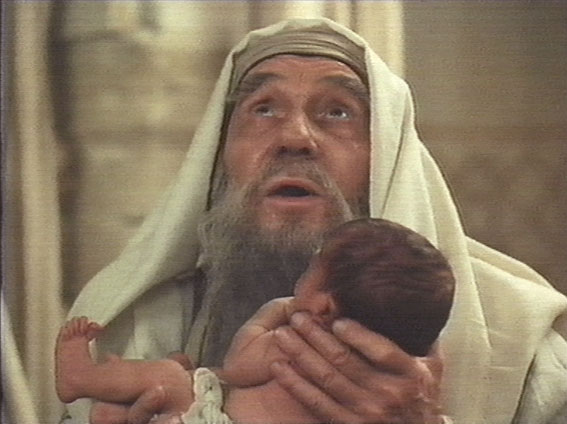
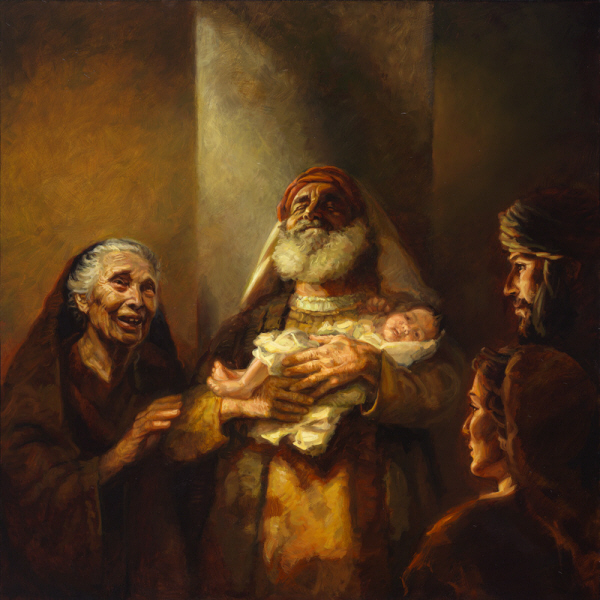
Simeon and Jesus

“We have this as a sure and steadfast anchor of the soul, a hope that enters into the inner place behind the curtain, where Jesus has gone as a forerunner on our behalf, having become a high priest forever.” (Hebrews 6:19-20)

Hope for the Right Things!

I think we spend a lot of time hoping for silly and shallow things. We hope that our team will win or that we’ll win the lottery. We hope for a promotion, a second date, cool new toys for Christmas, etc. Not that there’s anything wrong with any of that, but they are, at best, extraordinarily transitory. Plus, that kind of “hope” isn’t really what the Bible is talking about. Hoping your team will win essentially equates “I hope” with “I wish”, “I desire”, “it would be really great if…”. That’s not biblical hope.

What if we “upgrade” our hope to bigger, more lasting things than lotteries and promotions … to really important things like marriage or kids or careers or church or true friendship? Again, these are all great things, but that’s still pretty risky business. Certainly marriage is bigger than the 2nd date and lastly friendship is greater than getting a cool new widget for Christmas, but they still might not last. They still depend on human beings or physical stuff to hold up their end of the bargain, and experience tells us that life doesn’t always play out that way. Plus, again, we’re still not talking about biblical hope. This “upgraded” kind of hope is really to name something that’s important to you, to invest in it heavily, and to expect it to continue to make you happy for a long time. Here, instead of “I hope for X”, we could say “I’m banking on X to fulfill or sustain me.” If we’re really honest, we could even add “… indefinitely.” This too is a worldly hope — not what the Bible is talking about.

What is “Biblical Hope”?

To have “Biblical hope” is to look forward to something with certainty — to unequivocally know (have absolute certainty) that what you’re looking forward to will come to pass. And when we live out that hope in action, it becomes what the bible calls “faith”. So I suppose if you knew with absolute certainty that your team would win or that you’d get a raise, then you would have biblical hope in it. And if you lived accordingly — bet your life savings on the team or spent the raise before you got it — then you’re demonstrating your faith.

But how could that be possible? Absolute certainty in a team winning or a raise coming through? Really? At the risk of sounding harsh, to have absolute certainty (true hope) in those kinds of things wouldn’t be “faith”, it would be “foolish”, because the agents who are required to bring these about are of this world, and therefore fallible.

House on a RockWhat you’re hoping in can only be certain if you’re hoping in God’s character and commitments. God is the only unchanging constant, the only one who cannot fail … the only place where certain hope can be found, so the only legitimate ground for your hope (and therefore your faith). People, stuff, even the laws of nature (do you believe in miracles?) cannot be absolutely relied upon to be an unshifting foundation on which to build — what Jesus called a “solid rock”.

Jesus said that everyone who hears His words and does them is like a wise man who builds his house on the rock” (Matthew 7:24). In other words, the only truly wise ground on which to place our hope is in God’s promises. If we want “life in all its fullness”… if we want to be able to rest assured … then our hope must be in God’s promises to us.

The Poster Children for Biblical Hope

In the biblical account of Jesus’ birth, we find two people in particular who demonstrate the unshakable certainty of biblical hope. Their names are Simeon and Anna.

Simeon and Jesus 2After Mary had given birth to Jesus, she and Joseph were warned by an angel that Herod (the local Roman petty king) desired to kill the child, so they had fled to Egypt. When the danger had passed, they returned home to Nazareth in Galilee. And at the appointed time, as was the custom of the Jews (by God’s law), they took the boy Jesus to the temple to be circumcised.

“Now there was a man in Jerusalem, whose name was Simeon. This man was righteous and devout, waiting for the consolation of Israel, and the Holy Spirit was upon him. And it had been revealed to him by the Holy Spirit that he would not see death before he had seen the Lord’s Messiah.” (Luke 2:25-26)

While Mary and Joseph were there, Simeon “came in the Spirit into the temple, and when the parents brought in the child Jesus, to do for him according to the custom of the Law, [Simeon] took Him up in his arms and blessed God and said, ‘Lord, now you are letting your servant depart in peace, according to your word; for my eyes have seen your salvation that you have prepared in the presence of all peoples, a light for revelation to the Gentiles, and for glory to your people Israel.'” (Luke 2:27-32)

Simeon, Anna and Jesus“And there was a prophetess, Anna, the daughter of Phanuel, of the tribe of Asher. She was advanced in years, having lived with her husband seven years from when she was a virgin, and then as a widow until she was eighty-four. She did not depart from the temple, worshiping with fasting and prayer night and day. And coming up at that very hour she began to give thanks to God and to speak of him to all who were waiting for the redemption of Jerusalem.” (Luke 2:36-38)

Simeon and Anna remembered what so many others had forgotten – that God had repeatedly promised to redeem His people, and they had spent their entire lives waiting for God to come. Simeon wasn’t just a devout man; he had heard specifically from God that he would see God’s Messiah with his own eyes. And Anna had literally lived in the temple her entire life trusting the Lord, waiting for His Messiah. The certain hope of God’s work among them carried them through their entire lives, though there had not been a prophet in Israel for over 400 years. They had never known anything but poverty and oppression, and could easily have given up on God’s promise. Instead, the worshipped God in exemplary hope!

I want that kind of hope!

I want to be like Simeon and Anna. I want the kind of hope that is absolutely certain … in the kinds of things I can be absolutely certain about. I want to know God’s promises, and then believe them with my whole heart. And I want to live like God’s promises are true.

Simeon knew that God would deliver His people. We have no evidence that he burned calories worrying about how that would happen or building elaborate schemes to lead rebellions in order to help God pry Israel loose from the grip of the Roman empire. By all accounts, he was a quiet man of devoted prayer and expectant waiting, a man who rested in God’s sovereign control, and lived a “righteous and devout” life. God rewarded Simeon’s faithfulness with His presence (“the Holy Spirit was upon him”; v25) and by sharing with him special (even unique?) insights into God’s plan of salvation (“it had been revealed to him… ” that he would see the Messiah and what kind of Messiah Jesus would be; vv26, 34-35). The Bible is clear that God takes the godly into His confidence (see Ps 25:14, John 15:15, 1 Corinthians 2:10, etc). That’s the kind of man I want to be — righteous and devout, one in whom God confides.

Anna trusted God with her entire life. Having lost her husband at a young age, she could have wallowed in self-pity (bad plan!) or built a new life with another husband (nothing at all wrong with that plan!), but instead she literally moved into the temple and spent decades seeking the Lord. I have no intention of joining a monastery or moving into my church’s basement, and I’m not recommending that you should either. But how amazing would it be to have that kind of confidence in who God is … to so love and trust and hope in God that He would become literally everything to me? How many promises has God made about taking care of His people if they would simply put Him in His rightful place on the throne of their lives?! (see Psalm 34:10, Luke 12:24, and Philippians 4:19 just to get started). I want the kind of hope that leads to that kind of radical faith.

Our Ultimate Hope

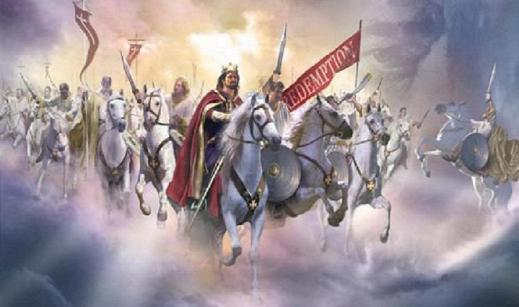
Jesus, the Conquering KingThere’s a difference between what we hope in and what we hope for. We’ve discussed already that the ultimate ground of our hope is in God’s unchanging character and promises. But if that’s the basis for our hope, then what is it’s object? When Simeon and Anna hoped in God’s deliverance, what were they really hoping for?

Simeon and Anna lived among a people deeply invested (at least the ones who still believed God’s promises) in a conquering, political, earthly Messiah. Without an extremely blunt word from God to change their mental picture, it’s unlikely anyone at the time had categories to understand the concept of a Messiah would who both be the suffering servant of Isaiah 53 and the conquering king of Isaiah 9. Certainly, the apostles didn’t even after spending 3 years with Jesus. It took the cross and the resurrection for them to get it. Living as they were under Roman oppression, Jesus, the Suffering Servantmost everyone who believed the prophecy at all was pretty fixated on the conquering king part of the picture. We know Simeon had a little more info than that, but I doubt that his or anyone else’s picture could have matched ours today, looking back on the cross, the resurrection, and the completed New Testament.

My point is that, in reality, they were actually hoping for even more than they realized.

For us, we hope for all kinds of things. Even when it’s genuine biblical hope, grounded in God’s promises, the object of our hope can be all over the place. If you’re like me and many people I’ve met, then it’s really easy for your hope in God to ultimately be about earthly existence. Often the things we’re hoping for boil down to having a better next Tuesday — even when the specifics are wrapped up in good and godly things like improved character, greater love, broken patterns of sin, deeper prayer, etc.

God has promised these things to us — the Bible makes clear that we are new creations (2 Corinthians 5:17) — just as He promised deliverance to Israel. But also in the same way, what God meant by that promise is more complicated than we (or Simeon or Anna) often think it is. God’s perspective is eternal. He’s very rarely focused on next Tuesday. Sometimes God delivers His people by marching them out of Egypt through a parted sea. But sometimes He doesn’t. In the same way, sometimes the godly character we want doesn’t happen by next week, or because we were struck by a spiritual thunderbolt, or without the incredible pain that in often required to change the human heart. Sometimes not even in this life.

So, what is our ultimate hope? Our ultimate hope is heaven. More specifically, bodily resurrection unto eternal life in the immediate presence of God. It’s not bad to want to be more godly or to claim any of God’s myriad promises in this life. In fact, I encourage it. We should train in godliness. We should rest in God’s promises. We should step out confidently in the power of the Holy Spirit. We should expect fruit to be borne in our lives. But if God doesn’t zap us into whatever it is we want to be by whenever we want to be zapped into it based on whatever way we’ve interpreted His promises, that doesn’t make God slow or absent or untrustworthy. And it doesn’t mean our hope is misplaced. But it might mean that, like Simeon and Anna, we are going to see God’s promise fulfilled only partially in this life — that there is both an “already” and a “not yet” to what God is doing. God may deliver you from a sinful pattern now, but your heart will not be pure and spotless and free of temptation until you stand before God in heaven. God may make you more loving now, but there’s no getting away from selfish tendencies, occasional lapses, and mixed motives this side of eternity. God may give you power in the Spirit to do large, medium, or even small things now, but none of that compares to what you’ll be like when Jesus appears and you are found in Him.

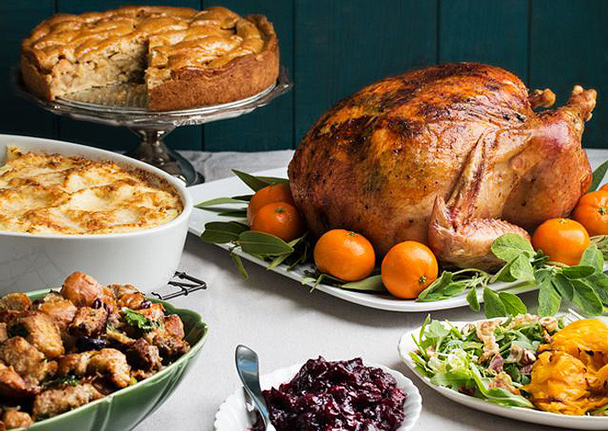
Thanksgiving FeastDon’t look at God’s work in your heart as binary — nothing until Thursday night, then 100% different on Friday morning. Don’t look at it like paying your dues — it’s been X years, so surely Y should have happened or I should be on level Z by now. A gourmet meal is neither prepared nor cooked instantly. It takes a ton of work, and the final product makes progress for a long time before slowly arriving at “done”. Looking at yourself in the mirror and stressing over not being perfect yet is like calling Thanksgiving dinner a bust because you pulled the turkey out of the oven an hour into baking it and rightly observed that it isn’t ready to eat.

None of that is right-headed hope. In addition to grounding our hope in God’s promises, we need to be more patient while He works — like Simeon and Anna were. Instead of obsessing over timing and details and measuring progress, thank God for what you do see, and know with certainty that the rest is coming; you just have to be willing to wait for it. Spend your days hoping in God’s character and promises and hoping for eternity, knowing that “He who began a good work in you will bring it to completion at the day of Jesus Christ” (Philippians 1:6). In an ultimate sense, from God’s perspective, what He’s cooking for dinner is already finished. And it is … you are … absolutely perfect.

Todd Agnew’s lyrical account of meeting Simeon in the temple

Posted in Bible Stories | Tagged , , , , , , , , | 7 Comments

What Mary Teaches Us About Worship

Jesus, Mary and Joseph 4

“My soul magnifies the Lord,
And my spirit rejoices in God my Savior,
For he has looked on the humble estate of his servant.
For behold, from now on all generations will call me blessed;
For he who is mighty has done great things for me,
And holy is his name.
And his mercy is for those who fear him
From generation to generation.
He has shown strength with his arm;
He has scattered the proud in the thoughts of their hearts;
He has brought down the mighty from their thrones
And exalted those of humble estate;
He has filled the hungry with good things,
And the rich he has sent away empty.
He has helped his servant Israel,
In remembrance of his mercy,
As he spoke to our fathers,
To Abraham and to his offspring forever.”

— The Magnificat, the Song of Mary, Luke 1:46-55

Mary, the mother of Jesus, was a poor peasant girl who lived 2,000 years ago in ancient Palestine — occupied Roman territory — in the tiny, backwater province of Nazareth. We know little about her before we meet her in the gospels, but it is almost certain that she grew up in poverty and obscurity (absolutely nobody, in human terms) and anxiously awaiting God’s deliverance of her people from the oppressive rule of the Romans.

As Mary grew up in the Judaean countryside, she had little to look forward to under the thumb of the Romans, and little hope of more than the brief and unremarkable life of a peasant farmer. Likely she had an honorable and loving family, and we know from Scripture that her future husband Joseph was both a competent tradesman and an honorable man in dishonorable times.

MaryAt the personal level, I strongly doubt that neither Mary nor Joseph nor their families expected much more from their lives than basic survival. Likely, their most realistic daily hope was to stay off the radar of their Roman overlords and harvest enough from each year’s crop to pay the ever increasing taxes levied against them by the thieving, ungodly men who pocketed half and surrendered the other half to their localvassal king, Herod the Great, to support his recklessly extravagant building campaign (as he tried to impress Caesar with his little kingdom).

At this time in history, it had been 400 years since the last prophet walked the earth and spoke for God in Israel. In a very real sense, God had gone dark, and many had to be thinking that He had gone away altogether. During those generations of silence, many lost faith that God still cared for them, turned away from God in a sense of hopelessness or anger, or simply forgot God. For many, hope and prophesy had turned to legend and story, or even to bitterness and unbelief.

But while most of the world, even many among God’s people in Israel, “each did what was right in his own eyes” (Judges 21:25), there were still some who remembered and believed God’s promises. Mary — as well as her future husband, Joseph — was in fact descended from King David himself (who reigned over 1,000 years before), in the very ancestral line through which God would ultimately fulfill His centuries-old promise to send to His people a Deliverer — Messiah. Mary knew that this Messiah would be stronger than Herod’s henchmen, stronger than Caesar, even stronger than all of Rome … and that He would break the yoke of their oppressors, free His people, and finally establish an everlasting kingdom for Israel. She knew that someday, a child would be born, a son (of God) would be given, and the government would finally be upon His shoulders. His name would be called, “Wonderful Counselor, Mighty God, Everlasting Father, Prince of Peace.” Of the increase of His government and of peace, there would be no end, and He would reign on David’s throne and over his kingdom, to establish it and to uphold it with justice and with righteousness from that time forth and forevermore (Isaiah 9:1-7).

Can you imagine how much that kind of passage (which Mary likely heard read in synagogue) would mean to those who where stepped on by earthly powers every day but who held on to God’s promises, knowing that someday, the zeal of the Lord of hosts would accomplish all this?!

In my mind, I see Mary as one who stubbornly refused to give up on God’s promises. Can you imagine the kinds of things she and her family likely talked about? Do you think that every time a traveler came through Galilee from Jerusalem, they would ask, “Is there any news? Has anyone heard of anyone who could be the One we’ve been waiting for?” Do you think the younger folks in the village ever got tired of the older folks talking about it?

Mary 2And can you imagine the wrestling that doubtless took place, even if never spoken aloud, while lying in the dark before sleep? “What if Messiah never comes? Is God really there? Where has He gone? Will God not remember us in our great need? Has He forsaken us? Has our sin finally caused Him to disown us? What hope is there?”

But to be found faithful in her remembering God’s promises (which we’re clearly told she was), I bet Mary also spent a lot of time preaching to herself passages like these (in addition to Isaiah 9, which we discussed)…

“Though the fig tree should not blossom, nor fruit be on the vines, the produce of the olive fail and the fields yield no food, the flock be cut off from the fold and there be no herd in the stalls, I will rejoice in the Lord; I will take joy in the God of my salvation.” (Habakkuk 3:17-18)

“Behold, God is my salvation; I will trust, and will not be afraid; for the Lord God is my strength and my song, and he has become my salvation.” (Isaiah 12:2)

I can hear her saying to herself, “Though I see no evidence of hope, I choose to believe God’s promises! He will come for us!”

Mary and the Angel 2And then one day…

“Greetings, O favored one, the Lord is with you! Do not be afraid. Behold, you will conceive in your womb and bear a son, and you shall call his name Jesus. He will be great and will be called the Son of the Most High. And the Lord God will give to him the throne of his father David, and he will reign over the house of Jacob forever, and of his kingdom there will be no end.”

But Mary said to the angel, “How will this be, since I am a virgin?”

And the angel answered her, “The Holy Spirit will come upon you, and the power of the Most High will overshadow you; therefore the child to be born will be called holy — the Son of God. And behold, your relative Elizabeth in her old age has also conceived a son, and this is the sixth month with her who was called barren. For nothing will be impossible with God.”

And Mary said, “Behold, I am the servant of the Lord; let it be to me according to your word.”

(See Luke 1:26-38)

Okay, pause. Put yourself in this story. How would you be reacting at this point?

Mary worshipped God with her faith.

Mary and the AngelFirst, having grown up in the silence and darkness, would you have been found by the angel to be expectantly awaiting the rejoicing of the angels and the light of the world? Just like Mary, we live in our day in a sea of unbelief and self-worship, and most certainly each man still does what is right in his own eyes! If God’s angelic messenger were to come tonight, would your persistent faith invite the greeting Mary’s did? “Fear not, for you have found favor with God!” Is that you? It can be. It’s your choice.

Second, the angel bluntly proclaimed to Mary a whole series of patently-absurd miracles…

Angel: “You’ve never been with a man, but in complete defiance of nature and everything you know to be true on this subject, you’re going to wake up tomorrow and be pregnant. Surprise!”

Mary: Shocked, blank stare.

Angel: “Not only that, but this baby isn’t just any peasant baby. He’s going to be the Messiah you and your people have been waiting for for a thousand years. He’ll be the king of Israel, and rule them forever.”

Angel: “And not only that, but the father isn’t Joseph. The father is God Himself.”

Mary: Blinks twice. Mouth gaping.

Angel: “No wait, there’s more. Just to make sure you really can’t sleep tonight and will spend the rest of your life trying to figure out what I’m talking about, here’s the cherry on top… This baby will be human in some sense, but in another impossible-to-understand sense, the baby will actually be God Himself — the Son of the Most High.”

Mary: “Behold, I am the servant of the Lord; let it be to me according to your word.”

Jeff: Blinks twice. Mouth gaping.

Honestly, is this how you would have responded? In my better moments, I think I would have at least believed the angel, but even in my finest hour I suspect I would’ve had 63 follow-up questions and more than a skeptical tendency or two to pray through. What about you? Have you positioned yourself for God to work miracles in your life? When He’s asked you to believe and do “just a little crazy” stuff, have you submitted with joy and responded as Mary did? Because if God can’t expect that response from us in the little things, we’ll never have a day like Mary did that day. Why would we expect otherwise?

Do you have the faith to believe the impossible? Because the truth is that God makes the impossible look easy, but only for those who believe He can and will. We worship God well when we believe Him and take Him at His Word — when we make God big and whatever else small.

Mary worshipped God with her trusting submission.

Mary PregnancyIn Mary’s day, out-of-wedlock pregnancy wasn’t a misdemeanor or an inconvenience, it was a stoning offense. Literally. Having been betrothed to Joseph, Mary was considered legally married to him, but not yet legally free to consummate the marriage. Like engagement on steroids. In the eyes of the people around them, being pregnant before marriage, Mary was at best a fornicator (for sleeping with Joseph before the appointed time) and at worst at adulteress (for sleeping with someone else while betrothed to Joseph). Either way, everyone around them would have said that it honored God for the townsfolk literally to stone her to death in the street. Yet Mary met the angel’s proclamation of her virgin conception with faith and submission. I’m sure she was afraid, but she trusted God in her fear.

To say that our cultural morays have migrated somewhat since that day is a gross understatement, and God is likely not looking for any other virgin mothers any time soon. But what if God asked you to do something else you found scary and difficult, something that would look crazy or even foolish to the culture around you? For that matter, what if God asked you to do something that was merely inconvenient? What if honoring God and obeying His word meant losing friends? Alienating family? Losing your job? Losing time you planned to spend on something else? How about surrendering some possession or freedom that you really love?

Would your response by as worshipful as Mary’s was?

“God, because you are everything and my fears are nothing in comparison, I will do and say and be whatever you ask of me.”

“Behold, I am the servant of the Lord; let it be to me according to your word.”

Mary worshipped God with her song.

Mary and ElizabethAfter all this, Mary’s response was to sing to God. Awesome! After her encounter with the angel, Mary travels to visit her cousin Elizabeth, who was also miraculously pregnant with John the Baptist (who would become the prophet who would “prepare the way” for Jesus). When confronted with this second sign of the unfolding of God’s plan, she responds by breaking into a song of praise. See Luke 1:46-53, which I quoted in full at the beginning of this post. This song is so beautiful an expression of faith and worship that it has been repeated and re-sung for centuries, written into hymnals and confessionals, and even named “the magnificat”.

In her song, Mary sees herself as a prism through which God’s glory is to be shown on earth. She magnifies God. She sees her poverty and sin and “humble estate” before God. She is God’s servant. She sees God’s transcendent holiness and beauty and power, and she sees that He has “done great things” on her behalf — things she couldn’t have begun to do on her own. Her song is bursting with spot-on theology — worshipful truths about God. And she shows clearly that she is trusting the Lord to do what He has been saying He’s going to do for centuries.

Are we like this?

In even the best of times or the easiest of circumstances, do we see our “humble estate” before God? When life breaks bad, is our first instinct to run to Him? Do we call His name “holy” with our lives, not just our words — setting apart only the finest, choicest offerings with which to come into His presence? Or, do we casually troll into God’s office and make demands? What does your life say? Are you more like Mary — “the humble” who will be “filled with good things” —, or are you “the rich” whom God will “send empty away”? It’s not about money (as Joseph taught us), it’s about the heart. If you have everything you need in yourself, then you a) don’t understand what you really need, and b) will be incapable of truly worshipping God. The incense we burn on God’s altar from a position of self-confident strength does not turn His head toward us the way it was turned toward Mary. More than once God has said, “Oh that there were one among you who would shut the doors, that you might not kindle fire on my altar in vain! I have no pleasure in you, and I will not accept an offering from your hand” (Malachi 1:10). Ouch! Seems like God might take His holiness fairly seriously. Perhaps we should too, as Mary clearly does.

The Almighty God — who brings salvation and the hope of eternal life — dwells in unapproachable light. He is high and lifted up. There’s only one acceptable response to God’s holiness, and Mary shows it to us… Get as low as we can as fast as we can. And if we do, then the world will see that in our lives, as we live out our faith in God’s promises and our submission to God’s commands.

And they will hear it in our songs…

Todd Agnew’s amazing rendition of Mary’s song

Posted in Bible Stories, Psalms, Music and Worship | Tagged , , , , , , , | 2 Comments

What Joseph Teaches Us About Poverty

Jesus, Mary and Joseph 3

My wife’s favorite Christian music artist is Todd Agnew. And I have to say that I absolutely love his music too. His songs are clearly written from a preacher’s heart, draw deeply from Scripture, and therefore paint vivid lyrical pictures of God and our relationship with Him. It’s for this reason that I find myself, every Christmas season, blasting Todd’s Christmas CD, Do You See What I See? — which is in fact my favorite Christmas album. But today, as I was playing one particular song over and over again, God impressed on me in a new way one of the most critical truths of the Christian life. I’m not sure if this was running through his head when Todd wrote “This is All I Have to Give,” but it has certainly been running through mine as I’ve listened to it today…

This is All I Have to Give (Joseph’s Song)
by Todd Agnew

I’d always dreamed I’d build a cradle we’d lay you in
When we brought you home, when we brought you home.
But there you lay, fast asleep in a feed through;
It was all that I could find.

I’d always hoped you’d have my eyes,
And maybe a little bit of the skill of my hands,
But as I look into your eyes,
I see your hands created mine.

This is all I have to give.
You can share my home and bear my name.
But this is not how you should live.
The son of God has become the son of man,
And this is all I have to give.

I’d always thought about how I’d teach you to build your first chair,
And how to treat your mom, your lovely mom.
How to explain the reckless love of God to your simple mind.
But what can I offer you, my son,
When you’re the living breathing proof
Of everything I hoped could possibly be true?

Why couldn’t God have chosen another man?
How can I lead this family when I don’t understand?
And how can I take the place of your Dad,
When I cannot explain even how You came to be?
My sweet Jesus, my baby boy…

This is all I have to give.
You can share my home and bear my name.
But this is not how you should live.
The son of God has become the son of man,
And this is all I have to give.

The Savior of the world, Jesus — the Word of God, the long-foretold Messianic King, and eternal second person of the Trinity — took on human flesh by being born of a virgin named Mary over 2,000 years ago. Mary was with child by the power of the Holy Spirit, not by the will of any man, such that the child conceived in her womb would be in every sense the Son of God. Mary was a poor peasant girl, and she was betrothed (promised to be married to) an equally poor peasant named Joseph in an obscure province on the backend of the Roman empire. Todd Agnew’s amazing song expresses some of the thoughts that might have gone through Joseph’s mind as he held his newborn son, remembering what the angels had told him… that it had been prophesied centuries earlier that this baby would be the savior of the his people Israel, and even of the entire world.

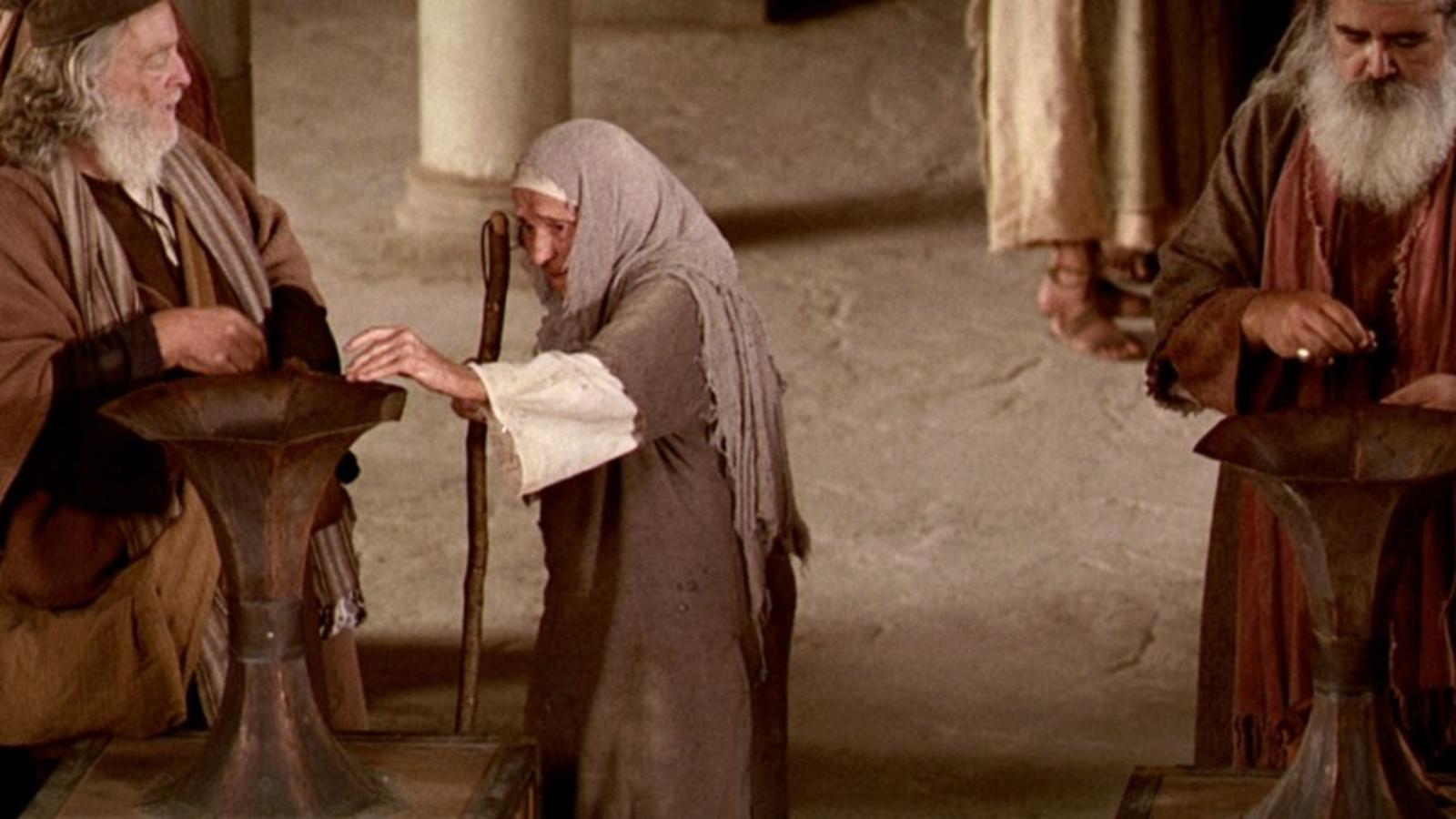
widows-mite

Joseph’s deepest poverty wasn’t financial.

Listen to some of Joseph’s hopes for his son and how far from reality they really were…

I dreamed I would build you a home and a cradle, but I’m too poor and we had to travel all this way at the demand of the Romans. So here you are in a little cave (what the manger most likely really was) with the animals, and all that goes with animals, lying in a feed trough.

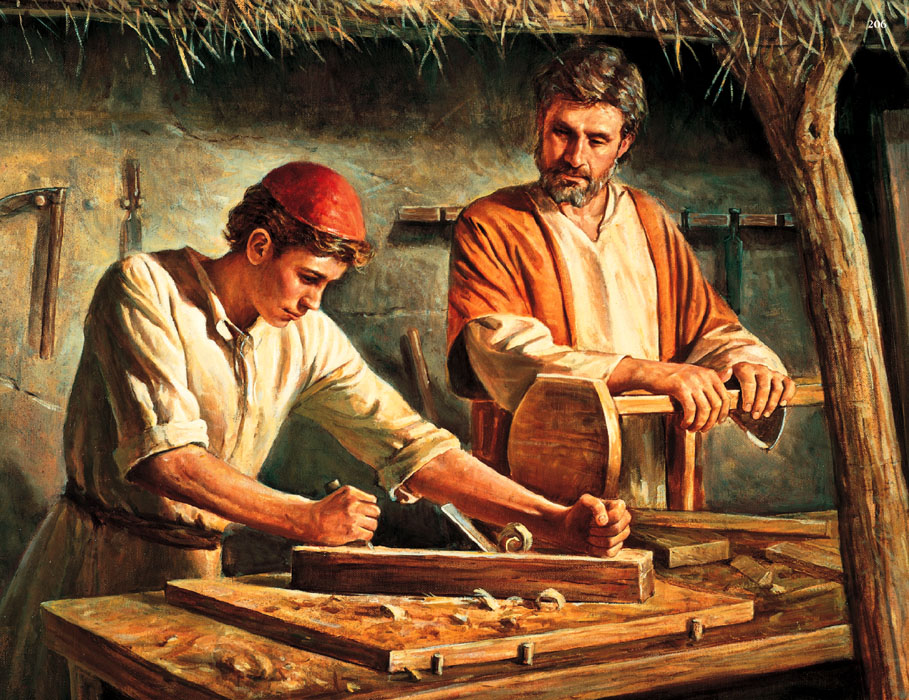
Joseph and JesusI thought you’d be like me, and that you would look to me to teach you a trade. That’s what all the other fathers I know talk about. I would pass on the family business, and your hands would grow more skilled as I passed along my hard-fought skill as a carpenter — which I learned from my father, and his father before him. The men in town would see you in me; I would be proud of you and your work, especially as I grew old and left the business in your hands. But now I realize that it’s not my skill or my wisdom or my hands that will shape you, but your hands created my very being. And it is I who must come to be recognized to be in you, rather than you in me.

I thought I’d teach you right from wrong, but you are the author of right and wrong.

I love God, and I imagined teaching you who He is and to live your life so as to honor His Name, to walk worthy of your calling as one of God’s chosen people. But it is in fact you who, even by your very presence, teach me about God and His great love for me.

I have longed for a child that I might be a gracious loving father to him. And though I will be that to you, the truth is that you, my son, in some way that I simply don’t understand, are the ultimate loving Father to me instead.

How can I teach you anything? I don’t even understand how you came to be!

I acknowledge, I see now, that everything is backwards. This is not how it should be. You should be in a palace, not a manger. You should be shrouded in unapproachable light, worshiped by angels innumerable, high and lifted up. But you are a helpless baby, wrapped in a few dirty rags, born in abject poverty.

So, this is all I have to give… You can share my home and bear my name. And I will be a father to you, such as I am. As poor as I am. You can have me, and that’s not much, but this is all I have to give.

javier-bible

We could learn a lot from Joseph this Christmas.

This is what hit me afresh while listening to Todd’s song. Joseph was uniquely the man chosen by God to raise His Son Jesus, God incarnate. But Joseph’s poverty — his penetrating sense of smallness as he stared into the very face of God — is in no way unique to him. That humility is what Jesus called “poverty of spirit” (Matthew 5:3). It is what every man needs, but what few men possess, and what even fewer men actively cultivate.

We should be asking the same kinds of questions Joseph asked…

Would I build God a cradle or a house (or whatever you see yourself as good at building)? Or would we be built by God into living temples? A kingdom of priests? (1 Peter 2:4-9)

Would I, in my vast knowledge, teach God? Surely I’m in a position to instruct Him on how things really should be! I certainly have some choice words, or at least some respectful advice, about that recent circumstance that I’d have handled totally differently. God could have at least gotten it right faster or with fewer bumps along the way! Or perhaps it would in fact be wise to get really low, really fast in the face of His sovereignty, omniscience, and power, which He lovingly and consistently turns toward my good. (Romans 8:28)

Can I let God be a Father to me? Or am I all grown up and pretty much in charge? Can I let go of having to understand everything, stop imagining myself to be strong and wise, and trust that God knows what He’s doing? (Psalm 46)

With Joseph, we need to realize that we approach God with absolutely nothing to offer Him. We are small and poor and helpless. We are the beggar with no money to buy bread, let alone with which to pay the insurmountable debt of our sin. Where is pride? Where is brilliance? Where is skill? Where are earthly riches? Where is the power of human kings and presidents and international business tycoons? Where is the best of the best of our “wealth,” in the face of the cross and the Kingdom of Almighty God? It is as Joseph’s poverty was when He looked at Jesus. He knew what He had to offer God. Do you? Joseph had nothing God needs and neither do we, but if we’re wise, then we bring what Joseph did … the only thing any of us has to give…

Simply ourselves.

Posted in Psalms, Music and Worship, Theology | Tagged , , , | 3 Comments