

Honoring God in Counseling Others

Submission

Like everybody else this side of the Garden of Eden, I have a serious sin problem. One of my particularly well-traveled sinful paths is an arrogant pride that can far too often be harsh and unfairly critical of others.

God has been working on this character flaw in me for a long time now, and teaching me (though I’m a slow learner) humility and grace. It’s slow going. I’m better than I used to be, but I’ve got 1,000 miles to go. (As an aside, if you relate, check out yet another amazing Caedmon’s Call song, “Thousand Miles” from the album Back Home.)

What about you? What’s your particular bent? Where do you find yourself repeatedly, even consistently, dishonoring God with your thoughts, word, or deeds? In this broken world, full of broken people, it doesn’t take long for an honest, introspective person to come up with quite a list of selfish, disgustingly dark, highly-personalized-yet-common-to-everyone tendencies in his own heart.

But…

The Holy SpiritThe Power to Change

By definition, any person who has given his heart and life to Jesus Christ has been born again (John 3:1-17). This is more than a get out of jail free card or a quick fix for a few bad decisions or habits. It’s total regeneration … a completely new life. The old has gone; behold, the new has come (2 Corinthians 5:17). In a mystical, nobody-really-understands-it sort of way, this means that the Spirit of God now lives within the heart and life of that new person (Romans 8:9-11). And one of the amazing promises of God in the indwelling of His Spirit is the power to change. We really can make better decisions. We really are no longer slaves to sin (Romans 6:6). Of course we continue to fall and fail in many ways, but God does not condemn us (Romans 8:1) and day-to-day failure is by no means inevitable. And in the end … we will ultimately see total victory over all sin (Revelation 21:1-8).

Anyone who loves God burns a ton of calories cooperating with God with regard to the changes He’s affecting in our hearts — working out our salvation with fear and trembling (Philippians 2:12). And those who aren’t (burning those calories), probably should be. Whether we want to admit it or not, we are certainly broken and twisted enough — even if others would readily say “she’s a great gal!” — that we could spend our lives consistently investing in our own growth and still be far from perfect. But since that’s true of everyone, it’s only a matter of time before you find yourself face to face with others’ sinful choices, immaturity and character flaws, in addition to your own. And if you care about those other people at all, you’ll want to fight through some of their muck with them as well. Sometimes people will overtly ask you for help, and others will simply make choices before your eyes that you consider to be really bad ones. And because you care, you’ll want to share their burdens, advise them, rebuke them, help them make better choices, rescue them from stepping on land mines to which you’ve already lost limbs in your own life, etc.

I am that hero!

I Want to Help!

And in my opinion, that’s where things get difficult. Most people (myself included) routinely try to “help” others in ways that are spectacularly unhelpful. Many of us mean well and really want to serve others, but execute somewhat poorly. I’m convinced that there is a kind of “help” that is in fact a thinly-veiled cloak of arrogant pride. And sometimes “help” is little more than bullying one’s way to the front of the crowd on the playground … of running others down and gossiping about them behind their back in order to feel better about ourselves. Sadly, I’ve been guilty of that myself. And at a bare minimum, even the most godly people have mixed, many-layered motivations, because (in general) the heart is deceitful above all things and desperately wicked (Jeremiah 17:9). We tend to worry more than we trust God and nag people more than we pray for them. We feel superior to others (pride) instead of feeling unworthy to be used by God to serve them in the first place (humility). And we offer untimely, unthinking, unsolicited advice, when we’d be better off asking God to change US into better examples so that others can follow us as we follow Christ. If we feared God at all, we’d be a lot more careful about the stuff we think and say, especially about His kids.

Please understand… None of this is intended to be some kind of condemnation of others from my own position of righteous indignation. Rather, I am the chief of sinners on this topic. There’s nobody that has needed this post more than I have. Over the years, I’ve found it tremendously difficult to discern the line between selfishly wanting someone to be more like me, and genuinely, lovingly seeking to help them maneuver around dangerous blind spots that I fear will really hurt them. And sometimes, I’ve been downright arrogant or cowardly. But over the last week or so, I have felt convicted to share some of what God’s been teaching me on this subject, and my hope is that these lessons will be for you as helpful as they have been for me in shaping my thinking (and increasingly, my actions) on this topic.

Wise Counsel

Seven Necessary Ingredients of God-honoring Counsel

1) Trust in the Lord

Like almost everything else, godly counsel depends heavily on trusting the Lord. Do you trust God’s wisdom above your own? Have you given to God your time and energy and desire to help, knowing that He will return on your investment in a way nothing else can? Have you stopped to pray, because you trust His strength more than your own? Do you actually believe that God loves you (John 3:16) –no, I mean it; believing in such a way that it radically changes your behavior, not just some quasi-comforting “religious” word? Do you believe God is working all things together for the good of those who love Him (Romans 8:28), that He’s creating something beautiful in both you and your friend (Ezekiel 36:26), that He’s given you power even to the point of representing Him before a watching world (Acts 1:8)?

Trust in the Lord with all your heart, and lean not on your own understanding. In all your ways acknowledge Him, and He will make your paths straight. (Proverbs 3:5-6)

2) Humble Yourself

Try this out… The next time you’re in a discussion whose temperature starts to rise — even if only internally, in your heart –, make the intentional decision to assume you might be wrong and the other person might be right. Assume you can learn as much or more from them as they can learn from you. Assume God is got at least as much work to do on you as He’ll ever have to do on them. Back down. Stop talking. Consult Scripture for wisdom. Pray. Listen more than you talk. Ask questions. Seek to really understand before you respond. Pray some more. And see what God does. Maybe God’s word is at work more powerfully in their hearts than your word would be. Maybe God will bring someone wiser than you to the table to give counsel that benefits both of you. (And if your honest, knee-jerk reaction is to find that scenario hard to imagine, then this point is definitely for you!)

Girl Praying3) Pray

Pray FIRST. Pray continually. Pray before. Pray after. You are not the Changer of men’s (or women’s) hearts. You are either a) an instrument in God’s hand, or b) in the way. Submit to the Lord. Ask Him what He wants. You may be surprised to learn that He doesn’t need your help making your friend who He wants them to be. Not putting prayer first in advising others is tantamount to the fundamental assertion that you know what’s best, so you’re going charge ahead … and with your mighty hand and outstretched arm, you plan to fix all the broken stuff God wasn’t able to get right. I’m certain that isn’t going to work out the way you think it will.

4) Genuinely Love Them

Do you love the person you’re trying to help? Not the world’s “love” (like “I love pizza!”), but God’s kind of love (“you before me, even if it hurts”). If you want to know what love is, literally take an hour to meditate on and pray through Romans 5:1-11. Then ask yourself…

Have I built a real relationship with the person I’m trying to help? Do I know the small but important details about their lives that serve as the backdrop to any counsel they might seek or I might give? Do I know any of the reasons why they make the decisions they do?

Friends Hanging OutMany people want to “help” other people they don’t really know all that well, rather than reserving counsel for those with whom they have a deep and abiding history. Still others would say they have a close relationship, when in truth the relationship has more selfishness or distance wired into it than we’d be comfortable admitting.

Take a second to prayerfully consider if you can really, truly “help” someone without the context of a loving relationship. Unless you’re a pastor or in the occasional pastoral role with a stranger who needs principle-driven, effectively-anonymous advice on the spot, I would strongly advocate relationship before rebuke. Your relationship is the foundation on which your counsel will rest. And no building stands well on a neglected foundation.

5) Tell them the Truth

Two parts to this one in my mind…

First, is what you’re telling them actually true? If you aren’t getting your “help” from Scripture, you might as well keep it to yourself. A person making bad choices almost never needs your wisdom or mine, they need the Lord’s. If you’re going to give someone advice, best make sure it’s good, sound, meaningful, godly advice. And remember, God’s truth isn’t “facts”, it’s a person (Jesus Christ) whose word is living and active, sharper than any two-edged sword, piercing to the division of soul and of spirit, of joints and of marrow, and discerning the thoughts and intentions of the heart. (Hebrews 4:12)

Second, when the time is right and you feel led, makes sure you actually tell them! Often times, especially if we’re being careful to do some of the things on this list, we actually share our thoughts only a small percentage of the times when we have an opportunity to or are tempted to do so (because we’re really trying to honor God). So when the time comes, don’t be afraid to speak up when you feel God is prodding to do so. Faithful are the wounds of a friend (Proverbs 27:6). Even if they get angry, love does not cower away from hard conversation. And make sure you tell them the last 10%. It’s likely not helping them to make 3 peripheral points only to leave out the main, most important point in the final stretch of the discussion.

6) Take Your Time

It takes time to love someone and to be wired into their deeply life enough to offer them god-honoring counsel. A drive-by admonishment is typically not helpful. Soaking in truth together typically is. Like everything else meaningful, you won’t be able to help bear your brother’s burdens by squeezing a conversation into your commute time or sending him a Facebook message. I’m sorry, my self-reliant, gadget-powered, hyper-busy American friend, but you in fact do NOT have time to do everything you’d like to do in life. Something somewhere will likely have to be sacrificed (maybe many somethings) to have real relationships with people in which God can use you to make a meaningful difference in their lives, and maybe in their eternities.

Also remember that Rome wasn’t built in a day. God is at work in your friend’s life, whether you see it or not. Not only are you not the one solving her problems or fixing her life, but whatever is going on in her heart is happening on God’s timetable, not yours.

7) Engage Them Appropriately

Once you’ve invested heavily in these other areas, it comes down to the practical question of how best to approach them. In my opinion, this is one of the hardest variables in the equation, because it boils down to maintaining balance over time. On the one hand, while trying to help someone steer around a land mine in her life, it’s critical to be a position from which they are willing to hear your counsel and at least consider acting on it. But on the other hand, sometimes people really need you to jump in front of them or even grab the wheel and jerk it to the right in order to avoid the land mine. Sometimes highly-appropriate, prayerful, tough love angers its object in the immediate term. Sometimes even in the long term. And figuring out how to navigate all that takes love and respect for your friend, a lot of prayer, and a serious dose of reverent fear (of God). I can’t give some kind of formula for striking that kind of balance, but I can give some principles…

NaggingFirst, nagging is worse than useless. If you’ve told them 217 times, and you’re wondering if you should make it 218, don’t. Stop talking, and start praying. Nagging is a totally and completely impotent activity. It is worse than doing nothing, because it runs the risk of hardening the person against hearing your counsel and maybe even the counsel of others. If you feel you must go for round 218 on the same topic, I would ask you two questions:

  1. Are you sure you trust that the Lord is sovereign over your friend’s life … to do what HE wants to do with it?
  2. Have you really examined your motives before the Lord in pushing the issue? Is it possible that there some selfish motivations — maybe your image is at stake, or you’re offended for some reason that they aren’t more like you, or you’re projecting onto them, etc — that are really the dominant force behind your persistence?

Second, ask the Lord for wisdom. Like I said, there are no formulas for stuff like this. Every person and situation are unique. The way we gain wisdom is by asking the Lord for it (James 1:5-8). The best approach ever to making difficult decisions — like when to speak and when to remain silent when you sense your friend is steering the ship into dangerous waters — is to make them together with the Lord, in the context of a vibrant, quick-to-listen-and-obey relationship. It’s amazing how often God has responded to me in these situations by focusing on how need to grow, not my friend.

Third, remember that people are not projects. Sometimes when I’ve experienced the most … let’s call it “unfavorable responses” … to advice, it’s been because I was coming at them in a posture that screamed to them that I knew I was superior and was reaching down from my lofty amazingness to rescue them from an obvious second rate future. I exaggerate to make a point, but not as much as I wish I was. If you’re finding it hard to get someone to listen to you or to be open to important counsel, and you’ve taken the time and effort to do the other things on this list, then maybe it’s time to examine your own heart before the Lord. Perhaps the problem is that the other person is exceedingly stubborn, and needs your persistent prayer and friendship. But perhaps, you might be a little stubborn too, and are thinking of yourself as pretty right and pretty amazing, while your friend is a project for you to complete or a mission for you to accomplish. That’s going to make it exceedingly hard to have the kind of healthy mutually-beneficial, growth-centric relationship that you want to have and which honors the Lord.

Private ConversationFourth, find the right setting for the conversation. Don’t admonish people when other people are around. Not on the train, not at the party, not in front of the kids or another friend, not somewhere that it’s hard to hear, not when you have to be somewhere in 20 minutes. Don’t send a text. If you really have something to say to someone, set aside plenty of time, get them alone, feed them comfort foods, look them in the eye, and really talk.

Lastly, concentrate on the most important thing, or at most a couple of things. Nobody can hear you if you come to them with the 14 things they really need to get straightened up in their lives. By item 3 or 4, you’ve probably transformed (in their minds) into a mean-spirited version of Charlie Brown’s teacher. And who can blame them!?


Okay, so that got far longer and took far more time to write than I had planned. I hope it’s helpful to you. These principles have certainly meant a lot to me as God has been teaching me how to honor Him and honor others more deeply in my relationships with them.

Remember that the person God is primarily working on is YOU. If we were all half as good at loving others as we are at judging them, the gospel would be ON FIRE in every one of our neighborhoods. No, love doesn’t mean ignoring someone’s blindspots, but it almost certainly does mean overlooking their faults, forgiving them early and often, and being way more worried about the log in your own eye than you are about the speck in theirs.

Beloved, let us love one another, for love is from God, and whoever loves has been born of God and knows God. Anyone who does not love does not know God, because God is love. In this the love of God was made manifest among us, that God sent his only Son into the world, so that we might live through him. In this is love, not that we have loved God but that he loved us and sent his Son to be the propitiation for our sins. Beloved, if God so loved us, we also ought to love one another.
(1 John 4:7-11)


Posted in Counseling and Psychology, Theology | Tagged , , , , , , , | Leave a comment

Can I be with you?

Fishing with dad

Everybody, each and all, we’re gonna die eventually
It’s no more or less our faults than it is our destiny
So now Lord I come to You asking only for Your grace
You know what I’ve put myself through, all those empty dreams I chased

And when my body lies in the ruins of the lies that nearly ruined me
Will You pick up the pieces that were pure and true
And breathe Your life into them and set them free?

But when You start this world over again from scratch
Will You make me anew out of the stuff that lasts?
Stuff that’s purer than gold, is clearer than glass could ever be
And can I be with You? Can I be with You?

And everybody, all and each from the day that we are born
We have to learn to walk beneath those mercies by which we’re drawn
And now we wrestle in the dark with these angels that we can’t see
We will move on although with scars, oh Lord move inside of me

And when my body lies in the ruins of the lies that nearly ruined me
Will You pick up the pieces that were pure and true
And breathe Your life into them and set them free?

And when You blast this cosmos to kingdom come
When those jagged-edged mountains I love are gone
When the sky is crossed with the tears of a thousand falling suns
As they crash into the sea, then can I be with You? Can I be with You

Be With You” by Rich Mullins (10/21/1955-9/19/1997)


Soccer with dad

The other day, cruising around a beautiful lake in North Dakota in a friend’s boat, God brought this song to my mind. As I meditated on it, it seemed clear to me that at the root of it, my life, in all its seeming complexity, pretty much boils down to the same single question this song is asking.

It’s not about my circumstances. My successes or failures, victories or defeats do not define me. My goals and dreams and plans and hard work are not the most important things in my life. My perspective is limited and flawed. Others’ approval is of extremely limited value. My culture (about which I retain such a smug superiority) is both good and bad — one among many others which are also both good and bad. My nation and place in history are too. In general, it’s really not as much about me as I seem to think it is.

Laughing with dadBut there is a God who created the heavens and the earth, and created us … not to be distracted by and absorbed into everything else He made, but to walk with Him among them.

So, the big question … the first question in all these other things … the question I think Rich Mullins (died 18 years ago today) was really asking is… “Will you run to God?

Good day today? Run to God! Bad day? Run to God! If everything seems to work / fit, run to God. If everything seems to go totally pear-shaped, run to God. Happy, sad, angry, scared? Confused, confident, cautious, or crazy. In life or death, our question is the same, “Father, can I be with you?”

Rich MullinsFrom there, God will give us everything we need for life and godliness (2 Peter 1:3). Our job is to keep the main thing, the main thing.

Thanks for continuing to remind us, Rich!

Posted in Psalms, Music and Worship, Real Life, Tribute | Tagged , , | 1 Comment

Anticipating Judgment

Scrolls of Judgment

Then I saw in the right hand of him who was seated on the throne a scroll written within and on the back, sealed with seven seals. And I saw a mighty angel proclaiming with a loud voice, “Who is worthy to open the scroll and break its seals?” And no one in heaven or on earth or under the earth was able to open the scroll or to look into it, and I began to weep loudly because no one was found worthy to open the scroll or to look into it. And one of the elders said to me, “Weep no more; behold, the Lion of the tribe of Judah, the Root of David, has conquered, so that he can open the scroll and its seven seals.”

Revelation 5:1-5

The Apostle John was Jesus’ best earthly friend, and a member of His inner inner circle. In his old age, while imprisoned (marooned by the Roman government) on a little island, John was given a vision by God of heaven and the end of history. He was commanded to write that vision down, did so, and now we have it as the Book of Revelation, the last book in the New Testament.

Early on in the book, God shows John that He is going to judge the earth. Finally, all the wrongs of history will be set right by God’s white-hot righteous fury. A perfect God is about to make justice flow like a river (Amos 5:24). And to symbolize that such that John can understand it (and write it down), God shows John angels bringing out sealed scrolls which “contain” His judgment on the earth. But evidently, no one can open the scrolls.

When he sees that, John weeps. Why?

Because he desperately wants justice. He wants God to be glorified by his life and the lives of those around him (and by our lives as the church thousands of years later), but he knows that all of us are essentially one collective epic failure. NONE of us is worthy. None of us loves God the way He deserves. All have sinned and fall far short of God’s glory (Romans 3:10-12, 3:23). The world is in a sad state of affairs, and John knows that — in the moment depicted in Revelation 5 — as clearly than he’s ever known anything in his life. And as a result, he weeps … loudly! So should we.

Angry JudgeAnd like John, we anticipate God’s judgment on this world, because we want all the horrible wrongs in it to be set right. But we have to be careful. We are not God. We do not have the wisdom or the authority to sit on His throne of judgment. It would be unwise to think that we know enough or are in any sense pure enough or powerful enough to reorder the universe. God is in control! The question is whether or not we’re demonstrating that we believe that God is in control. Do we act like it? Or, do we act like we need to take care of it or no one will? Do we imply in our attitudes and behavior that God had better get on my program quickly, ’cause we’re wasting valuable time not smiting people? Note that John doesn’t flip on Fox News or MSNBC, or have people who think just like him over to dinner, and then rant in anger. He weeps. And that’s an important difference.

God clearly commands us to forgive and love, and leave the repayment of wrongs to Him. “Beloved, never avenge yourselves, but leave it to the wrath of God, for it is written, ‘Vengeance is mine, I will repay, says the Lord,'” He says (Romans 12:19, quoting Deuteronomy 32:35). So, God can and will effectively repay wrongs! But we aren’t God, can’t do what He’s doing, and need to leave the things that are impossible for us and easy for Him in His capable hands.

A critical question I think we need to grapple with… What is my motive for getting all jazzed up about God’s judgment? Is it because I truly want justice, or because it’s a sanitized, spiritual form of elitism? Are we weeping before God before we rise to fight (and getting our battle strategy and marching orders from God Himself)? If we want to be like John or Jesus, then we should be!

But wait, you say, Jesus overturned the tables of the money lenders at the temple (Matthew 21:12-13). There was no weeping! Oh, but there was. When Jesus wept at Lazarus’ funeral, it wasn’t because Lazarus was dead (as if he regretted not having gotten there in time to save him), it was because of the hardened unbelief of the people who didn’t believe Jesus could do anything about it (John 11:1-44). At least that’s the way I read it (although admittedly, a little systematic interpretation beyond just reading this particular text is required). Ask yourself which interpretation makes the most sense, knowing Jesus from the rest of the gospels.

judgmental2Plus, keep in mind that Jesus is the perfect and all-powerful God of the Universe, who has every right to stand in judgment over anything and anyone He chooses. You and I are not (God), and do not (have that right). I know for me, my judgmental attitude has at times been little more than a thin religious shroud of justification for allowing me to condemn others and feel generally superior to them while conveniently ignoring my own sin. Like the bully on the playground, it’s scary how easy it is to artificially feel better about myself because I’m calling some other littler kid names or taking his lunch (no matter how rotten a kid he is). Are we really sure that’s not what we’re doing as adults, while we call it “a heart for justice”?

John wept in this passage in Revelation, precisely because his initial thought was that no one was qualified to dispense judgment. He wanted the world to be set right, but he knew that he was unworthy to do so, and that he lived among a people who were unworthy to do so. Should sound familiar. Check out Isaiah 6. In fact, anyone who encounters God face-to-face generally gets that look of smug superiority wiped off their face pretty quickly on their way to being face-down in the dirt. “Unworthy!” is the cry of the one who truly sees God. It’s not at all wrong to cry “How long, O Lord?!” (Psalm 109), but that better happen after we cry, “Have mercy on me, a sinner!” (Luke 18:13). Otherwise, whether we realize it or not, if we’re screaming “smite them God, cause they’re evil”, we may very well actually be saying “God, I thank you that I am not like other men” (zoom out from verse 13 to the whole story in Luke 18:9-14). And that doesn’t turn out well.

judgemental1It’s not just okay, it’s a good thing, to cheer for Jesus when He runs the moneylenders out of the temple, to carefully research politicians and lobby them on important issues, to speak out against the atrocity of abortion — So, now we’re selling the body parts of babies we ripped apart, are we? Nice! I’m sure God will think that’s no big deal; just good medicine + good capitalism, right? — or to decry the 1,001 other horrors of our sick, self-soaked, sin-shattered world. BUT, if we don’t do it with a broken heart and a genuine love for people, then we’d be better off with our mouths shut and our heads bowed (Psalm 51:17). Before we write anything else on our protest signs, let’s make sure that the first thing we write (and really grapple with) is, “There, but for the grace of God, go all of us.” We are all the same. And I strongly suspect that if we connect with that appropriately — really believe it — then it would change the way we show our “outrage”. Maybe if we prayed more and screamed less… Maybe if we served more and condemned less… Maybe if we invited to dinner more and talked behind backs less… Maybe if we thought a little more about Jesus and a little less about ourselves… Maybe if we worshiped God more and we worshiped things like our “freedom” or our “rights” or our perceived infallible view of the world around us less…  I wonder what would happen. I wonder how many miracles we will never see because we were too busy being hacked off and stomping our feet, instead of asking God for justice and leaving it in His hands. How do you think God wants Christians to be identified? By what character traits and behavioral qualities? That’s worth some Bible study and meditation, I think.

The Apostle John didn’t form an action committee to get the scrolls open. He recognized a God-sized problem when He saw it. And this is Jesus’ best friend … a man who spent His life, to the point of prison and death, for the gospel. He was no man of inaction. He was an Apostle and a martyr! But He was executing God’s orders, not powering up on his own sense of self-righteousness. And that’s my personal takeaway from this passage (and the emotional roller coaster it produces for me)… We are to act at the Lord’s direction. judgmental3He will call some of us into politics, some into business, some into protests, some into crusades, some into forming NPO’s, some into just about anything you can name. But He calls all of us to love Him and love others FIRST. Most of us charge ahead into our daily lives doing what we want to do and what we think is right, barely even consulting God … let alone waiting on His direction and clearing our agenda for the sake of what He commands.
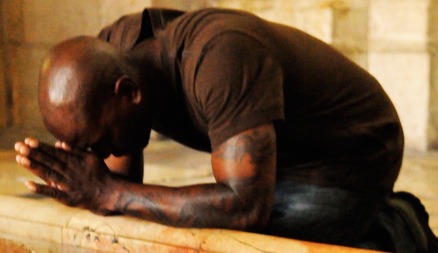
So, in summary…

First, our response to a sinful broken world can rightly be anger, but if anger comes before compassion, then something’s very wrong. Anger without compassion will almost certainly become sin. Better off in prayer and love and service, and to leave wrath and retribution to a perfect God. Don’t try this at home, kids!

Second, wait for the Lord. Ask, seek, knock, and you will find. (See Matthew 7:7-10, interestingly positioned in the Matthew’s gospel immediately after Jesus’ call to stay our judgment of others.) God’s plan is different for everyone. It would be better to let some perceived opportunity go by while waiting on God than to charge ahead confident in your own superior ideas and ability to run your little universe. Everyone’s been called to pray, love and serve, even their enemies (Matthew 5:43-48). Beyond that, some are called to build organizations, even great movements, to fight cultural battles here on earth. But relatively few … certainly not all. And nobody is called by God to whine and gripe at the dinner table in cadence with talk radio (I write with a searing sense of personal conviction).

Make sure you aren’t using spiritual language to veil your judgmental heart. Make sure you’re not loving and protecting a culturally-respectable sin that has the power (like all sin) to consume you. Remember, the abortionist, the terrorist, the horrible boss, the lazy coworker, the abusive family member, the dishonest politician, the greedy businessman, the corrupt preacher…  They are not your enemies. Satan is your enemy. “We do not wrestle against flesh and blood, but against the rulers, against the authorities, against the cosmic powers over this present darkness, against the spiritual forces of evil in the heavenly places” (Ephesians 6:12). Sadly, some people are certainly satan’s standard bearers, and must be fought on earthly (cultural, political, legal) battlefields. But if you don’t feel true sadness for them, compassion, and regret for their lost souls — satan is their enemy too, remember — , then you don’t have God’s heart and for your own sake you must realize that you might have no business holding a weapon against them, let alone commanding troops. It would be better to walk with God and not fight, than to fight and not walk with God. He is not your divine backup. He’s the one issuing the orders. Make sure you aren’t actually going AWOL, all the while thinking you’re fighting for the Lord. I’m convinced that happens every day, and I’m no more immune to it than you are.

So, let’s adopt an Isaiah 6 posture together. Let’s really be the Church … the body of Christ on earth … standing out by serving plague victims and caring for widows and orphans, not by screaming the loudest or even by “being right”. We are, quite literally, the hope of the world. Make sure you’re going to feel good about answering to God when He demands an account of how you discharged that awesome and terrifying responsibility. That day will be here before you know it.

And let it start with me.

Pray

Do not be afraid and do not be dismayed at this great horde, for the battle is not yours but God’s. Tomorrow go down against them. Behold, they will come up [against you, but] you will not need to fight in this battle. Stand firm, hold your position, and see the salvation of the Lord on your behalf.

2 Chronicles 20:15-17a

Posted in Bible Stories, News, Politics and Culture, Real Life | Tagged , , , , , , , , | 4 Comments

The Potential for a Prophetic Voice in the American Evangelical Church on Issues of Race and Racialization

As you know, I’m in seminary at Trinity Evangelical Divinity School. This summer, I took a single “modular” class called “Social and Cultural Exegesis”. The focus of this class as bible students is to learn from concepts in sociology to better interpret scripture and preach the gospel to people in different worlds and from different cultures. Naturally, racial tensions in our own North American / Western European society was a hot topic, among other fascinating conversations.

This blog entry is simply the reconstitution of a paper that I submitted as a requirement for the class. It’s intended to be a “dialogue” with three separate books we had to read for the class. I’ve made no edits to the original paper I wrote when I re-published it here, so please forgive the mismatched voice (so to speak). But as you also know, I’m committed to sharing a significant portion of the things I write for classes in this context as well.

Lastly, I want to explicitly state that I am not the wise old man here. I don’t have magical answers to issues as complex as racism and racial tension in America. Other than God Himself, who could? Only God is wise! My intention here isn’t to “be right” or to claim someone else is “wrong”, but rather to continue to learn myself and to hopefully make some tiny contribution to a large much-needed conversation. Certainly, the process of reading these books and writing these papers taught me a lot and was hugely thought-provoking. Maybe it will benefit you too.


AN INTERACTION WITH
DIVIDED BY FAITH, MORE THAN JUST RACE, AND A SPACIOUS HEART

Submitted to Dr. Peter Cha in partial fulfillment of the requirements for the course
PT 7860 Social and Cultural Exegesis at Trinity Evangelical Divinity School


Although most white evangelical Christians in North America believe those of diverse racial backgrounds to be equal to themselves and to have the same dignity and standing before God, they tend to think and act in ways that support and even perpetuate racial inequality. This paper explores the nature and extent of racism in American society, discusses how various racial attitudes and practices have affected and involved the church, and attempts a few modest recommendations regarding how the church might increasingly become a prophetic witness in our world.

Nature and Extent of Racism in American Society

Racial Tension

The question of “race” is very complex. Where many (including myself) have limited the discussion and evaluation of racial issues and inequality in America to individual personal interactions and racially prejudicial or bigoted thoughts and behavior, the issue is in fact far broader in scope. In Divided by Faith, Michael Emerson introduces an extremely helpful new term, “racialization”. He explains that “race” as we know it today is “socially constructed” (Emerson, kindle location 185), tied less to a precise analysis of ethnic heritage and more to a set of cultural realities agreed on by society at large to constitute “black” or “white” (or other). American society is “racialized” because in almost every place where society can be divided along racial lines, the sub-groups produced “differ profoundly … in life experiences, life opportunities, and social relationships” (Emerson, kl 183). With this definition, Emerson draws a clear and enlightening distinction between individual racially-biased choice-making – whether subtle or openly hostile – which constitutes “racism”, and the reality that American society at large is “profoundly” divided along racial lines. Examples include everything from household income to divorce rates to job security to levels of education, and many others.

Julius Wilson, in More Than Just Race, introduces two categories for racial issues and discussion which I also found extremely helpful in understanding how racism impacts American social life. He emphasizes that both “structural” and “cultural” contributions to racial tension and inequity must be considered in order to develop a complete picture of racialization in our society (Wilson, kl 128). First, over decades, even centuries, the dominant white culture has erected considerable structural barriers to impede the opportunities of minorities, particularly blacks. Some structural inequities have resulted from overt, intentional policies (e.g. Jim Crow laws, redlining, or manipulating zoning laws or planning highway routes to separate and “protect” more affluent neighborhoods). But they have also resulted from seemingly-innocuous policies and practices which on the surface seem disconnected from race, but nonetheless contribute to systemic racial injustice (e.g. the migration of jobs from the cities to the suburbs, or recent governmental fiscal and education policy). Thus, the consequences of systematic racial inequality have been both intentional and unintentional in nature during the course of American history. Wilson focuses particularly on three resulting outcomes:

  1. Concentrated poverty and ghettoization (Wilson, kl 425) – Huge numbers of poor are now concentrated in small geographic areas, with few available resources or opportunities, resulting in an amplification / downward spiraling effect leading to extreme poverty with seemingly no way out.
  2. The “economic plight of inner-city black males” (Wilson, kl 924) – The perfect storm of poor education, lack of jobs or even job prospects, intense bitterness, an informal (often illegal) street economy, and a “cool-pose culture” (Wilson, kl 1143) has resulted in high crime and a deepening set of cultural affectations which perpetuate the systematic challenges blacks face.
  3. The “fragmentation of the black family” (Wilson, kl 1359) – Black women view black men with distrust, doubting the men’s ability to provide for children. Simultaneously, black men view women as conquests and prefer commitment to “cool-pose culture” over the traditional family. As a result, the secure family unit has all but disappeared in poor black communities.

Secondly, Wilson contrasts social structures imposed on black society from the outside with the negative impact of cultural distinctives originating from inside the black community. Often in reaction to hard-felt systemic encroachment, black culture has developed crippling perspectives and practices, such as rampant distrust in male-female relations, high birth rates out of wedlock, the devaluing of education and work in favor of street culture and an informal street economy, self-defeating language patterns, etc. Wilson insists that contributing factors in both the structural and cultural “camps” must be addressed to effectively bring healing and forward progress in resolving racial problems. However, he is also clear in elevating systematic challenges to be first and primary in requiring change.

As I engage both these works, it seems to me that both blacks and whites in America have come to suffer from what I have been calling a “jaded weariness”. Both sides are deeply bitter over the past. They are tired and frustrated (to the point of intense anger) over what each side seems to feel is predominantly “the other’s fault”. Based on research by fellow sociologist Ann Swidler, Emerson introduces the concept of a “cultural tool kit”, which helps us make sense of the natural tendency to insist that the other party take the lead in overcoming the racial divide. Cultural tools are “ideas, habits, skills, and styles [which enable] individuals and groups to organize experiences and evaluate reality” (Emerson, kl 1589-90). This formally explains how the vastly disparate experiences of blacks and whites in turn result in vastly disparate perspectives on racial issues – both in defining the problem as well as potential solutions. Remembering literally centuries of prejudice and abuse, and daily feeling inhibited by social systems (as well as undermined by the worst aspects of their own culture), blacks view white majority culture as oppressive, and tend to assume injustice even when possibly not warranted. They might say, “I’m continually suppressed by an unfair system!” On the other hand, whites, from a position of comfort and favor within the existing systems, view blacks and other minorities through cultural lenses (tools) like accountable freewill individualism, relationalism and anti-structuralism (Emerson, kl 1603-4). They can harshly judge blacks as unwilling or unable to establish themselves in the dominant culture – even to the point of believing that the problem of race is being artificially manufactured by chronic victims or a sensationalist media (Wilson, kl 1470). This view might be represented by the question, “Why can’t they get it together like my grandparents did?” Until we recognize our own cultural starting points and move toward a greater empathy for those of other experiences, we have little chance of building a bridge across the racial divide.

Influence of Racial Issues on Christians & Christian Community

Segregated Churches

Unfortunately, neither evangelicals individually nor the Church collectively in America are immune to these cultural effects. If anything, the church is even more segregated than other parts of society (Emerson, kl 2771). Whereas many white evangelicals desire and can even be vocal advocates of racial reconciliation on an individual level, few are willing to threaten the system-wide status quo or buck existing societal structures to achieve it, and almost all are subject (perhaps unwittingly) to various social effects which act as a negative inertia against real change. Specifically, “the need for symbolic boundaries and social solidarity, the similarity and homophily principles, the status quo bias, and the niche edge and niche overlap effects all push congregations, and volunteer organizations in general, continually toward internal similarity” (Emerson, kl 3135-7). Each of these principles and effects represents a “technical” sociological aspect of the old adage that “birds of a feather flock together”. This “internal similarity” naturally and necessarily excludes those who are “different from me”. One point I found incredibly instructive is that this exclusion doesn’t have to be malicious or fearful or even selfish. This status quo of segregation can in fact be the unintended consequence of the perfectly healthy tendency to band together around core shared beliefs or to stand together in opposition to moral degeneration in the broader culture. In fact, one might feel she has been fairly selfless and sacrificial in putting the needs of the group before her own, not realizing that in so doing, she further excludes those outside the group. Thus, an individual member of the congregation unwittingly and unintentionally extends and reinforces racial divisions while simultaneously feeling good about having sacrificed for and benefited the group. This is what Emerson calls the “ethical paradox of group loyalty” (Emerson, kl 3244).

White evangelicals can also be individually very gracious and loving toward people who are very different from them, but do so in the same way a family would extend hospitality (even extravagantly) to a guest in their home. Regardless of how caring and courteous the host is, the guest remains a guest, and is not invited into the family to share in its benefits. Even the most gracious host thus maintains a separation between “my people” and “my guest”. With regard to racial issues, there is no question that millions of Christians have individually extended courtesy, decency, charity, and even friendship to those of other races, but many have done so from within the “host-guest” paradigm, not as a “brother of the same kind”. This too inadvertently exacerbates racial division.

Emerson gives an interesting example of the correlation between education and segregation. He makes the case that educated whites claim to be less concerned about blacks living in their neighborhoods or attending their schools, but in practice, those same middle-to-upper class white evangelical Americans statistically live in neighborhoods and send their children to schools that are almost entirely white. So, in the end, “college-educated whites [end up] more segregated from black Americans than are whites with less education” (Emerson, kl 258). He also applies a similar principle to the church. His studies show that as the commitment level of a religious group increases, so does its segregation. “The ‘stronger’ the religion, the more it segregates networks by increasing the density of one’s in-group ties” (Emerson, kl 3311), which naturally results in stronger inclusion of those in the group (those like me) and stronger exclusion of those outside of it (those different from me). Thus congregations, even among highly committed evangelicals who would express a strong desire for racial reconciliation and dismay at racial injustice, remain extremely segregated.

Recommendations Toward a Prophetic Witness

Reconciliation

For me, Wilson’s work was extremely helpful in exposing the nature and extent of racism in our society, while Emerson provided the most significant new insights into how various racial attitudes and practices have affected and been exemplified by the church. Having drawn principles from both of these, we turn our attention to a few concrete recommendations for action, framed primarily by Volf’s work in A Spacious Heart. I would begin with the “culture of lament” concept we discussed in class. To me, this means that we take the time to understand the history and context of racialization in our society, to lament our role in supporting and reinforcing it, to dialogue openly, somberly, and humbly with those on the other side of the racial divide, and to engage those different from us by actively loving and serving them. This creates four key activities in which the church must engage: to understand, to lament, to dialogue, and to engage.

To foster greater understanding, I would invite both churches and parachurch organizations to make classes like PT 7860 available to their constituents – to bring the material and format (around informed discussion) of the class more deeply into the Christian community. This will increase our knowledge of key historical and sociological realities, as well as to force us to face the issues we read and discussed. The result, in my mind, could only serve to mature perspectives and open dialogue around important racial issues.

To facilitate a culture of lament and a deeper, richer dialogue between people of diverse backgrounds, I would support programs like Mosaic at Trinity, or any other setting which brings people together to learn from each other and creates an environment for intentional, honest, transparent, and (again) humble discussion of racial issues. We simply cannot make progress in healing a wound we are unwilling to admit exists. It would be my hope that this confession would involve a godly sorrow, which would in turn lead to repentance (2 Cor 7:10) – turning from one path to proceed down another (better) one.

To stimulate direct action in loving and serving others, I would proffer a few ideas. It is imperative that we leave the cocoons of our own in-groups and at least occasionally go to where people are different from us. I would suggest that racially segregated churches form partnerships, and that churches, small groups, families, or even individuals periodically visit other, racially diverse congregations. I would also encourage white suburban churches to partner with (or start) parachurch organizations in urban centers to serve the under-resourced in those areas. To rub shoulders with (actively love and serve) those who are foreign to me, to walk a few miles with someone of a thoroughly different background, and to experience conditions which are hard for me to accurately imagine from my isolation in the suburbs can only serve to open my eyes to the social realities of and perhaps even friendships with those on the other side of racial and social lines.

Volf’s work, A Spacious Heart, gives us a fantastic conceptual framework for all four of these recommendations in his theology of “exclusion and embrace”. The most powerful word picture I encountered in any of the three books we read was Volf’s concept of “Catholic personality” (Volf, 43). This concept demands that – as we better understand, lament with, dialogue with, and engage others regarding racial issues – we do so as Kingdom citizens. We must view all earthly cultures as equally inadequate when compared to our expectation of God’s heavenly culture. We must then center ourselves increasingly in that culture, not the “majority white Western European” or the “minority African-American” cultures, etc. No culture is perfect. Each contains many ideas, concepts and traditions that are strong and positive and which should be embraced, but also many (ideas, concepts and traditions) from which we must, as Christ-followers, distance ourselves. In every culture, some things are to be leaned into, and some are to be rejected. So, the unspoken tendency to believe that my culture is all good and yours is all bad is a horrible fallacy, with no place in the heart of a member of God’s “Kingdom culture” (my term for Volf’s “Catholic personality”).  As Kingdom citizens, we are uniquely positioned to “embrace” every other Kingdom citizen as “of the same kind” as me – not the same, but equal before God. The differences between our earthly cultures are not erased or invalidated, but they are greatly eclipsed by our oneness in Christ. No one is “excluded”. But also as Kingdom citizens, we stand apart from the world system and all its various cultures. We are in the world, but not of it (John 17:16; Rom 12:2). Volf called this concept “Catholic foreignness” (Volf, 45). And because we take only the “side” of heaven (not of one earthly culture against another), we move beyond (“transcend”) cold, indifferent relativism and tolerance, and seek to be enriched by each others’ differences. “Christians are not simply aliens to their own culture; they are aliens [citizens of heaven] that are at home in every culture because they are open to every culture” (Volf, 44). This “Catholic” view of culture and the openness to embrace rather than to exclude “otherness” must pervade and govern all activities we might undertake to better understand, lament, dialogue and engage others.

Finally, as the Church, we must continue to evaluate ourselves, both corporately and individually. None of the activities I’ve prescribed here are static. A one-time inward assessment of our hearts (and the collective “hearts” of our congregations) is better than nothing, but grossly inadequate to engender lasting change. Instead, we must continually and critically assess what we consider to be the status quo. Are we pushing ourselves to be less comfortable? Do we reserve our strongest expectations for ourselves, or do we expect grace from others while we demand they freely receive judgment from us? Am I somehow always right while anyone different from me is typically wrong? Are we stretching ourselves to spend more energy defending the weak and embracing otherness, or are we defending our own comfort and embracing only those who enhance and support it? What am I doing (or tacitly agreeing with) which perpetuates racialization and inequality, even if I strongly oppose them in my words and personal relationships and interactions? The Christian desiring oneness in the Church should consider questions like these when evaluating the health of their attitudes toward others as individuals and toward our social practices and systems at large.

Conclusion

I want to conclude on a note of gratitude for the experience of PT 7860. It was truly an eye-opening adventure. I was strongly challenged by and had to wrestle through concepts such as the difference between racism and racialization, the impact of both societal structure and culture on racial issues, and the influence of cultural tools in evaluating racial problems and their solutions. It was eye-opening to begin to see some of the differences between individual choice-making and the willingness to question the structural status quo, or acknowledge how strongly that status quo protects my own personal comfort and security, or admit how significantly that likely influences my attitudes and actions.

In the way of solutions, the simple act of engaging this conversation in the way I have over the summer feels like a solid first step in making a tangible difference. Having been so impacted, it is my goal to continue to better understand and lament, and to take new concrete steps to dialogue with and engage others. In so doing, I hope increasingly to be able to claim the kind of prophetic witness in our world which honors God and shows His love to all people, not just people like me.


REFERENCE LIST

Emerson, Michael O. Divided by Faith: Evangelical Religion and the Problem of Race in America (New York: Oxford, 2000). Kindle.

Wilson, William Julius. More Than Just Race: Being Black and Poor in the Inner City (New York: Horton, 2009). Kindle.

Volf, Miroslav and Judith Gundry-Volf. A Spacious Heart: Essays on Identity and Belonging (Harrisburg: Trinity, 1997).

Posted in Book Review, News, Politics and Culture, Real Life, Theology | Tagged , , , | 2 Comments

The Perfect Father

Oh, I’ve heard a thousand stories of what they think You’re like.
But I’ve heard the tender whisper of love in the dead of night.
And You tell me that You’re pleased and that I’m never alone.

Oh, and I’ve seen many searching for answers far and wide.
But I know we’re all searching for answers only You provide.
Because You know just what we need before we say a word.

You’re a good, good Father.
It’s who You are, it’s who You are, it’s who You are.
And I’m loved by You.
It’s who I am, it’s who I am, it’s who I am.

Because You are perfect in all of Your ways!
You are perfect in all of Your ways!
You are perfect in all of Your ways to us!

Oh, it’s love so undeniable, I can hardly speak.
Peace so unexplainable, I can hardly think.
As You call me deeper still,
into love, love, love …

Good, Good Father” Kalley Heiligenthal, Bethel Church


family-walk-the-dogI heard this song for the first time in church this morning, and I absolutely love it. It’s so simple and yet so profoundly descriptive of my relationship with God — as God would have it. Of all the ways I think of God, I think of Him most as my “good, good father”. And of all the things in the world that could define me, with all my heart I want my worth to come entirely from the fact that God loves me and has made me His own.

I think God made Himself fairly clear on the subject…

  • “I will not leave you as orphans; I will come to you.” (John 14:18)
  • “All that the Father gives me will come to me, and whoever comes to me I will never cast out.” (John 6:37)
  • “Behold, I stand at the door and knock. If anyone hears my voice and opens the door, I will come in to him and eat with him, and he with me.” (Revelation 3:20)
  • “But to all who did receive him, who believed in his name, he gave the right to become children of God, 13 who were born, not of blood nor of the will of the flesh nor of the will of man, but of God.” (John 1:12-13)

walk-in-the-gardenSeems to me that the Apostle John totally got the fatherhood of God, and evidently so do the folks at Bethel Church. This is by no means the only song they’ve done that speaks to God’s love for us as our Father.

I think we over-complicate life. I think over-complicate life. Just run to God. Be a child. Be messy. You don’t have it all together, and you won’t anytime soon. To be honest, I think the insane effort we exert to “get on top of things” spiritually is largely about us, not about God. I don’t know if that time is “wasted” per se, but I don’t think it’s what God had in mind. We don’t clench our fists and try hard to be better. We relate to God and He does what He does: make old broken things new and dead things alive. I’m not excusing sin or licentiousness, I’m calling for love and sonship / daughtership.

I wonder, if we could extract ourselves for a second from our individualistic, self-actualized, total-autonomy-to-do-anything-and-call-it-freedom culture, then perhaps we would be able to do a little more resting in God and just being in relationship with people. I wonder if that would be better. Images of walking in the garden in the cool of the day and laughing together at the dinner table come to mind. Maybe life isn’t as complicated as we make it out to be. Maybe God’s perfect fatherly love is far more powerful than we give it credit for. Maybe we’d be amazed at what kind of life change and witness and fruit of good works would come from spending more time curled up in Dad’s lap for a good story or some old-fashioned undistracted time together.

I think that’s an experiment worth trying.

storytime-with-dad2

Posted in Psalms, Music and Worship | Tagged , , , , , | 3 Comments

Was Jesus “Efficient”?

Increase Efficiency

I read the other day (can’t remember where–maybe an audiobook?) that if Jesus had walked the earth in our day, He would have been super busy. The author argued that Jesus was so well-loved and so important, that everyone wanted a piece of Him. He (my author friend) predicted, “If Jesus had lived in the days of mobile phones, His would have been ringing off the hook!”

That didn’t sit well with me then, and when this morning in one of my classes, a much younger fellow M.Div student casually commented that Jesus was all about efficiency. Then he made a comment quite similar to this “Jesus would get a lot of use out of smartphones” comment. And I felt I needed to think this through and comment.

Industrial RevolutionI’m on campus this week taking a class about carefully considering society and culture in the interpretation of Scripture. Among other topics today, we discussed modernism and its effect on North American Evangelicalism. The professor had asked us to think through the theological implications of various elements of the industrial revolution, specifically…

  • Measurabililty of productivity — the transition from measuring quality to measuring productive efficiency
  • Reproducibility — the interchangeability of parts and workers on an assembly line, as well as the fact that you could build the same identical widget in two factors if you had a process for doing so
  • Knowledge of a hierarchy of experts — the specialization of skills, such that instead of crafting something from start to finish, a worker builds (and specializes in) only part of it, and answers to a hierarchy of management to orchestrate the components being built into a coherent whole
  • And so on.

A group of 3 fellow students and I were embroiled in a conversation about the first of these (“measurability of productivity”), discussing what the Bible / Christian theology might have to say about the trade-off that has occurred in the last 100 years between the quality of a product and the efficiency with which that product was produced. As we talked, I was thinking through the possible implications of that question on the culture of Jesus’ day. Is our fixation on efficiency a byproduct of our culture only? Did it exist in middle eastern culture at the time of Christ? Is it a tendency that the Bible would speak to (either for or against) in some direct way? So, half wondering aloud, I asked the group if they felt that Jesus was “efficient”.

Almost everyone I’m in seminary with is younger than me, but the 3 folks I was sitting with for this conversation, I would estimate, were all in their mid-20’s … so much younger. Without a moment’s hesitation — clearly, he’d thought this through before –, one of the guys responded, “Absolutely! Jesus had 12 disciples and 3 were his inner circle. And Moses appointed judges to manage the people of Israel after they fled Egypt.”

I was astonished. That was quick and easy. But I wasn’t at all as certain as he seemed to be, so I pressed him. He went on to imply that essentially Jesus had established a ministerial staff to multiply the effect of his ministry. Jesus clearly didn’t have time to do all the work of preaching, teaching, baptizing, ministering to the poor, feeding the hungry, etc. that he wanted to do. So He appointed a two-tiered management team to run the ministry. Peter, James and John in the inner circle (in my terms, maybe the “executive team”), and the other 9 disciples as the next tier of management (again, in my words, maybe “middle management”).

I found that fascinating. And having had two people speak so confidently about this to me in the very recent past, I wanted to weigh in…

Moses Appoints Judges

I thought I’d tackle this reference first. In my mind, it’s the easiest. You can find the story in Exodus 18:13-27. God had just used Moses to lead a few million Jewish slaves out of Egypt and destroyed the Pharaoh’s army (and half of Egypt) in the process. Moses is now the leader of an extremely large, fairly grumpy group of people who (due to their rebellion before God) end up wandering through the wilderness of the Middle East for 40 years before settling in the land God had promised them.

As time went on and the number of people grew, Moses has begun to be occupied day and night with settling disputes between the people. Your ox trampled my petunias! Your goat ate my dinner! You stole my phylacteries! I’m sure it was getting on Moses’ nerves.

So, Moses’ father in law sat him down and advised him to establish a government — to appoint judges to hear the concerns of the people. They could handle small matters themselves, and bring only the most significant issues to Moses, who could then take them before God. (BTW, wouldn’t it be awesome if every government leader took the people’s concerns before God!?)

So in a way, I do see this as an efficiency play. Moses was trying to scale up. He needed to share the burden of leadership. And this does in fact sound to me a little like our concepts of modern production. However, I don’t think it was “efficiency” per se that Moses was after, but rather “scalability”. He needed to build a structure to handle the number of people, but I don’t think he would have related to the idea of quantity over quality. In other words, if Moses had later written about “grading” this new system of government, I don’t think he would have done so in terms of the number of requests handled, or the number of people serviced per hour, or the % drop in requests that came to him in a week. I think he would have asked questions like, “Do the people feel they are getting justice? Is God pleased? Does this system bring Him glory?” I don’t think there would have been any spreadsheets or bar graphs involved.

So, scalability. Is that what Jesus was after too?

Jesus’ Ministry Leadership Team

My seminary colleague is correct that Jesus spent his entire earthly ministry surrounded by and investing pretty exclusively in twelve (12) disciples. He had other friends and undoubtedly met thousands of people, but his focus was on “the twelve”. And of these men, three (3) were his inner circle: Peter, James and John. They were his closest friends, and Jesus poured into them in a very special, exclusive way.

But I do not agree that these men were selected to “scale Jesus up”, as Moses’ judges had been, or that they formed a “management team” of some kind. I don’t think that’s what Jesus had in mind. As I read the gospels, it seems that these 12 men spent pretty much every waking moment with Jesus. Sometimes, Jesus would go into the synagogue or stand on the lake shore and teach vast crowds (with the disciples by his side), but much of the time we see Him explaining some spiritual truth to the twelve directly or having a personal interaction with a random person Jesus met on the road while the twelve looked on and tried to understand what Jesus was talking about. It’s true that at one point (see Matthew 10) that Jesus “sends out” the twelve to do ministry without Him, but by chapter 13, they’re back together. And with the exception of that brief three-chapter episode, they pretty much went with Him wherever He went.

I can’t hear Jesus saying, “Peter, come with me and we’ll cover Galilee. Phillip and John, you guys take the Decapolis. I need Thomas down in Perea. And everyone steer clear of Samaria. We’ll meet back here in 90 days. Have your Q2 reports ready at that time for the board meeting.” And if that was the plan, certainly none of the four gospel writers got word of it. If the goal was to have the disciples scale Jesus to give the ministry a broader reach, then it seems like that plan was a dismal failure. Instead, they went together. Looking at the twelve as men to whom Jesus could delegate ministry implies that they were far more equal (to Jesus) than they were and invalidates the entire concept of not sending them out until the Holy Spirit comes upon them that we see in Acts 1-2.

Woman at the Well

What I do see is Jesus (while His disciples watched and learned) tirelessly focusing His energy on the individual person. By my reading, He spent countless patient hours meeting with one or two (or 12) people. I picture their having His complete attention. I imagine Him looking into their eyes with a mixture of heartfelt compassion and unyielding commitment to God’s glory and truth. And I see Jesus walking wherever He went, not running around getting tasks checked off His busy agenda’s checklist. Where in the gospels do you see Him racing between meetings, delegating tasks, or receiving a status report from a team just back from detached assignment? Where do you see His disciples acting as His secretaries, or shuttling him out of one appointment early to ensure he gets to the next? Even the few times they tried to “handle” Him, He rebuked them. On the contrary, when I read the gospels, I see Jesus 100% of the time deliberately, and I think slowly, being with people … especially the twelve. Walking down the road discussing His Father, reclining at the table with friends and enemies alike, taking the time to bless little children, sitting to talk to a woman at a well, and countless hours of prayer alone on a hill. This does not sound to me like “Chief Executive Jesus”, but it does sound like Good Shepherd Jesus.

If efficiency of production (eclipsing quality of product) is a hallmark of modernization, then Jesus was anything but modern. In no way do I see Him treating His ministry like a business to be run. In fact, I think the picture we’ve drawn is the exact opposite. And I think that leads us back to why Jesus had twelve disciples. Jesus wasn’t creating a tiered ministerial leadership hierarchy, He was investing in a small group of people, knowing that the depth of their transformation (not the size and strength of their numbers) would change the whole world. Jesus wasn’t thinking in terms of production capacity or repeatable process, He was thinking in terms of life-changing power. Not, “go and repeat the 8-step process of discipleship I taught you well”, but “go and be my witnesses and I will still be with you” (Matthew 28:19-20). And beyond that, wait for the Holy Spirit to empower you to do it (Acts 1:4-8). Message, not technique. People, not production. Quality, not quantity. Relationship, not efficiency. And dependence on God, not independent agents.

Jesus Joins the Mobile Age

And that brings us to the whole cell phone thing.

First, I think Jesus very intentionally planned His time on earth to be in an age of no iPhones, no cameras, no video blogs, no CNN, no Internet, and no selfies. I don’t think He had the slightest interest a YouTube video of His raising Lazarus from the dead going viral. Where would be the need for faith in that?

And on top of that, the theology of God’s sovereignty is at stake. God doesn’t arbitrarily do things. He has a plan. He is for sure a God of order. So, whatever the reason, God didn’t get lost in the space-time continuum somewhere, take a wrong turn, and accidentally get Himself incarnated in the wrong century. Whether we can “figure it out” or not, He walked the earth precisely when He planned to.

Second, if Jesus had chosen to live bodily in our day, I seriously doubt He would have owned a cell phone. Why would He? What other “tools” and “technology” did Jesus invest in to multiply the effect of His ministry (or for any other reason)? Other than sandals, I’m not sure I can think of any. No horse. No weapon. No farming tools. No quill and scroll.

And how would Jesus have used a cell phone if he’d had one? How many times in the gospels do you see Jesus getting interrupted in the middle of a conversation by another eager petitioner, or sending people ahead to make arrangements so He could squeeze an extra meeting in on a layover in that city, or changing his plans to visit a place halfway there, or jotting out quick letters (no more than 140 characters of course) to random disciples scattered around the countryside and sending them off via the fleet of couriers He always had in His entourage? Very few if any of these happened, and certainly not often. Because all of Jesus’ interactions were measured, deeply personal interactions. I don’t even see Him making plans to go to more than one place at a time. When Mary and Martha wanted Him to come and rescue their brother, He went to them, even though it was a multi-day journey (John 11:1-44); with modern tools at hand, would He have rather just sent a card or emailed condolences? He was ready to walk to the Centurion’s house to heal his servant, until he said it was unnecessary (Luke 7:1-10); do you envision that exchange having taken place by phone if that had been an option? Etc. I just can’t see Jesus investing in email, smartphones, or blogging. And I don’t think He’d have considered “following” on Twitter or “friending” on Facebook to constitute real relationship.

Jesus did nothing in the gospels to expand the scope of His ministry, to grow His follower base, or to squeeze more into a day. If anything, I see Him warning people off (e.g. Matthew 16:24). I never see Him rushing, never see Him frantic, never see Him late or concerned about not being able to be two places at once. If there was ever a person who was fully present with you when He was with you, I bet it was Jesus. It seems inconceivable to me to imagine Him checking His watch or answering a text in the middle of a conversation.

Efficiency

So what?

Believe it or not, I didn’t write this post to somehow “win an argument”. In fact, I don’t have any more ability to somehow “prove” a position than my colleague did this morning. In many ways, this is all speculation. In truth, this post is more about impressions I have of God based on broader personal engagement and reading of Scripture over time than anything else. Very few passages deal directly with Jesus’ choice of cell phone carrier (or lack thereof).

That said, I think there are two concrete applications at stake…

The first is seeing God for who He really is — taking time to think about questions like this concerning His nature. It can’t go anywhere good to layer our cultural constructions on top of Jesus, because I think that drives a wedge between us (Him and me). It’s much harder to have an intimate relationship with a figment of your cultural imagination than with a real person. We can’t just make up who Jesus really is. So, even if it’s speculative, I think it’s healthy to really try to place myself in HIS cultural context (not mine) when trying to understand what He was like when He walked the earth.

Secondly, if as Christians we want to be like Jesus, then we need to accurately understand who He is and follow Him. If Jesus took a “more is better” approach to ministry, then I want to too. But if Jesus was disinterested in “more” and “efficient”, and rather placed an extremely high value on being present with people in the moment, then I want to as well. I want to learn from Him and be like Him.

As I said, I think “quantity of production over quality of product” is very “modernist America”, but I don’t think it’s very Christlike. I think Jesus would be much more fixated on really being with and making a difference in a few than in figuring out a high-output factory-assembly-line approach to discipleship. Again, that is why He only had 12 disciples. I think Jesus tried to meet fewer goals each day than we do. And I think His goals were about people, not production.

So, no, I don’t think Jesus was very efficient. I think He was effective. And I’m pretty sure that distinction was an intentional part of His strategy, not a failing to reach His maximum productive capacity. I suspect lean manufacturing efficiency experts would find very little value in studying Jesus. But for those who want a foretaste of Kingdom living, modeling their lives after His life is the best it’s going to get.

Jesus and His disciples


Posted in Theology | Tagged , , , , , , | 4 Comments