God’s Megaphone

danger sign coastal defences

God causes suffering in our lives in order to warn us about sin

danger_zoneCS Lewis writes in The Problem of Pain,

The human spirit will not even begin to try to surrender self will as long as all seems to be well with it. Now error and sin both have this property, that the deeper they are the less their victim suspects their existence; they are masked evil. Pain is unmasked, unmistakable evil; every man knows that something is wrong when he is being hurt.

God uses pain to get our attention … to identify “error and sin,” as Lewis puts it, in our lives. If we were perfect, bound for heaven (eternal unity with a perfectly holy God), and living a sin-free existence, then pain would have no place in our lives … as it will have no place in heaven. But since we are in this life anything but perfect and are everyday greedily accumulating the wages for our sin — which is death (Romans 6:23) —, how incredibly unloving and un-good would God be if He allowed us to barrel uninterrupted toward death in our comfort and ease and apathy?! God loves us far too much for that.

megaphoneInstead, God uses pain, again quoting Lewis, as a “megaphone” used to call us off the road to hell:

We can rest contentedly in our sins and in our stupidities; and anyone who has watched gluttons shoveling down the most exquisite foods as if they did not know what they were eating, will admit that we can ignore even pleasure.

But pain insists upon being attended to. God whispers to us in our pleasures, speaks in our conscience, but shouts in our pains: it is His megaphone to rouse a deaf world. A bad man, happy, is a man without the least inkling that his actions do not “answer”, that they are not in accord with [God’s laws].

In other words, if there were no pain and no suffering, then there would be nothing to tell a bad man that he is in fact being bad. And he would dance with merriment and comfort in (painless) sin until he suddenly woke up in hell! We already know about this kind of pain in the physical dimension of life, because it warns us to stop what we’re doing before our bodies get hurt. For example, what if there was no pain from heat? Would we not then be in far more danger of routinely being burned alive?

campfireI once burned my hand on a hot stove as a kid. 2nd degree. Not good. Mega painful! But imagine sticking your hand on a hot stove and not feeling pain… You’re distracted in conversation, and casually lean on the stove while you chat. You become burned, but don’t notice. While you stand there, the severity of the burn ratchets up from stage to stage, but you haven’t yet smelled burnt flesh so you don’t know it. You literally catch fire. It’s down to the bone now. You’re being burnt worse and worse until you’re eventually left with nothing but a charred stump that has to be amputated. Um … bad day! I know it’s graphic, but that’s exactly what would happen without the pain God built into the “system” to tell you something is wrong.

cliff-road-guard-railsSo is it in the spiritual world. The danger of sin is very real. Hell — eternal separation from God for our rebellion — is very real. Because God loves us, He inflicts pain to keep us on the narrow road … to get our attention when we start to veer off course into danger. It hurts to scrape against the guard rails at the top of the mountain, but it would hurt a lot worse to careen over the cliff and plummet to our deaths 1,000 feet below because the (admittedly painful) guard rails weren’t there to protect us.

Some suffering sent by God is the suffering of guardrails and searing heat. Would you really want to try to live without them?

Thomas Aquinas said of suffering, as Aristotle has said of shame, that it was a thing not good in itself, but a thing which might have a certain goodness in particular circumstances. That is to say, if evil is present, pain, at recognition of the evil, being a kind of knowledge, is relatively good. For the alternative is that the soul shall be ignorant of the evil, or ignorant that the evil is contrary to [the soul’s] nature. Either of which, says the philosopher, is manifestly bad. And I think, though we tremble, we agree.

—CS Lewis, The Problem of Pain


Read more about the goodness of God, and how and why God introduces suffering into our lives.

Posted in Real Life, Theology | Tagged , , | 1 Comment

God’s Goodness vs Refining Fire

refiners-fire3

How can a “good” God directly cause suffering?

(Question 5 of 8 in the Goodness of God series)

The world is full of pain and suffering, but not all pain and suffering is the same. We’ve already talked about the fact that some of the sources of suffering in our world come from sin (ours and on the part of others) and some is more or less in our heads. Some of what we call “suffering” is rooted in a failure to have our expectations met. I wanted a relationship to work out, but it didn’t. I wanted a promotion, but it didn’t happen. I lost big on a financial deal. Etc. This suffering is very real, but is probably best addressed by training ourselves to fix our hearts and eyes upon Jesus … to increasingly reorient our lives away from worldly desires and toward seeing the world the way God does.

Other suffering is so serious and painful that I can hardly bear to describe it, and can only be explained by the presence of evil in human suffering. For example, how many shootings and other violent public acts (racially motivated or otherwise) are we up to in 2016 alone? And I was just reading about a teenage girl named Elisabeth who had been kidnapped at the age of 16 and sold into forced prostitution in South Asia, until she was rescued by International Justice Mission. THAT is suffering. And evil! And it doesn’t even get into all the wars and famine and oppression that goes on every day in our world.

In all these cases, when we feel that the world is collapsing around us or are watching injustice play out so vividly in the lives of others, it’s easy to question our theology, “Is there a God? If so, who is He? What is He really like?” and to ask, “Where is God in the midst of all this suffering?!”

The Question of God’s Sovereignty

Given these questions, we could quickly and easily quagmire into a debate about what it means for God to be “sovereign”. Does God cause everything or does He simply “allow” certain things? Does God do and know everything, or position Himself to react to our choices out of His exhaustive knowledge of all our possible choices? How do we understand the concepts of predestination and free-will? Etc.

Many thousands, perhaps millions, of pages have been written on this topic over the course of thousands of years, so I’m not going to try to tackle it here. There is a sense in which God allows the suffering that Satan or the sinful choices of others inflicts on our lives, as we’ve discussed. But there is also a very real sense in which God actively causes suffering in our lives. And it is with this presupposed reality that I would like to contend for a moment.

God directly causes suffering

Maybe you’re thinking, “I don’t buy it! Why in the world would a good God intentionally cause me to suffer?!”

As I see it, there are five important reasons…

1) … In order to warn us about sin

danger sign coastal defencesGod uses pain and suffering as a megaphone to get our attention. They are guardrails on the road of life. Just as fire burns us when we get too close, causing us pain to prevent our doing serious damage to our bodies, so the burning pain of this life prevents our doing serious damage to the next. Would a loving God allow us to walk around without those safeguards in place?

Read more about God’s Megaphone.

2) … In order to wrestle our idols away from us

idol-snatching ninjaGod uses pain and suffering to wrench our idols away from us … to draw us away from worshipping useless things to worshipping Him. How unloving would it be of God to allow us to be fat, dumb and happy in our idolatrous lives, as we careened into hell? So He introduces suffering to create dissatisfaction with this life and longing for Him and His Kingdom.

Read more about Idol-Snatching Ninjas.

3) … In order to perfect us

God's house of pain working-out5God isn’t interested in making us just good enough to have a better next Tuesday. There’s no such thing as being a little bit redeemed. God’s vision for us is total and complete perfection. If we wanted the perfect body, we would have to work and sweat and bleed to get it. We’d spend a LOT of time at the gym, and it would hurt! Why do we think perfection of heart and soul would be any less painful?

Read more about God’s House of Pain.

4) … In order to perfect others

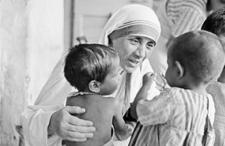
mother teresa serving childrenGod is no less interested in the sanctification of others than He is in yours. But we can get so fixated on ourselves, that we never consider what sacrificial love might look like and how valuable it might be to God. The ultimate example of this kind of love is Jesus, who, though He was God, suffered immeasurably for us. If we claim to love Him, wouldn’t we insist on being at least a little like Him in the way that we sacrifice for others?

Read more about Painful Love.

5) … In order to bring Himself glory

gods-gloryGod is the great Artist of this universe. In the same way that a sculptor is due the glory for what he creates from gloriless lumps of stone, so God is due the glory for His work in our lives. Through the artist’s creative genius, even the stone (once crafted into a beautiful sculpture) takes on a reflection of that glory, so God makes us glorious as well. And just as it would be painful for the stone to be sculpted if it were alive, but it would consider it worth it in the end, so will it be in eternity when we reflect back on God’s amazing (but often painful) work in our lives.

Read more about Selfish Glory.

Conclusion

We are God’s handiwork. He is a good God and a loving Father. He is transcendently holy and utterly beyond us, and He does what we cannot understand. He gives us free-will out of that goodness, love and holiness, even though the consequences will be dire. He then redirects all the evil that comes from our choices into purifying, redeeming and reconciling us. He sacrificed Jesus to accomplish that. He even uses Satan and his brood to that end. He uses pain and suffering in our lives and uses us in each others’ lives. And in the end, after all the pain and suffering in this world has done its part in our redeeming work and all evil has been finally destroyed, those of us who choose to see and choose to submit, whom God has called unto Himself, will recognize the genius of it all, and…

After this I looked, and behold, a great multitude that no one could number, from every nation, from all tribes and peoples and languages, standing before the throne and before the Lamb, clothed in white robes, with palm branches in their hands, and crying out with a loud voice, “Salvation belongs to our God who sits on the throne, and to the Lamb!” And all the angels were standing around the throne and around the elders and the four living creatures, and they fell on their faces before the throne and worshiped God, saying, “Amen! Blessing and glory and wisdom and thanksgiving and honor and power and might be to our God forever and ever! Amen.” (Revelation 7:9-12)

worship-together


Epilogue: The “Complex Good”

A merciful man aims at his neighbor’s good and so does “God’s will”, consciously co-operating with “the simple good”. A cruel man oppresses his neighbor, and so does simple evil. But in doing such evil, he is used by God, without his own knowledge or consent, to produce the complex good – so that the first man serves God as a son, and the second as a tool. For you will certainly carry out God’s purpose, however you act, but it makes a difference to you whether you serve like Judas or like John. The whole system is, so to speak, calculated for the clash between good men and bad men, and the good fruits of fortitude, patience, pity and forgiveness for which the cruel man is permitted to be cruel, presuppose that the good man ordinarily continues to seek simple good. [But if ordinary men seek simple evil,] it is not indeed to break the divine scheme but to volunteer for the post of Satan within that scheme. If you do his work, you must be prepared for his wages.

— CS Lewis, The Problem of Pain


The Goodness of God Series

  1. How do we know that God is good?
  2. If God is good, why didn’t I get what I want?
  3. Why do bad things happen to good people?
  4. Where does evil come from?
  5. How can a good God directly cause suffering?
  6. Should we actively avoid suffering?
  7. How can a good God send people to hell?
  8. Does God change His mind?

CS Lewis, The Problem of Pain

For further reading on this extremely deep and difficult subject, I recommend the following from CS Lewis, whose exceptional work has benefited me greatly in thinking through this issue:

Lewis, C.S. The Problem of Pain. Revised ed., New York, NY: HarperCollins, 2015.

Posted in Real Life, Theology | Tagged , , , , , , , , | 9 Comments

Rethinking Freedom

Freedom Statue of LibertyI don’t know about you, but I absolutely love the Marvel movies. I enjoy watching the good guy unequivocally trounce the bad guy. I’m all about truth, justice and the American way! As our culture becomes progressively discontent, confused, even fearful and angry about the concepts of “truth” and “grand narrative” — a larger story (God) behind the smaller stories of life (us) —, and has increasingly embraced a postmodern worldview, Marvel movie story lines are starting to get darker and more dystopian … which isn’t my bent. But up to this point, with the exception of Iron Man 3 (sorry!), I love them. The first Avengers movie is probably my favorite, for a lot of reasons, including some of it’s (perhaps unexpected) theological implications.

One of the scenes that gives me goosebumps every time is the scene in which Loki has come to Germany to steal a necessary component of the doomsday device he’s building — a substance he needs to build a portal by which his waiting army will invade the earth. He gets what he came for, but his ego won’t let him just leave. Unable to pass up the opportunity to coerce worship from the masses, he gears up in full Prince of Asgard, Greek god of mischief garb, walks out into a crowded German street, and starts making speeches. He demands that the crowd bow down and submit to him … at least, that is, until Captain America shows up and busts his chops.

I cheer every time. From the first time I saw it, this scene strikes me as a phenomenal hero moment, in which freedom triumphs handily over oppression and the strong defend the weak. It has always represented for me a little slice of the way things ought to be. Justice! Even, shades of the gospel!

And then, about the 10th time I watched it, it hit me…

Loki is right!

Check out the scene for yourself; then I’ll attempt to explain…

Just to make sure you caught the dialogue (and so that I can add some emphasis)…

Loki: “Kneel before me!”

Frightened, the crowd kneels.

Loki: “Is not this simpler? Is this not your natural state? It is the unspoken truth of humanity, that you crave subjugation. The bright lure of freedom diminishes your life’s joy in a mad scramble for power … for identity. You were made to be ruled. In the end, you will always kneel.”

A single elderly man stands. It is implied that he is a survivor of the Jewish holocaust of World War II or at least that he lived through that era.

Elderly man: “Not to men like you.”

Loki (sneering): “There are no men like me.”

Elderly man: “There are always men like you.”

Captain America appears out of nowhere, defends the people, and puts Loki in his place. The goosebump-inducing line: “The last time I was in Germany and saw a man standing above everybody else, we ended up disagreeing.”

Jeff (typically out loud): “YES!”

And the crowd goes wild!


Okay, now that I’ve got my goosebumps on, what’s all this “Loki was right” nonsense?!

We were made to be ruled

king-aragorn

The fact is that God did not create you to be autonomous and independent. He didn’t design you for self-sufficiency and self-determination. He made you to be told who you are from the outside. He created you to be ruled … by Him.

Loki intends to subjugate the people to his rule. Captain America intends for the people to be free from anyone’s rule over them. The truth is that both views are quite inferior to what God intends for us.

I’m sure I don’t have to do much convincing for you to see that Loki is not qualified to rule over you. But I suspect it will be far less natural and easy to acknowledge that neither are YOU qualified to rule over you. Nor is President Obama, or Queen Elizabeth, or your governor or the local mayor or whoever … except to the extent that each of these people is given varying kinds and degrees of power and authority by God to rule over you, on God’s behalf, temporarily in our broken, sin-stained world. But they are only placeholders. In the end, there is only one man qualified to rule over this universe, especially over your heart, and that’s Jesus.

And you were designed by God to be ruled by Him and Him alone.

The bright lure of freedom does diminish your life’s joy

achieve-independenceIt is not “freedom” to shake off, rebel against, or otherwise deny the righteous rule of King Jesus. It’s not in any sense beneficial to you to strike out on your own. Loki is exactly right… there’s no quicker way to “diminish your life’s joy” than to tell Jesus to pound sand, because you’ve got this “king of my heart” thing sorted.

No doubt that Loki’s rule over the people would have been extremely ungodly and oppressive. So it’s a good thing Captain America showed up to take care of that problem. To fight to throw off the burdensome yoke of someone like Loki is an extremely good idea. But to succeed in overthrowing Loki just to put your own self-indulgent desires on the throne to rule over your life is not the way to happiness. It’s the certain (Jesus called it “broad”) road to agonizing pain and bitter regret — first in this life, and then in the life to come (Matthew 7:13-14).

But, you might ask, “Aren’t those two different things? Don’t we need governments and earthly rulers? We can’t elect King Jesus president in 2016, can we?”

congressional-buildingWell, Jesus would certainly get my vote over the other candidates running, that’s for sure. Sadly, though, you’re right … we can’t write Jesus in for the next presidential election. Nor can we live without earthly governments. In fact, God specifically ordains them for our benefit (Romans 13:1-7). Of course, some forms of government are better than others. For instance, I’d far rather live in the US (with all its flaws) than in North Korea, or in 2016 Germany than in 1936 Germany. And for sure, some leaders are better than others. I’d rather live under Captain America than Loki. However, every earthly government and every earthly governor are broken, imperfect and inevitably inadequate. We were not meant to be ruled by Hitler, Loki, Obama, or Captain America. And we weren’t meant to rule ourselves either! But because we too are broken and imperfect, we need rulers and systems of rule to keep things from going totally off the rails. Sadly though, they will always be a difficult and distressful compromise, necessary to stand in the gap until Jesus returns to set everything right and rule over us Himself.

Put another way, our sin has backed us into a corner where we find ourselves in need of rulers other than God Himself to exert authority over us. So, let’s pick the best, most godly, wisest, most humble rulers and establish the best forms of government we can… But don’t think of them as the ideal or the goal (such that if we could just get the right system or people in place, everything will be right and good!). Earthly leaders and governments aren’t the destination; they’re the babysitters on the long journey home (where everything is already right and good).

What we call “freedom” does become the mad scramble for power and identity

mad-scrambleOkay, so we’ve fought to establish the best form of government the brokenness of our world will allow, and we’ve worked hard to choose (an incredible privilege known only to a few in the grand scope of history) the best leaders possible. Naturally, that system requires that we have “freedom,” and those leaders must be freely elected to be any good, right? It’s all about liberty within the system, isn’t it?

Well, yes and no.

Of course, I’d rather live in a system in which I get to do what I want when I want to do it, versus being told where to go and what to do by an oppressive overlord. Naturally, I’d rather have a say in who my leaders are, rather than having them thrust upon me by heredity or because they have the biggest guns. Obviously, I’d rather have the opportunity to become a leader myself if I wanted to (instead of seeing power unalterably consigned in the hands of a very few) or become wealthy if I work hard (versus being locked into a cast or class without hope of change, even over several generations). So, yes, in one sense, I definitely do want to be free … from oppression, tyranny, lack of options, and the like.

But the problem is that we expect too much from “freedom”. We define it badly. Well, maybe not “badly,” but too exhaustively. Here’s how Miriam-Webster defines freedom…

Freedom (n.) — the state of being free from the control or power of another: as …
a : the absence of necessity, coercion, or constraint in choice or action
b : liberation from slavery or restraint or from the power of another : independence
c : the quality or state of being exempt or released usually from something onerous
Etc.

This definition paints for me the following picture of “freedom”…

traffic-camerasI (totally subjectively) find a law or a governor to be oppressive. For example, I hate getting tickets from those silly traffic cameras, or I feel that jaywalking is a ridiculous infringement of my rights, or I feel that the speed limit on this particular stretch of road should be considerably higher, or … whatever. My personal power and my right to self-determination are being suppressed or restrained. I desire to be exempt or released or liberated from these onerous constraints in my personal choice or action. I want to drive where I want, walk where I want, and go as fast as I want. I want liberty, independence, FREEDOM!

But the part of this picture we always seem to overlook is that you can’t just be set free from something. You have to be set free to something in its place. There is no world without boundaries. What we in America typically mean when we proclaim that we’re going to “throw off the yoke of our oppressors” or when we picture this “free to do anything I want” kind of freedom … what we’re really saying is that we ourselves, personally, want to be in charge. It’s fine that there’s a president or governor or whatever, but they are only allowed to create rules that I like. I will decide whether or not I stopped completely enough before making a right turn on red, thank you very much. I will decide when and how to cross the street. I will decide how fast it’s safe to drive. President Obama is pretty much just a figurehead … someone to shuffle the paperwork, repair the roads and man the armies. (I don’t have time for that stuff!) Who I really want to be in charge is … ME!

So, just like Loki said, we scramble for power and identity. We rage against “the Man” and demand our rights. We pour endless time, energy and investment into building our personal wealth, prestige or power base, so that we can come out on the top of the heap. We want strong networks so we can get the introduction or the favor we need at the critical moment. We want lots of cash in the back or assets on the balance sheet so we can move with ever-increasing freedom in a limited-resource world. We want the power and prestige to tear down walls, shatter constraints, and open up ever-greater vistas of choice before us. And we rebel against boundaries we don’t like, treating them as if they weren’t even there — like the ridiculous stop signs every 20 feet in the grocery store parking lot. Seriously! One big yellow “yield to pedestrians” zone is really all we need, isn’t it?!

But I digress.

Wclimbing-the-tablehat we don’t realize is that the result of all this clawing and scraping is to assign to our jobs and our bank accounts and our professional networks … and the personal freedom-of-movement in our lives … the power to tell us who we are. Big house, nice watch, and people who recognize me out in public … so I’m important. Big 401k, prestigious law firm, and the right degree from the right institution … so I’m safe. Big pile of disposable cash, coveted vacation home, and enough time away from work … so I’m free.

But it’s not real! These are illusions many people, sadly, spend their entire lives fighting and jockeying to achieve, but never do. It’s like chasing after the wind (Ecclesiastes 2:11).

In the end, you will always kneel

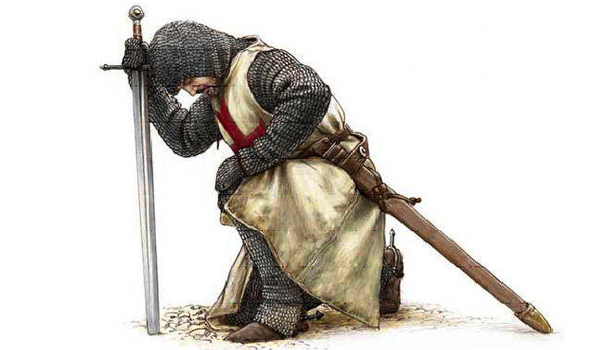
templar-knight-swearing-fealtyWe were made to be ruled — not by oppressive earthly dictators or off-balance Asgardian “gods,” and not by our own wildly flailing desires or emotions … but by King Jesus. But one way or another, we will always kneel. You came into this world designed to be ruled by the King of kings, and to worship Him in return. And if you reject God’s authority and rightful rule over your life, then you’ll put something far less worthy in His place. But something will receive your devotion, your fealty, your worship … even if it’s only YOU, and your selfish, petty desires. There is simply no universe in which you are not ruled by someone or something.

And whatever rules you, whether it’s a modern national government or a hidden addictive desire or a baseline self-indulgent pride … someday whatever it is will be subjugated under the perfect rule of King Jesus. You, your mayor, your favorite military commander, your hobby, your job, your addiction … EVERYTHING will bow down to or be destroyed by Jesus. No third option.

God is, in fact, quite clear…

Therefore God has highly exalted [Jesus] and bestowed on Him [done deal!] the name that is above every name, so that at the name of Jesus every knee should bow, in heaven and on earth and under the earth, and every tongue confess that Jesus Christ is Lord [Ruler, King], to the glory of God the Father. (Philippians 2:9-11)

Christ has been raised from the dead [to deliver] the kingdom to God the Father after destroying every rule and every authority and power. For He must reign until He has put all his enemies under His feet. The last enemy to be destroyed is death. For “God has put all things in subjection under his feet” … that God may be all in all. (1 Corinthians 15:20-28)

And thereby be fully human

What we don’t understand is that humanity doesn’t consist of some kind of imaginary limitlessness or self-determination. It’s not your right to life, liberty and the pursuit of happiness that makes you human. It’s being what God made you to be. The God of the universe made you a specific way (in His image) for a specific reason (His glory).

Happy children silhouettes on summer meadow running and jumping“Freedom” is the realization of that purpose. It’s finally being who you were meant, who you were designed to be.

The Bible tells us that, without Christ, we are slaves to sin (John 8:34). The only true freedom comes from Christ, who, by His death on the cross and resurrection from the dead, has conquered sin and death. He defeated these mortal foes, and now we are no longer slaves to them. Instead, we are free. Not free to plunge ourselves back again into sin from which He saved us — to do whatever perverted, self-indulgent, self-directed thing that pops into your mind. Rather, we are free from the sin that entangled us and kept us from being the righteous image-bearing sons and daughters God created us to be.

The Apostle Paul put it this way,

When you were slaves of sin, you were free in regard to righteousness. But what fruit were you getting at that time from the things of which you are now ashamed? For the end of those things is death. But now that you have been set free from sin and have become slaves of God, the fruit you get leads to sanctification and its end, eternal life. For the wages of sin is death, but the free gift of God is eternal life in Christ Jesus our Lord. (Romans 6:20-23)

Notice again that it’s not some kind of boundless freedom, which cannot exist for created beings who are confined in a physical universe and subject to the many and varied laws of God, both natural and spiritual. This kind of boundlessness is a myth. Instead, it’s the freedom to be “a slave” to God (leading to life and joy and peace) rather than sin (leading to suffering and sadness and death). No third option.


So, let’s stop thinking of “freedom” as the absolute destruction of all boundaries or the selfish conquest of the world around us so as to put ourselves at the top of our respective heaps, and start thinking of it as right worship. I love this quote by Randy Newman in his book Questioning Evangelism, which I think says it well:

When people reject the Good News [of the gospel of Jesus Christ], it’s because they’re enslaved and addicted to other kinds of news. They’re in love with something unworthy of such devotion, and it won’t let them go.

To let go of the world and be set free from all its glittering entrapments … to bring into check our hope and expectation of earthy rulers and forms of government … to subjugate ourselves under right authorities — King Jesus and the rulers He installs over us — before God forcibly bends our knees for us … and to be bound tightly in the embrace of the God who designed you to be held and ruled by Him …

THAT is true humanity.

THAT is freedom!

freedom worship


Resources

Some other resources you might consider checking out…

Posted in News, Politics and Culture, Theology | Tagged , , | 3 Comments

Our God has come close

runtogod1

I can’t get this song out of my head this morning. It’s simple, but its implications are far-reaching. And, by the way, I’m diggin’ this group (new to me): Love and the Outcome.

Check this out…

A Life of Hope

For everyone
Hope has come
The Savior of the world

kingdom of godThe world attempts to manufacture hope. We talk ourselves into believing that we can create for ourselves a perfect world which will fulfill are dreams. So we work hard to stamp out disease or improve technology or broker peace or stabilize economies or develop a perfect system of government. And although it’s good to do these things and we may make headway in one area or another from time to time, our hope, if it is in these things, is ill-founded. Hope is a person, Jesus of Nazareth, who establishes / brings with Him into this world a Kingdom in which all these goals and more are achieved. There is only one Savior of the world. If we hope, let it be in Him and in His Kingdom, as we eagerly await the day when He will reign uncontested over all things. And may we live today in the reality that — in the same way warmth is available to those who will gather around the fire — God’s Kingdom is available to those who will gather around King Jesus. THEN, as He gives us power to do so, we set out to change the world around us. But if we jump directly to the work, bypassing the person, running on our own batteries, we will experience failure and frustration. Only King Jesus working through us builds the Kingdom we hope for.

Study: Acts 2:22-28; 2 Peter 1:2-10

A Life of Gospel

To light the dark
And heal our hearts
He is The Savior of the world

Emmanuel, Emmanuel
Our God has come close
The world needs to know
This good news we have to tell
Emmanuel

neighborhoodThe world needs to know the good news of King Jesus. We have been entrusted with the gospel. “Emmanuel” means “God with us.” This one word encompasses the whole of the story of God … that He doesn’t abandon us or leave us as orphans, but draws near and adopts us as sons and daughters. He brings with Him a Kingdom, a way of life, an alternate reality, that is glorious beyond words. It’s where and how we were meant to live: walking with God in the garden in the cool of the day, being His people as He is our God, trusting Him as sheep trust their shepherd, living and even reigning with Him in perfect peace. This reality is now possible and available for everyone who comes to God in humility, surrendering her rebellious heart.

What are you doing today to make Him and His Kingdom more real to those who live in darkness, groping for something they don’t fully understand but know has to be out there? Are you a light in their dark worlds? Are you an instrument by which God heals hearts? Do you proclaim with your words and with your life that there is another way, a better Kingdom than what this broken world has to offer? Will you demonstrate, in whatever you do today, the superiority of the life lived in Christ?

Study: 1 Thessalonians 2:1-8; Matthew 5; Matthew 28:18-20

A Life of Freedom

For unto us
Is born the One
Who’s love will set us free

broken chainsJesus, the Son of God and Ruler of All, sets prisoners free. Not just in some esoteric future Kingdom — though that will be amazing beyond imagination — but right now! If fear is your captor, run to God and let Him make you brave. If you’re bound by pride, God desires to release you from your chains — which means that hardship might be the best thing you could experience right now. That might require looking at life a little differently, which would be a huge first step! If you’re imprisoned by distractions, start turning things off or throwing things away, and ask God for the freedom to focus on Him. All of Christian living is God’s grace and power + your faith-that-leads-to-action. But whatever you do … maybe you don’t even know what your prison is, but you feel walls around you when you grope in the darkness … run to God! Get alone and undistracted for as long and as often as it takes — as in, take off work or go away alone for a weekend if you have to; or maybe start by turning off your phone for an hour (*yikes!*) — to clear your mind and fix your eyes on Him. Submit to Him. Ask Him to help you. And whatever He says to do, no matter how crazy or painful you think it’s going to be, just do it. Immediately. Don’t evaluate His love for you by this world’s standards. Only He brings life and freedom and wisdom. Only His word leads to the life you’ve always wanted.

Study: Isaiah 61:1-4; Matthew 6; Colossians 2:6-15

A Life of Worship

And we will sing
Unto our King
His love has set us free

Ring the bells
Ring the bells
Emmanuel

church bellsThe church bell in the steeple in the middle of a sleepy country town used to literally summon the people to worship on Sundays. The town crier used to ride into the town center, climb stairs to a raised platform, and literally shout proclamations to passersby.

May this song call us all to worship. May that worship in fact be a life lived to declare with our mouths and demonstrate with our hands a new potential reality in Christ — not just an hour on Sunday and maybe an advanced hour on Wednesday night, but every moment of every day. May our lives proclaim from a raised platform in the middle of our spheres of influence the goodness of God and the life He brings to all who will run to Him.

Study: Matthew 7; Romans 8

Posted in Psalms, Music and Worship | Tagged , , , , | Leave a comment

Not Qualified for Anything

qualifications2

In my life as a consultant manager, I’ve done a ton of recruiting. Over time, the various teams I’ve led have set out to hire all kinds of people — from narrowly-specialized technicians to broad generalists, from entry level worker bees to executive leadership. One thing every one of those hiring situations had in common was a strong set of expectations around the recruit’s qualifications. We need someone who knows a particular programming language forward and backward. We need someone who has done X, Y and Z successfully before. We need someone with a proven track record of godly character and strong work ethic. Etc. Some qualifications apply particularly to specific jobs, while others are more general and are always desired.

The other day I found myself daydreaming about my qualifications. You probably know that I’m currently living a half-time experience — transitioning from a career in the marketplace to a life of full-time ministry. As such, I have moments of great clarity and certainty about the details of giving my life to the kingdom of God, honoring the Lord in whatever I do, making ministry a “career”, etc. Other times, I’m quite uncertain: What specifically is God calling me to? Will I teach? Will I be a pastor? Should I pursue a Ph.D? Where will we live? Could I even end up back in the marketplace? And so on.

qualifications1It’s in this what-will-I-be-when-I-grow-up mode that I’m most tempted to sit and stew about whether or not I’m qualified for these various career paths. Am I smart enough or wired correctly or qualified in general to be a professor? Am I strong enough and sensitive enough to be a pastor? Am I enough of a leader? Do I have a big enough heart for people or a devoted enough heart for God? Am I strong enough to train effectively for godliness (1 Tim 4:6-10) … like I really mean to run the race of life to win (1 Cor 9:24-27)?

The other day, as I was soaking in the doubt and uncertainty that these kinds of questions inevitably generate, God was very gracious and clear in His response…

No. You are in fact not qualified for any of these things. Not qualified to be a professor or a pastor. Not qualified to shepherd, teach or preach.

You may be surprised that I found this incredibly comforting, even freeing. And after a bit of reorientation around what Scripture actually teaches about how “qualifications” work in the life of a Christ-follower, I found not only comfort but some exceptionally clarity …

qualifications4

Whom God chooses

Brothers and sisters, think of what you were when you were called. Not many of you were wise by human standards; not many were influential; not many were of noble birth. But God chose the foolish things of the world to shame the wise; God chose the weak things of the world to shame the strong. God chose the lowly things of this world and the despised things — and the things that are not — to nullify the things that are, so that no one may boast before him. It is because of him that you are in Christ Jesus, who has become for us wisdom from God — that is, our righteousness,holiness and redemption. Therefore, as it is written: “Let the one who boasts boast in the Lord.” (1 Corinthians 1:26ff)

God specifically does not choose people for their qualifications. If anything, God chooses the weak and the unqualified, so that it will be all the more clearly seen how incredibly strong and qualified He is … “so that no one may boast before him.”

Why God chooses us

You are a people holy [consecrated, set apart for special purpose] to the Lord your God. The Lord your God has chosen you to be a people for his treasured possession, out of all the peoples who are on the face of the earth. It was not because you were more in number than any other people that the Lord set his love on you and chose you, for you were the fewest of all peoples, but it is because the Lord loves you and is keeping the oath that he swore to your fathers, that the Lord has brought you out with a mighty hand and redeemed you from the house of slavery, from the hand of Pharaoh king of Egypt. Know therefore that the Lord your God is God, the faithful God who keeps covenant and steadfast love with those who love him and keep his commandments, to a thousand generations, and repays to their face those who hate him, by destroying them. He will not be slack with one who hates him. He will repay him to his face. You shall therefore be careful to do the commandment and the statutes and the rules that I command you today. (Deuteronomy 7:6-11)

Out of His great love, God has made an amazing promise to His people: an everlasting covenant with Abraham (Genesis 12) that his children would be God’s people, and He would be their God. He made similar covenants with Adam (Genesis 1-2), with Noah (Genesis 9), with Moses (Exodus 19), with David (2 Samuel 7), and on and on it goes. God is a promise-making God! And we who are in Christ are the children of Abraham, so God’s promise is for us, not just for Israel (Galatians 3). But most significantly of all, God made His highest and best covenant directly with us, written in the shed blood of His own Son Jesus (Hebrews 8-9; c.f. Jeremiah 31:31-34).

baby-jesus-christmas-nativityGod has declared, “You will be my people, and I will be your God!” (2 Corinthians 6:16; c.f. no less than 51 other occurrences in Scripture)

And now, again out of His great love, God is keeping His promise. He chooses us to be His children and to do His will, not because we are qualified for either, but because of His love for us and for the sake His reputation as the ultimate promise keeper!

Where is the wise person? Where is the teacher of the law? Where is the philosopher of this age? Has not God made foolish the wisdom of the world? For since in the wisdom of God the world through its wisdom did not know him, God was pleased through the foolishness of what was preached to save those who believe. Jews demand signs and Greeks look for wisdom, but we preach Christ crucified: a stumbling block to Jews and foolishness to Gentiles, but to those whom God has called, both Jews and Greeks, Christ the power of God and the wisdom of God. For the foolishness of God is wiser than human wisdom, and the weakness of God is stronger than human strength. (1 Corinthians 1:18-25)

So again we see that it is not my wisdom or strength that matters. God does not seek me for my capability and qualifications. He knows I’m both weak and foolish (Psalm 103:13-14). “But we preach Christ crucified” (1 Corinthians 1:23). And in Him is all “the power of God and the wisdom of God” (1:24) … power and wisdom which He has chosen to put to work in and through me.

The purpose for which God chooses us

It is not for you to know times or seasons that the Father has fixed by his own authority. But you will receive power when the Holy Spirit has come upon you, and you will be my witnesses in Jerusalem and in all Judea and Samaria, and to the end of the earth. (Acts 1:7-8)

As a witness in a court room reports what they have seen and heard and experienced, in order that others can know what happened even though they weren’t there to see it first hand, so we are God’s witnesses. We are chosen by God and given power by God to proclaim the reality of who God is simply by bearing witness to what He has done in our lives. We do this not only in words, but with the proclamation of our entire lives. How we think, what we say, how we spend our time, what sloshes out of us when we get bumped by others in stressful situations, how we respond to pain and loss and crisis… These all bear witness to who God is and to how seriously others can take the promises God has made to us (and them).

We are also given some very specific tasks as God’s children — those identified as related to Jesus through adoption because we act like Jesus…

The Spirit of the Lord is on me, because he has anointed [chosen] me to proclaim good news to the poor. He has sent me to proclaim freedom for the prisoners and recovery of sight for the blind, to set the oppressed free, to proclaim the year of the Lord’s favor. (Luke 4:18-19; c.f. Isaiah 61:1-7)

But wasn’t that what Jesus said He was sent to do? Indeed it was. However, Jesus also made it clear that “as the Father has sent me, even so I am sending you” (John 20:21). Adam’s tasks to tend the Garden of Eden were explicitly intended by God to be an extension of the work of God through the hands of man. In the same way, Jesus explicitly intends that our hands would extend His work. So, as you do … whatever it is you will do today … you do that work as the hands of Jesus in this world.

feeding-hungry-childrenLike Jesus, we are anointed to proclaim good news to the poor. Not just those who are physically or financially poor, but spiritually or emotionally poor as well. To all who do not have the resources it takes to live the perfect lives God intended for all of us (that’s everyone, including ourselves), we proclaim the good news of the gospel of Jesus Christ. No matter what other needs a person has, they for sure need grace and love, forgiveness from sin and to be introduced to a new King and His new way of living. It’s not about fixing the world. We’re not qualified for that either; there is only one Savior of the world. But, by God’s grace and authority, we do what we can … starting with the declaration (in word) and the demonstration (in deed) that it is now possible for ordinary, unqualified, sin-stained people like you and me to be washed clean and to live in the presence and under the authority of King Jesus.

intervention set prisoners freeLike Jesus, we are to proclaim freedom for those who are in bondage. Because the Son has set us free, we are free. We no longer need be trapped in sin and despair, addiction, unbreakable habits, selfishness, and the like. Sin may hold sway over the world at large, but it doesn’t have to hold sway over us … not because I’m qualified to or capable of resisting it, but because the same power that raised Jesus from the dead now lives in me! And that Spirit, and the power He offers to die to sin, is real and available to any who run to God.

poverty-eye-care recover sight to the blindLike Jesus, we are to proclaim recovery of sight to the blind. As those sent by Jesus into the world, we are light in a very dark place. Before all those who are blind and cannot see — their sin, their desperate need, their gleeful-but-should-be-terrifying descent into hell because of their rebelling — we are the light of Christ, and the witnesses to true life. To some, we are even the bringers of physical sight — providing the most basic medical services or a pair of eye glasses to someone who otherwise wouldn’t have them. But to anyone and everyone, we can be the light of Christ. How many people in our spheres of influence might only see Jesus and live because they have first seen Him in us?

rescue-from-trafficking fight oppressionLike Jesus, we are to set the oppressed free. Where there is injustice, we fight for justice. Where there is oppression, we oppose it. But this is hard, especially in our comfortable, western, entertainment-driven lives. We might have to give up elements of our lives which are comfortable and easy and entertaining in order to fight, in any meaningful sense, for the oppressed and abused in this world. It’s probably more than writing a check or waxing indignant at a party. We will probably have to do something, and that could very well incur cost in time, money, prestige, and pride. Most certainly it will cost us something, but if we want to be like Jesus, then we will actively oppose oppression.

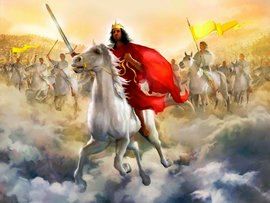
jesus-riding-on-white-horseLike Jesus, we are to proclaim the year of the Lord’s favor. A day is coming when there will be no bondage anywhere, no darkness in need of light, no poverty, no injustice, no oppression. Just the other day, I heard Michael Frost say that nostalgia over what we remember as “the good old days” will not motivate Christians into God-honoring action. Only a clear vision of the Kingdom of God will result in living for the Kingdom of God (eagerly orienting my life under the authority of King Jesus today).

I know all that might sound a bit overwhelming, and brings us back to where we started … Who could be qualified to respond to such a high calling?

The ability to do that for which we are chosen

Stay in the city until you are clothed with power from on high. (Luke 24:49b)

You will receive power when the Holy Spirit has come upon you, and you will be my witnesses in Jerusalem and in all Judea and Samaria, and to the end of the earth. (Acts 1:7-8)

This line in Acts is so well known to Christians that I think we sometimes overlook or undervalue it. The Spirit is the source of our power. Jesus is super clear that the apostles should do nothing … not even work on the programs, as James MacDonald is fond of saying … do nothing until the Spirit comes to them and empowers them to do it

But lest we think that directive was only for the apostles in an especially apostolic time…

I (Jesus) am the true vine, and my Father is the vinedresser. Every branch in me that does not bear fruit he takes away, and every branch that does bear fruit he prunes, that it may bear more fruit. Already you are clean because of the word that I have spoken to you. Abide in me, and I in you. As the branch cannot bear fruit by itself, unless it abides in the vine, neither can you, unless you abide in me. I am the vine; you are the branches. Whoever abides in me and I in him, he it is that bears much fruit, for apart from me you can do nothing. If anyone does not abide in me he is thrown away like a branch and withers; and the branches are gathered, thrown into the fire, and burned. If you abide in me, and my words abide in you, ask whatever you wish, and it will be done for you. By this my Father is glorified, that you bear much fruit and so prove to be my disciples. As the Father has loved me, so have I loved you. Abide in my love. If you keep my commandments, you will abide in my love, just as I have kept my Father’s commandments and abide in his love. These things I have spoken to you, that my joy may be in you, and that your joy may be full. (John 15:1-11)

grape vinesJust as life itself continually flows from the vine to the branches and keeps them alive and vibrant and “useful” for bearing fruit, so the life of God flows from Jesus to you to keep you alive and vibrant and “useful” for the work God has called you to do. I don’t read this as an exaggeration, either. Quite literally, in my mind, if you want to do what God is calling you to do … to live the life God intends you to live … then you need the life and power of the Spirit of God to enable you to do it. There’s no other way for the branch to remain alive than to be connected to the vine. Period.

The results of being chosen

It makes me rest

Jesus said…

I thank you, Father, Lord of heaven and earth, that you have hidden these things from the wise and understanding and revealed them to little children; yes, Father, for such was your gracious will. All things have been handed over to me by my Father, and no one knows the Son except the Father, and no one knows the Father except the Son and anyone to whom the Son chooses to reveal him. Come to me, all who labor and are heavy laden, and I will give you rest. Take my yoke upon you, and learn from me, for I am gentle and lowly in heart, and you will find rest for your souls. For my yoke is easy, and my burden is light. (Matthew 11:25-30)

God the Father sends us Jesus, and gives Him authority over all things. God then chooses the simple and foolish and unqualified people of this world, and reveals to us His own greatness and that of His Son. Jesus then invites us to simply come to Him, rest in Him, remain in Him, and He will do that for which God has sent Him and given Him all authority.

Serving as the underkings of King Jesus is to have restful power. It’s an easy yoke and a light burden. All our scurrying and scraping and clawing and conniving in this world will amount to nothing, because Jesus (who is gentle and lowly in heart, but all powerful and all capable) will unequivocally rule over all things (Ephesians 1:20-22; 1 Corinthians 15:24-28).

It makes me bravecourage

God has chosen me out of His strength, not mine … for a purpose more glorious than I could have conceived. He works through me, causing my  meager efforts to serve Him to always be enough. That makes me brave! It gives me courage to do what — to some — shouldn’t be able to be done. It sends me on adventures that some would call uncertain, or even dangerous. But I trust the God who chooses weak and unqualified people to do amazing things.

And whenever I find myself fretting or fearing instead of boldly stepping out in faith, I listen to this song. It was introduced to me by a fellow classmate in my first semester at Trinity, and I think it says it pretty well…

I stand before You now; the greatness of your renown.
I have heard of the majesty and wonder of you.
King of Heaven, in humility, I bow.

I have heard You calling my name;
I have heard the song of love that You sing.
So I will let You draw me out beyond the shore
Into Your grace … Your grace!

As Your love, in wave after wave,
Crashes over me, crashes over me.
For You are for us;
You are not against us.
Champion of Heaven,
You made a way for all to enter in.

You make me brave.
You make me brave.
You call me out beyond the shore into the waves.

You make me brave
You make me brave
No fear can hinder now the promises you made.

You make me brave.
You make me brave.
No fear can hinder now the love that made a way.

You Make Me Brave, Amanda Cook, Bethel Music


Want the full story about this song? I thought this video (the story behind “You Make Me Brave”) was really insightful and worshipful… “It came from literally lying on the floor of the writing room and seeing my life from [the perspective of] prophetic clarity… Oh, You’ve been here the whole time.”

Amen, Amanda. Amen!

Posted in Psalms, Music and Worship, Theology | Tagged , , | Leave a comment

The Person Behind the Practice

Removing Shoes

The No-Shoes Rule: An Analogy About Love and Obedience

Which is more important: to take off your shoes when you enter a man’s house so that his carpet doesn’t get dirty, or to love the man who owns the house and the carpet?

You probably answered “both”, and I’d agree.

If the owner of a home has a rule to take off your shoes when you enter, it’s likely that you readily obey the rule. It would no doubt show great disrespect for this man if you were to disregard his rule, walk in with your boots on, and get dirt on his carpets. Adopting a pattern of this behavior would quickly raise the man’s ire.

If, on the other hand, you take off your shoes when you enter his house, as he has requested, it’s a fairly neutral act. You’ve obeyed the rule, and he likely doesn’t particularly notice. It’s good, but a fairly low-grade background sort of good. This act alone is a relatively poor indicator of your relationship with the homeowner, or your general attitude toward him — let alone your character. To better evaluate these (deeper) kinds of things, one has to ask much broader questions about your life and interactions with the homeowner, not just about whether or not you adhere to this one rule.

messy-apartmentIf, for example, you scrupulously remember to take off your shows every time you enter, but you carelessly break things without apology or remorse… If you keep the carpets spotless, but you make a mess eating brownies on the sofa and help yourself to milk from the fridge as if it’s yours to take rather than your host’s to offer … If you routinely mistreat the man’s family or his beloved pet… Then of how much value is the whole shoe thing? If you otherwise act like a socially-maladjusted cad, it’s unlikely the owner of the house will think you to be a good guest because you obediently remove your shoes. In fact, it would be possible to act in ways which are so severe that all the rule following in the world wouldn’t matter to him. If, for example, you despise his son or think little of his character (distrust his word, devalue his promises, casually disregard his advice, disrespect him before others), then you will certainly not endear yourself to him by keeping his carpet clean or staying out of his fridge. At some point, the disregard for him in your heart could create such discord that even meticulous, conscientious attention to every rule you could think of wouldn’t smooth over the rupture in your relationship.

Now, flip the scenario around. What if you absolutely adore this man? You’ve known him for many years, you have great respect and love for him … and it shows. When you (often) come into his house, you never fail to take off your shoes, and you wouldn’t think of taking his things or kicking his dog or demeaning his son. You don’t need rules for this stuff, because you love him. You respect his property as if it were your own. You go out of your way to show kindness to him, not abuse his kindness to you.

sorry-puppy

I’m so sorry!

Then comes a day when you forget to take off your shoes and get mud on the carpet, or inadvertently break a lamp, or carelessly trip over the dog, or say something stupid or even mean to a family member. What is the man’s reaction? Love! There may be some fracturing in the relationship that needs attention and repair. An apology is likely both warranted and required. But his love for you covers over the fact that you broke rules or acted carelessly, and caused damage in the process.

Or another scenario… The neighbor has been hit by a car. You run in the house to get help from the man and his family. You don’t even think about the mud on your shoes, you knock over a lamp and trip over the dog in your rush, and you bark harsh orders at the man’s son to dial 911. You’re breaking every rule we’ve talked about! You’re not acting lovingly at all! Surely now the man will set aside or suppress his gracious, loving tendencies toward you, stop you in your tracks, and demand decorum!

But he doesn’t. In fact, he drops all decorum on his side as well. He rushes out of the house barefoot, hair uncombed, in his night shirt … to help you attend to the injured neighbor. There isn’t even repair work to do in the relationship. If anything, the experience makes your relationship stronger. Why? Because everything happening here is happening for the sake of love. The love that tends to a neighbor’s wounds — keep in mind that this is just one example — is a higher, greater thing that the decorum and obedience of following rules.


What does this analogy teach us about life?

God also has a house

univerce It’s a bit of a metaphorical leap, I know, but if you think about it, one way you could define “God’s house” is … the entire universe. Everything that exists belongs to the God, who made it and sustains it. The Bible is even clear about why He made it: for Himself (Colossians 1:16) … which is to say, for His pleasure and glory.

We, as creatures made by God, walk continually in the world that God made for Himself. Like it or not, everything you think, say and do is in God’s presence … in God’s living room, so to speak. And so what we think, say and do essentially constitute our “manners” in God’s house … it all speaks to how we view God, His house, His rules, and His Son.

God’s house has rules
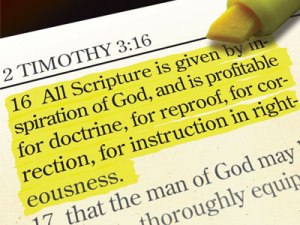
ScriptureThis world is filled to the brim of laws — from laws of nature to laws of relationship, from emotional laws to spiritual laws. There are real, tangible consequences for good and bad choices in all these areas, because there are real, tangible rules which prescribe right and wrong, working and broken ways to function in life. But in our culture, most people have developed a seriously misguided hated for most rules. Many of us imagine ourselves to be both smart enough not to need the rules and free enough not to deserve them … or at least cagey enough to avoid them. But you can deny them or chafe against them all you want … it won’t change their reality. Physical, relational, emotional, and spiritual laws are all here to stay, and they’re unavoidable … no matter how smart, deserving or cagey we imagine ourselves to be.

If you think about it, though, the fact that we have laws from God to govern us is actually a sign of His love for us (His creatures). That’s somewhat astonishing when you stop to think about it. In the absence of divine love, God’s divine right to demand justice could very well have resulted in a divine impulse to simply strike us down the first time we disrespected Him in the Garden of Eden … without a single word about what thou shalt or shalt not do. But instead, God is long-suffering and patient, slow to anger and abounding in steadfast love (Psalm 103:8). As such, He graciously instructs us in what’s best for us, installs boundaries into the very fabric of the universe to protects us, and in Jesus, He goes so far as to pay the price of our failures and rebellion Himself when we break the rules. That’s pretty amazing!

equationsSo if God’s house is the whole span of the universe and history, and God’s house clearly has rules, then it naturally follows that God would expect us to obey the rules of His house. As we stomp around on God’s carpets, hungrily eye the brownies on God’s counter, or otherwise interact with the rest of creation, it’s on us to follow God’s rules. And especially if you take God’s rules as loving gifts (certainly how He intends them to be received) and as part of who He is (which they certainly are), then doesn’t it also say quite a bit about our love and respect (or lack thereof) for God Himself in how we respond to those rules … just as our response to the “no shoes” rule reflects our love and respect for the owner of the house (who made the rule)?

And God has a Son

Lion at SunriseAt the center of God’s universe is His Son, Jesus. For any loving parent, their stuff and their rules are of distant secondary importance to their children. You can (and should) follow the rules of someone’s house all day long, but if you reject or disrespect their children, it will not go well for you. But does it work the same in God’s house? In point of fact, not really. There are key differences we need to discuss…

If you think of God’s “rules” as separate from God and (arbitrarily?) created by Him to be imposed on us — maybe because He was bored or mean or stodgy or really important or whatever — then it’s very logical to ask… Which does God love more, His Son or His rules? We may tend to think this way about God, because it’s logical to think this way about each other or in our no-shoes analogy. This question makes sense when asked of a fellow sinful human being. But it actually doesn’t make sense to ask it about God.

Why not?

First, it’s far better to think of God’s “rules” as an overflow or outworking of God’s character within the physical world. The universe is the way it is and the rules are the way they are because God is the way He is. God did not “arbitrarily decide” anything or “impose” anything. He just is, and we must deal with that in our lives. As the planets orbiting the sun must contend with the laws of gravitation and electromagnetism by the nature of the sun and their proximity it, so we must contend with the physical, relational, emotional and spiritual laws of the universe … because we live in God’s orbit. When we say that God has “given us laws”, what we really mean is that God has given us Himself. We live and move in His house, so by definition the laws of who He is affect us!

God’s Son is also an explicit expression of who God is. As humans, our children are our flesh and blood, and genetically express who we are. Hopefully they also act as we act, which further shows them to be our children … but that is a secondary way they “express who we are.” On the other hand, God’s Son Jesus is the second Person of the eternal Trinity. There is a oneness within the Godhead (Father, Son and Holy Spirit) that goes far beyond any concept of oneness within our human families — although human family structures do certainly reflect and teach us about God. God the Father and God the Son are not genetically similar, they are ontologically similar — the same in their very essence. So, you can’t talk about respecting God without respecting His Son, and you can’t talk about disrespecting Jesus without snubbing your nose at God the Father. Unlike our kids, God Son cannot be separated from God the Father.

So when you put that together, you end up with God the Son and the laws of God all essentially reflecting or expressing who God is. Take a shot at either, and you take a shot at Him.

So, follow the rules then?

well-behaved-kids2Some people think God is all about the rules. They think that if they follow a number of “do” and “don’t” rules, then they will be judged by God to be a good person. But if they fail to follow them, then they become a failure … and God will have to condemn with them. So, life — and certainly “religion” — becomes about rules.

There is some basis in truth to this of course. God is, after all, perfectly just and spotlessly pure, and requires (rightly demands!) that same perfect purity from anyone who approaches Him. He will unequivocally not overlook or dismiss sin — even the sins that we, in our brokenness, would consider to be small or “respectable.” In fact, God takes His rules so seriously that when we break His rules, we die. Period.

Some say this is overly harsh. Maybe you agree. But if God’s rules are an expression of God’s character, then disregarding them means disregarding Him! If God is the Source of all life and we, in our sin, willfully separate ourselves from that Life, then what would you expect to happen if not death? That would be like the leaf willfully ripping itself off the tree expecting to stay healthy and green on its own. To think we can separate ourselves from Life and remain spiritually, eternally alive is satanic nonsense.

dying-leaf2In fact, it’s “worse” than most people realize. “Following the rules” or “obeying God” does not just mean that we make all the right decisions and actions (as impossible as that would be in and of itself), but that we always do it with the right heart. Whether your actions appear to be “obedient” to you or not, doing what God commands without loving God Himself is meaningless. That’s just going through the motions … like a whitewashed tomb only appears to be pure and clean (Matthew 23:25-28). Maintaining some level of external purity without a heart for God and other people is of no value to God. Serving God to make myself feel less guilty or to get my small group leader off my back or to make myself look more spiritual … does not honor God. Doing something God’s way and smiling on the outside while grumbling on the inside is not what God would call “obedience.” Giving under compulsion in no way buys God’s favor. There is almost no value in these things. None of them speak God’s “love language,” and they will not be credited to you as righteousness (Romans 4).

The good news is that there is an escape clause written into the deep magic of the universe. Technically, I misspoke above… It’s more accurate to say that, when we break God’s rules, somebody has to die. Blood has to be shed. “But God demonstrates His own love for us in this: While we were still sinners, Christ died for us” (Romans 5:8). So, instead of my death for my sin, Jesus dies in my place. Following the rules is unequivocally required (and rightly so), but when I inevitably break the rules (wretched, rebellious creature that I am), God’s Son takes my well-deserved punishment upon Himself.

Knowing this, (hopefully!) we run to God. We turn away from all the things or habits or pleasures or successes that we could have loved, in order to have Jesus and Him only. In so doing, we receive forgiveness and restoration and reconciliation, because of Jesus’ sacrifice on our behalf. And when we do, we realize how beautiful God is. And we end up falling in love with Him — not just because He saves us, but because of who He is and how worthy He is of our love.

worship2

So, love Jesus and forget the rules?

Experiencing God’s beauty and that He is surprisingly and all-surpassingly merciful, some try to turn God’s amazing grace into a license to do whatever they want … because “I love Jesus” or “God is patient and kind” or “I’m only human” or “love covers over a multitude of sins” (1 Peter 4:8). But a quick look back at our no-shoes analogy makes it easy to see how foolish this is! Show me the person who loves God, and I will show you someone who rushes to obey God’s rules. Jesus made this abundantly clear: “If you love me, you will keep my commandments.” (John 14:15). I’m not sure how God could make it much plainer than that. We demonstrate our love for God in our obedience to His rules, just as we demonstrate our love for the home owner by obeying the no-shoes rule.

So, do both?

In a word, yes. Where many seem to latch onto one or the other of these ideas — “dutifully obey” or “passionately love” — I believe God indeed requires both. But remember that the separation of these concerns is 100% in our limited human minds. God does not separate them. If you love God, you obey God. If you obey God, then you demonstrate your love for God in obedience. If you obey a bunch of rules, but deny Jesus, then you don’t love God. If you sing loud and passionate praises to Jesus, but don’t give two shakes about the 10 commandments, then you don’t know God. You simply can’t ignore Leviticus, Romans and Hebrews, while “focusing on the gospels”. The Christian life cannot consist of truth without grace or grace without truth.

There is simply no legitimate separation of God, His rules and His Son.

But what if I fail?

runner fallen downToward the end of our no-shoes analogy, I mentioned two scenarios in which love prevailed over the rules. In the first, a friend who consistently demonstrates love for the homeowner and respect for his rules accidentally (carelessly) breaks a rule. In our analogy, we saw that some repair work might be needed in the relationship, but for the most part, love covers over the visitor’s sin. This is also true with God.

We are broken, sinful people. Augustine describes us as “bent in on the earth”. Hunched. Unable to stand erect. At least, that is, until we are resurrected into new life in heaven. In our current, hunchbacked state, there’s just no way to entirely avoid sin … no matter how hard we try or how diligently we train for righteousness. The presence of the Holy Spirit in the life of the Christian means you are no longer a slave to sin (choosing the right is possible), but not that you will never sin (in heaven, choosing the right will be guaranteed).

And just as the homeowner loves the friend who carelessly breaks a rule in the context of a loving relationship, so the God of the universe loves us, who belong to Him but inevitably trespass against Him. He who has adopted us as His children readily forgives us our sins, and does not count our failures against us. They are paid for by Christ. So, God defines us in terms of our belonging in His family, not in terms of our mistakes.

Some people will ask questions like, “How many times can I fail before God stops loving me?” That’s a particularly unhelpful question / way of thinking. It doesn’t work like that. Once a child, always a child, and no amount of sinful failure can counteract God’s love for you or your belonging to Him. But, remember that we are what the totality of our lives indicate we are, so there comes a point where “inevitable failures” become “the pattern of my life”. And in that case, we are proven by our ongoing rebellion that we never belonged to Christ in the first place.

Doesn’t love override the rules?

In the last scenario in our no-shoes story, the friend of the homeowner rushes into his house and breaks all the rules because of her overriding concern for an injured neighbor. Even though rules are broken, no rupture occurs in the relationship with the homeowner, because they are both serving a higher cause: concern for the injured neighbor. In fact, in our story, the homeowner and the friend actually become closer for having faced this emergency shoulder-to-shoulder.

But unlike the rest of the analogy, it doesn’t work like this with God. Why not? Because there is no higher or greater cause than God’s holiness! If God’s rules and God’s Son express God’s character (His very self), and God stands outside time as inconceivably great, utterly holy, and incomparable to anything in this universe … then there is no cause or concern that “trumps” the love and respect shown God by obeying Him, bowing before Him, and honoring His Son (which, as we’ve been saying, are all the same thing).

It comes down to this…

You cannot obey God without loving God. And you cannot love God without obeying God. Our finite natures make that pretty difficult to understand, but that doesn’t make it less true. And I believe that going through the struggle to merge these concepts in our minds and integrate them into our lives is essential to living a life than honors God.

Some of us must guard against legalism and a cold adherence to a set of rules. We must ask ourselves, “Does my ‘relationship with God’ essentially consist in a list of rules? Do I think that being a ‘good person’ obligates God to love me? What have I done with Jesus?”

Some of us must guard against sentimentality and hyper grace. We must ask ourselves, “Do I take God’s law seriously enough? Do I even really know what God’s law is? In a moment of deep honesty, would I say that it doesn’t matter what I do, as long as I’ve got Jesus?”

Although there is still much that could be said about loving and obeying God, it is my prayer that this is a good start, and that all of us would think more deeply, pray more fervently, and act more boldly in relation to these questions. As Paul exhorted the Philippians, I believe he would also encourage us, in so doing, to work out their salvation in fear and trembling (Philippians 2:12).

Work out salvation in fear and trembling

Posted in Bible Stories, Real Life, Theology | Tagged , , , , | Leave a comment