God’s Goodness vs the Reality of Evil

darkness1

Where does evil come from?

(Question 4 of 8 in the Goodness of God series)

In our discussion on suffering to-date, we have considered that pain and heartache enter people’s lives in four distinct ways:

  1. We suffer when we experience the consequences of our own sin.
  2. We suffer when we experience the consequences of the sins of others.
  3. We suffer because the universe in general has been cosmically broken by sin.
  4. We suffer when we let fear and negativity rule our minds.

But these earth-bound explanations do not tell the whole story. We mortal creatures are not alone in the universe. There are giants in the playground, who affect our lives in a very real way.

Humility in the Face of Mystery

galaxyBefore we attempt to parse how these spiritual “giants” affect our lives as mere mortals, I want to inject a moment of humble silence into our discussion. The spiritual realm is far beyond us, and the ways of God are far above ours. There are real answers to tough questions. There is much we can know to be true and that God has revealed to men. But whatever we know, if we’re wise, we will insist on knowing with open hands … in a posture of humility. Whatever answers we believe we’ve secured always stand among a forest of deeper questions. There are some things about life we may never understand … until perhaps we are made new in heaven. So we must not be afraid or shy away from admitting that there is much we do not, perhaps cannot, know.

So as we tackle the question of evil, I would suggest that we must contextualize our answers with the following two principles:

  1. Ultimately, we don’t truly know. In no sense is our understanding of suffering or evil or the spiritual realms exhaustive. No matter how long we talk or how much we know, we will always have questions. Often, even the really good answers to the really important questions raise as many new questions as they answer.
  2. Though we don’t know everything, God does. God is greater than evil, greater than our suffering, greater than our understanding, and greater than our theology (the study of God). God’s sovereignty is above and beyond all these things, as well as our minds’ capacity to analyze them. At the end of the day, we must invariably humble ourselves and trust God because, again, we will not have complete, exhaustive answers.

But we can be sure of this … that God will have the last word in our lives. Not suffering. Not evil. Not abstract knowledge. It is not the answers to our questions that will wipe every tear from our eyes, it is God Himself (Revelation 21:4).

Swimming in Deep Theological Waters

deep-watersAnd while I have us on a bit of a side street, I want to offer one more quick caveat to our discussion. The kinds of questions we’ll be tackling in this post constitute a very deep theological well. Scholars far smarter than I am have written thousands upon thousands of pages on these topics. So, layman that I am, I’m certainly in no position to somehow exhaustively deal with them in a few hundred words. Nonetheless, I do have some thoughts which I think can contribute to our discussion of the goodness of God, and which I pray are helpful to you. If you want to dig deeper, though, I’d recommend the following as a few places where you could get started:

So, with all that said, let’s tackle the question of evil…

Some suffering comes from Satan

depression1Part of the explanation of human suffering is the influence / intrusion of evil spiritual forces upon the lives of human beings. These demonic forces are led by Satan, the universe’s chief demon. People do not make bad choices — which produce suffering — in a vacuum. While our lives are certainly and strongly influenced by a good God who instructs us by His word and persuades us by His Spirit for our own good, there is also a real enemy — Satan, evil personified — who opposes God and works very hard to usurp God’s influence in our lives.

Satan is not in any way interested in your good. He is intrinsically evil, a pathological liar, and bent on the corruption of everything God made for good (John 8:44). We humans, as the pinnacle of God’s creation and the chief objects of God’s affection, are consequently the chief objects of Satan’s intense hatred. Where angels (and by extension, demons, who are fallen angels) are servants in God’s house, we are God’s adopted children. I have to believe (though it’s my speculation) that Satan and his brood are at least in part fueled in their wickedness by a deep-seeded jealousy of the working out of God’s love for us in our redemption and adoption. In the end, we will be what angels can never be: members of God’s family. So you can imagine that for a spiritual being who has given himself wholly over to evil, such a jealous rage would hardly make him the biggest fan of the human race.

As a result, Satan makes it his full time passion to steal, kill and destroy (John 10:10) the good things God has made. He prowls around “like a roaring lion” seeking to “devour” people (1 Peter 5:8) — to destroy anything God loves. He speaks only lies (John 8:44), calling black “white” and light “darkness.” And he is the master at disguising himself and the evil choices he advocates as good ideas. Satan was once an extremely beautiful and clever “angel of light,” and still masquerades as such (2 Corinthians 11:14). So we find him exceedingly attractive (especially as the world defines beauty) and his voice seductive, his ideas rational and his plans compelling. But they are, in fact, none of these things.

Satan’s Fun House

Here’s how his “compelling and rational” ideas work…

Satan sets before us a choice which God has warned us against — you know, those pesky biblical rules that are so unpopular and restrictive. God assures us that making this choice will cause us intense suffering. But, in his most convincing “you’re in charge; do what you want” voice, Satan instead assures us that this choice will actually bring us joy and happiness (calling God a liar in the process). Then, after we’ve made the choice God begged us not to make and are writhing on the ground in pain and regret, Satan stands over us laughing, calls us worthless, explains to us that nobody will ever love us, and proposes another even worse choice as our way out of the pain … actively hoping that we will repeat the cycle again, but another step down the spiral into hell. bullying mocking painIf Satan had his way, he would see you stretched out on a rack and tortured for sport right in front of the God who loves you and, quite literally, took the torture in your place on the cross.

Our Battle Strategy

Bottom line, it’s an understatement to say that Satan delights in your suffering and brings into your life as much of it as he can get away with. But we must not fear him or submit to him; God calls us to trust Him — His Spirit who is in us is greater than Satan who is in the world (1 John 4:4). We submit ourselves to God and resist Satan; God will indwell us and Satan will flee from us (James 4:7), demonstrating his weakness before God’s strength and our faith. We run to God to defend us, to fight for us (Deuteronomy 3:22), and obey God’s law even amid the seductive temptation of the enemy. We memorize Scripture and rehearse the truth, so that we know a lie when we hear it — even when it is masterfully told us by an angel of light (Romans 12:2; Proverbs 3:1-8).

However, even having developed the discernment to identify satan’s lies and armed ourselves with a battle strategy to counter them, we have not yet answered important questions about the nature and origin of evil. This discussion naturally leads us to some of these deep and difficult questions: If God is so good, and Satan is so bad, where did Satan come from in the first place? Did Satan become bad at some point? If so, how did that happen? Where did the tendency to evil come from in the first place? …

Where does evil actually come from?

To answer these questions, we have to start at the beginning…

God created everything, including angels

Before there was time and history and the physical universe, there was God, perfectly good, unfathomably different than us, and alone in himself … a “complex unity” which theologians call “the Trinity.” One God, but in three persons: the Father, the Son, and the Holy Spirit. God is self-existing, self-sufficient, and needs nothing. Perfect all-powerful personhood, existing as a mutually-loving self-community. This one-yet-many understanding of God is critical, because it is what makes God’s love meaningful (only way to love if you’re alone in the universe) and reveals to us God’s communal nature (we’re wired for relationship because of God’s very nature).
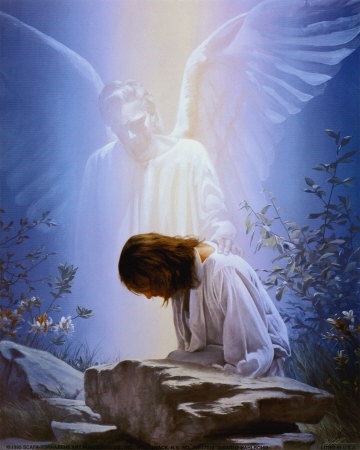
angelAt some point (whatever was the concept of “time”), this loving God creates our universe out of love, to give creatures the best thing creatures could have — Himself. This is what we, from inside our universe, call “the beginning” (Genesis 1:1). But “before” that (again, we don’t understand how “before” would work outside the time of our universe), God created spiritual or angelic beings to attend to Him. These angels are God’s servants.

“Later,” God created our physical universe, as a container in which to create us (Genesis 1:26-2:25). Unlike the angels, God creates us to be sons and daughters, not servants (Hebrews 1-2). Where the angels sweep the floors and tend the gardens in the house of God, we will dine at the Father’s table, be indwelt by the Spirit, and rule over a regenerated, perfected universe as “underkings” with the Son (John 15:15; Romans 8:15; Galatians 4:7; etc.). But I digress. For this discussion, our focus is on the angelic host, not on mankind.

Scripture gives us little information about the angels God created prior to / outside of the creation of our physical universe. Today, we experience these beings clearly as either good (“angels”) and evil (“demons”). In His day, we see in Scripture, Jesus went about casting out the evil spirits (e.g. Matthew 8:16; Mark 5:8; Luke 11:14), while benevolent messengers and servants of God (angels) go about proclaiming God’s word and doing God’s will in the lives of everyday people like you and me (e.g. Daniel 6; Luke 16:22; Acts 8:26). angels-and-demonsStill today, angels and demons both directly interact with the material world, though they are not of that world.

Angels and demons are not matter and energy and biology, like we are. They do not eat and sleep, like we do. They don’t have physical addresses, such that you could visit one’s house down on Jackson Street. They dwell in a spiritual realm with God (e.g. Luke 2:13; Galatians 5:12; c.f. 2 Corinthians 4:18). This isn’t a place to which you could take a cab or train or spaceship. It’s not a different physical dimension; rather, it’s a different kind of reality all together.

Some of the angels broke bad

The smartest and most beautiful of all the angels God created was named Lucifer. The Bible tells us Lucifer was jealous of God and wanted God’s power. So, he said to himself,

I will ascend to the heavens;
I will raise my throne above the stars of God;
I will sit enthroned on the mount of assembly…
I will ascend above the tops of the clouds;
I will make myself like the Most High. (Isaiah 14:13-14)

In summary… I, I, I… will be like God!

So, he turned on God and led a rebellion against Him. And as if that wasn’t bad enough, Lucifer was so winsome and persuasive and beautiful — like a “morning star”, the “son of the dawn” (Isaiah 14:12) — that a full third of the angels in heaven followed him into rebellion (Revelation 12:4).

As a result, God renames Lucifer and casts him and his fellow rebels out of heaven. Scripture describes him as “the great dragon, that ancient serpent, who is called the devil and ‘Satan’, the deceiver of the whole world — he was thrown down to the earth, and his angels were thrown down with him” (Revelation 12:9, c.f. Isaiah 14:12) … where he “prowls around like a roaring lion, seeking someone to devour” (1 Peter 5:8).

Now called demons, they influence people toward evil

What exactly does it mean for Satan to “seek someone to devour”?

SirensSatan and his demonic horde tempt people to rebel again God. They are the ultimate sirens — the mythical mermaid creatures who, in legend, captivated sailors with their beauty and song to such a degree that they would lure their ships in to being dashed on the rocks, and then reveal themselves as monsters and massacre the sailors. I’m certainly no expert in Greek mythology, but it would not surprise me to find that this myth has its origin in the concept of demonic influence. At any rate, that’s Satan’s game… to whisper lies in your ear…

  • God is a liar; He isn’t really good; you can’t really trust Him
  • Something on earth is more valuable than God and His law and love and Word
  • You are god; you are at the center of the universe; what you want is what’s important
  • Black is white; light is dark; good is bad; wrong is right; find your own truth
  • I’ll give you all the kingdoms of the earth if you bow down and worship me! (Matt 4:9)

Man still chooses right or wrong, but Satan and his cronies roam the earth day and night, tirelessly whispering, conspiring, influencing, and otherwise working against the Kingdom of God in their jealousy and hatred.

But Satan is a creature too

Here’s the rub… Neither is Satan acting in a vacuum.

Many people who hear about Satan’s ruthless efforts to destroy us begin to think that God might not really be in control of creation. For reasons that we will address in greater depth elsewhere, it’s important to understand that Satan is not some equal-but-opposing force who works against God at His level (the yin to God’s yang, or some such). SJesus wrestles with satanatan and God are not in any sense equals. They are not engaged in some roughly-balanced cosmic chess match, in which you and I are pawns, and Jesus is God’s power rook.
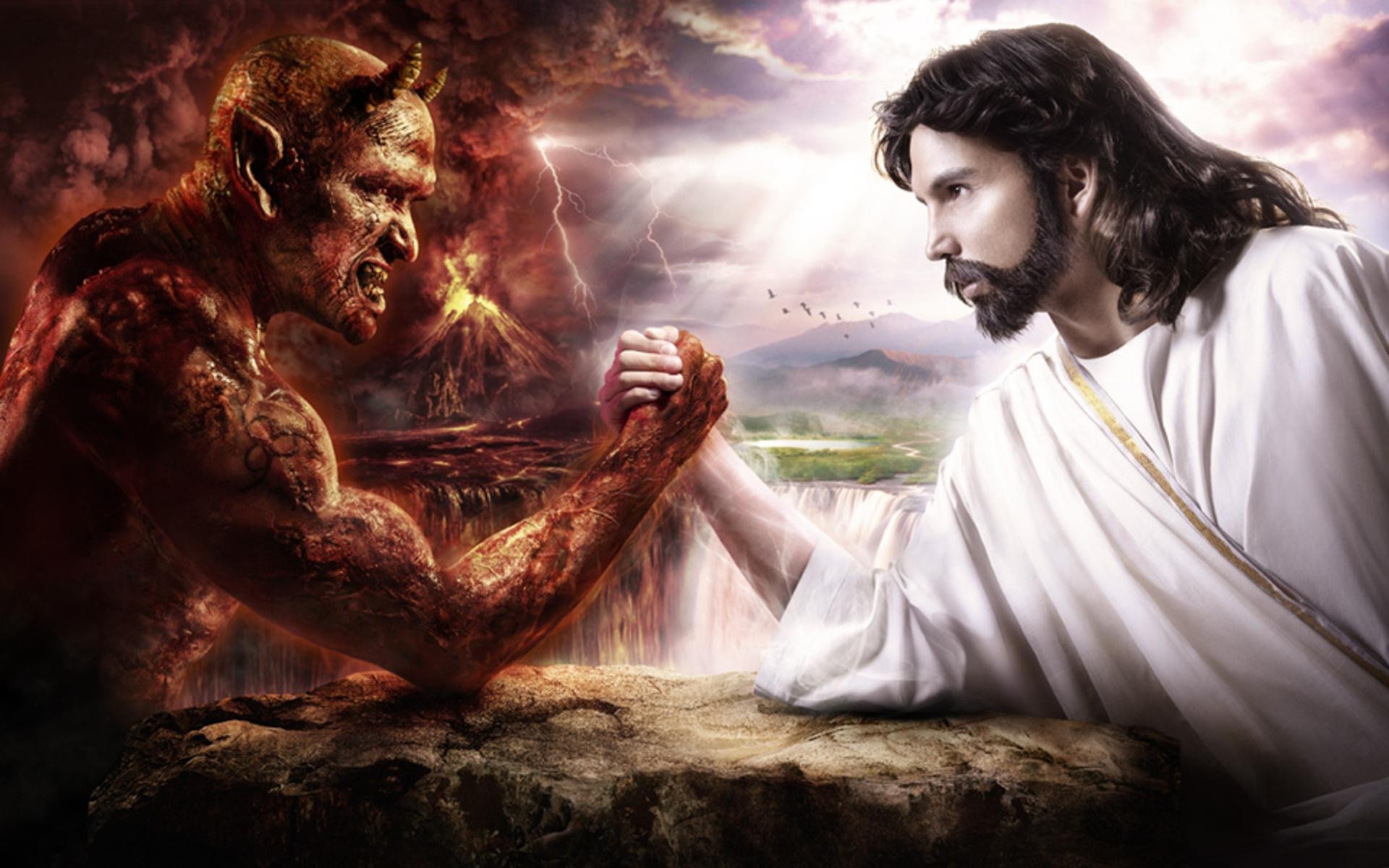
Although Satan is very powerful and exists in the spiritual realms, he is still a creature. He was created by God just like we were. He does exactly and only what God allows him to do, just like we do. Whether it’s two hydrogen atoms rubbing up against each other in a distant or your experiencing tragic illness, nothing in the universe happens without God’s direct awareness, involvement and control.

Key questions in understanding angelic beings

And this brings us to a series of very important questions which lie at the heart of the whole discussion of the nature of evil…

Can’t we say that God created evil?

No. God created choice. We (humans and demons) created evil … when we, with the power of our free will, rebelled against God.

Fork in the RoadDo angels have free will?

Yes.

God created animals (birds, fish, elephants, etc) without free will. They do what God commands them to do via their instinctive natures and the laws of the natural world.

God created angels and human beings with free will. They possess reason and the devastating power of independent choice. Both angels (1/3 of them) and people (every last one of us), have chosen death instead of life.

Do angels live outside time?

I think so. They are outside of our physical universe … in a kind of spiritual universe, which the Bible calls the “heavenly realms.” Maybe there’s some kind of time there, I don’t know. I don’t think there is. Rather, I suspect spirits do not experience time as we do. Instead, they have only one state of being. God creates them, and they are at all times, while they exist, the product of their choices. They do not make a choice, then sleep, then get up the next day, then make another choice … as we do. They are at all times the sum total of their decisions, just as we will be in heaven, when we are no longer inside our current concept of space and time. They are, and we will be, in a sense, permanently “locked in” to our destinies.

forced-perspectiveSo, angels have free will in the sense that they choose (once and for all in the process of their creation) to serve God or serve themselves. From the perspective of eternity, we humans are actually making that same choice. If you were to ball up all of history in our physical universe into a single “act of creation” — I like to use analogies like “giving birth” and “God’s painting a portrait” — then we too are making a once-and-for-all decision to submit to God in Christ or to go our own way. It’s just that we’re zoomed way in, inside the big choice, feeling seconds tick by that break it up into a zillion little choices. God does not suffer from that limitation. Neither do angels. But we do. From “in here” (inside space and time), we talk about angels choosing as if it happened at some point in the past. But not really; that’s just our perspective talking.

Can we say, then, that God is evil’s puppet master?

puppetsSortof. Remember that our human vantage point is inside time…

From that perspective, each of us makes moment to moment decisions out of our free will. It is also true that God is sovereign over all our decisions and their outcomes. So, in the great debate (which we can’t possibly exhaustively address here) between whether God sovereignly elects who will be saved or we choose to be saved, the answer is: both.

Also from our vantage point inside time, it appears that Satan’s choices are in the past (when in fact they are outside time). He is in the state he, from our perspective, has always been and always will be in. But suppose he is subject to the exact same rules of sovereignty-plus-choice that we are, except in his once-and-for-all-outside-time kind of way. Wouldn’t the same answer then apply to determining whether it was God’s sovereignty or his free will which led to his current state as master evil menace, scourge of the earth? I contend that it would. The answer is: both.

What are the key differences between angels and people?

So, angels are forever locked into their natures as good or evil. We, on the other hand, are not … yet. While there is still time, we can direct the flow of our lives toward a final decision to be redeemed and restored and reconciled to God. Fallen angels cannot. For whatever reasons and through whatever means — both incomprehensible to me, other than to say that God desired to shower goodness upon us because that’s what Love does — God made us in His image (Genesis 1:26-27), so that we could ultimately be adopted as sons. And He joined with us in the incarnation so that we could join with Him in eternity (Hebrews 2:5ff), again, to be adopted as sons (and daughters). And we have our mortal lives available to us to make that ultimate choice.

Some will say that didn’t help at all!

We’ve covered all kinds of ground and talked about many important things, but I think some might say that we are very close to being right back to the question we started with… Why does God allow suffering? If God is in control and He’s supposedly so good, then why does He allow my choices and my neighbor’s choices and Satan’s choices to cause me so much pain? I get all that about free will, but still, why doesn’t God prevent the suffering caused when we use our free will to make bad choices!?

Well, how would you suggest that God do that?

Option 1: Make my life better in spite of evil!

all-green-lightsI might ask God to make my life better. But would there be any way to do that other than at the expense of others — to exploit the resources of others’ lives to alleviate the suffering from my life? I think it’s pretty easy to see how it’s that kind of thinking that got Adam and Eve, you and me, and everyone else in the mess we’re in to start with. For a fantastic (and funny) glimpse into this unattractive option, check out the movie Bruce Almighty.

Option 2: Intervene to prevent evil!

Or, perhaps you’d like God to miraculously intervene and stop bad people from making bad choices and bad circumstances (in nature, etc) from occurring in the first place. And if God had gotten off His apathetic duff and done that kind of loving intervention all the way back to the Garden of Eden, then Eve wouldn’t have eaten the apple, because the serpent wouldn’t have tempted her, because God would have miraculously taken away from all of them their ability to make that bad choice. Or getting to the root of it, maybe God should have made human beings (or even angels) without the capacity to make bad choices in the first place. Just happiness and sunshine all the time.
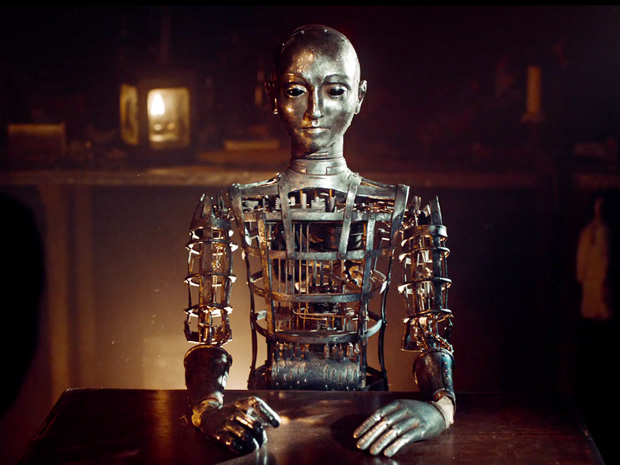
Automaton HugoAnd no free will … so no choice … so no capacity for relationship … and no love … so no point to the entire concept of creating the universe. You and your dog and the rutabaga in your garden would all be ontologically (in their nature) pretty much identical. So we would all have missed out entirely on sharing the amazing love of a perfect God.

Option 3: Reset the universe to “perfect”!

Or, why not have God wipe out all evil, regenerate everyone as incorruptible, and establish His kingdom such that every decision is perfect and Jesus reigns uncontested as a loving, righteous, inexplicably glorious King. Great idea! Don’t you see that this is exactly what God is doing? The problem is that we’re not very patient, and that we don’t understand what is involved in making such a thing as a perfect kingdom of redeemed sinners. And if you think you do, and think you could do it better than God is doing it, then you’re demonstrating that we are in fact idolatrous rebels so desperately need God’s grace!

Conclusion

In order for God to take away the choice to evil (and the suffering that results), He also has to take away the choice to good (and the beauty that results). You can’t have one without the other. Only having the choice to good means that you have no choice at all. And God apparently felt it was worth it to create us to be choosers … which is to say lovers or adulterers … adopted children or violent rebels … but not robots.

family walking together

It may be quite sensible for a mother to say to the children, “I’m not going to go and make you tidy the schoolroom every night. You’ve got to learn to make it tidy on your own.” Then she goes up one night, and finds the teddy bear and the ink and the French grammar all lying in the grate. That is against her will. She would prefer the children to be tidy. But on the other hand, it is her will which has left the children free to be untidy. The same arises in any regiment or trade union or school. You make a thing voluntary, and then half the people do not do it. That is not what you willed, but your will has made it possible. It is probably the same in the universe. God created things which had free will. That means creatures which can go either wrong or right. Some people think they can imagine a creature which was free, but which had no possibility of going wrong. I cannot. If a thing is free to be good, it is also free to be bad. And freewill is what has made evil possible.

Apparently [God] thought it worth the risk. Perhaps we feel inclined to disagree with Him. But there is a difficulty about disagreeing with God. He is the source from which all your reasoning power comes. You could not be right and He wrong any more than a stream could rise higher than its own source. When you are arguing against Him, you are arguing against the very power that makes you able to argue at all. It is like cutting off the branch that you’re sitting on.

— CS Lewis, Mere Christianity


The Goodness of God Series

  1. How do we know that God is good?
  2. If God is good, why didn’t I get what I want?
  3. Why do bad things happen to good people?
  4. Where does evil come from?
  5. How can a good God directly cause suffering?
  6. Should we actively avoid suffering?
  7. How can a good God send people to hell?
  8. Does God change His mind?
Posted in Real Life, Theology | Tagged , , , , , , | 4 Comments

My Least Favorite Caedmon’s Call Song

Caedmon's Call

I absolutely love Caedmon’s Call. These guys are my jam! They are incredibly deep, and have (in my opinion) perfected the art of combining a folksy, “90’s alternative” music style with deep theological truth. Even the name and cover of the album in which we find the song I want to discuss is a sermon (series?) wrapped into a single image containing a leaf and a single word. overdressedIt’s worshipful to me to know that God has made us with that kind of creative capacity. If we are but a glimpse, or image, of God’s creative nature, and creation itself is a broken, dim reflection of the what’s coming, how can one not be anxious for the Kingdom of Heaven!?

But I digress. For the moment, among the dozens of Caedmon’s Call songs I think are flat-out amazing, I want to tackle a particular song which ranks as one of my least favorites.

First, take a listen…

Second, here are the lyrics…

We’ve all got our burdens, our secrets and our shames
We’ve all been discouraged and watched love fall in flames
And when we’ve hit the bottom of all we can bear
When we need you

You rise like the morning sun, a pillar in the night
Who looked into the void and called it light
And you’re faithfully providing for the trouble that we share
When we need you you’ve always been there

Blessed are the poor all around the world
Your children living under war and oppression
Cause you’re the man of sorrows, they whisper up their prayers
When they need you

You rise like the morning sun, a pillar in the night
Who looked into the void and called it light
And you’re faithfully providing for the trouble that we share
When we need you you’ve always been there

And how do we know in the dark of the night
To call out for you, Lord, to come with your light
We were born with you hidden on our hearts
And now we need you

You rise like the morning sun, a pillar in the night
Who looked into the void and called it light
And you’re faithfully providing for the trouble that we share
When we need you you’ve always been there

Always Been There, Caedmon’s Call, Overdressed

Third, let me ask you a question…

What’s wrong with this song?

In many ways, it’s a great song.

It’s catchy and fun. It’s got a great sound that gets caught in your head. It’s packed with true statements about God. In fact, pretty much every line is true.

We do have problems. We do get discouraged. When we need God, He is absolutely there for us. God does in fact especially support the poor and oppressed. Jesus was in fact the “man of sorrows”, and when we struggle and pray in a faint echo of his earthly struggle, God does in fact hear our prayer and respond. In the dark night of the soul, when we cry out, God does indeed answer.

The chorus is deep and clever and lyrical and true…

  • God indeed rises like the morning sun – every day, new mercies, great faithfulness, light in the darkness.
  • God is indeed a pillar of fire that guides us by night, as well as a pillar of cloud to guide us by day … if we have the eyes to see.
  • God did indeed look into the void and call forth light (representing all of creation). He still does that in our lives. Where there is darkness, God brings light by His word and His power.
  • God is indeed faithfully to provide for us in all our times, both good and bad. We all share a life of troubles in this broken world — none of us is exempt — and when we are hurting, God particularly draws near to us.

So, what’s the problem?

The fundamental message of the song is, “God, when we need you, you’ve always been there.”

While this is in a sense true, I find it a dangerous way to think. This statement is fundamentally reversed. It obviously wouldn’t fit into the lyric of the song, but if I were writing this line, it would read: “God, you have always existed independent of us, at the center of all things, and any need we experience, we experience in the context of your ongoing goodness, power, presence and love.” Or something like that. (You can see why I’m not a musician!)

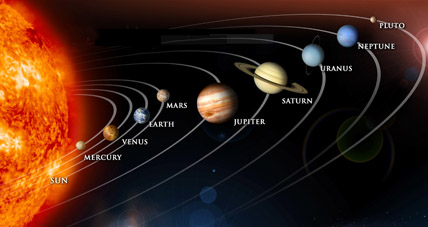
But the point is that any legitimate, helpful, worshipful view of the universe has to start with God. He is the center, around which everything orbits. You and I are not. Maybe a few things in the solar system orbit around the planets, but surely no one would dispute that the sun is the center! Solar SystemThere’s just too much subtext in a song like this that could lead one (perhaps unconsciously) to view the world as a place where I go about my business, doing whatever I want, whenever I want, mostly experiencing that all is well … and then … BAM! … trouble. Something breaks. Someone gets sick. From out of nowhere, suffering rears its ugly head. From my default position of self-sufficiency and self-actualization and self-provision, I have unexpectedly encountered a problem that is too big for me! On no! What will I do?!

I know, I will turn to God! When I need Him, He’s always been there.

There’s way too much ME in this worldview. The truth is that we don’t live the autonomous, self-sufficient lives that most of us seem to believe we lead. You do whatever you do because God enables you to do it. All your skills, gifts, abilities, reason, health and strength come from Him. You will take your next breath because God wills and enables it. The very atoms in your body hold together because God is actively holding them together as you read this. Your job comes from God. As do your relationships.

We exist in the context of God’s goodness.
He doesn’t exist in the context of our need.

wall-of-pictures

We need better pictures of God

God is not your buddy or your coach. He doesn’t follow you around meeting your needs. He isn’t a lifeguard, who leaves us alone to play in the pool until we get in over our heads. He’s a terrible, all-powerful King who dwells in unapproachable light AND a good Father who loves us beyond our capacity to understand. Both terrible and loving. God serves us, but not like a household servant, a vending machine or a divine backup plan. His service is that of a sacrificial Lamb, who takes away your sin with His broken body and shed blood (John 1:29; 1 Peter 1:17-21). He is the strong Parent who disciplines his children to facilitate their growth (Proverbs 3:12; Hebrews 12:4-11). He is the Gardener who prunes vines to yield more fruit (John 15:1-17), the master Craftsman who molds clay to create a masterpiece (Jeremiah 18:1-6; Isaiah 64:8), the Goldsmith who refines gold to maximize its purity (Hebrews 12:29; Job 23:10; 1 Peter 1:3-7).

Not a lifeguard, but the Lord of life. Not an assistant, but a servant King.

Now, I’m quite sure that the members of one of my favorite bands do not by-and-large subscribe to a me-centric worldview. But amid the pressures to create catchy, innovative art or while trying to remain clear-headed in a din of overwhelming cultural voices, it’s easy to overlook foundational, unalterable theology. Whether we’re writing songs, preaching sermons, or just making our way through our days looking for opportunities to share the good news of Jesus with the people we meet in everyday life, we have to be careful that the picture we paint of God is a true and real one. Keep in mind that likely more people than you know are watching and listening. And as we hum along with catchy tunes, let’s make sure we’re not reinforcing faulty worldviews in our minds, which in turn could result in significant unintended implications for our spiritual formation.

It’s not as catchy, but…

When I rise with the morning sun,
I will acknowledge the God who guides me and lights my path,
Who created and owns all things, even me,
He faithfully provides for the troubles that we share,
And no matter my circumstances, I will worship Him,
And when He calls my name, I will always be there.

framed picture of the bible

Posted in Psalms, Music and Worship, Theology | Tagged , | 3 Comments

God’s Goodness vs Human Suffering

Sad Young Woman

Why do bad things happen to good people?

(Question 3 of 8 in the Goodness of God series)

A Brief Word of Encouragement

Listening HandsHaving talked about God’s goodness and how it compares to wish fulfillment, I feel it’s important to interject a word of encouragement and compassion. It’s easy for someone like me — who sees blessing after blessing from God in my life — to treat the topics of pain and suffering or good and evil essentially clinically. It’s my intention to seek after what’s true, but also to acknowledge that life can be truly and legitimately painful. If the curse of the Fall (which we discuss below) has resulted in anything, it’s that life is hard.

I would encourage anyone reading this to try to understand my words not as an attempt to invalidate your pain or to claim that life would or be easier if you just made better choices or had greater faith. Instead, I hope to put our lives and our suffering and our analysis of God’s character in their proper context. I’ve met people who, in my view, are suffering unimaginably but who exude joy and stand as neon signs that point to God’s goodness (as they love and trust Him even though they’re hurting). And I’ve met people who grumble and complain endlessly even though they have resources that rival whole regions of people in the majority world and have almost no practical experience of pain in any objective sense.

So much hinges on faith… on what you believe … on how you view God and yourself. My hope is that these posts will evoke clarity, perspective, and deeper worship of God, even though life is hard.

Good people?

That said, you’d better sit down for this one… Because the first thing we need to tackle is a truth some people find very challenging … the fact that there are no “good” people. The Bible is extremely clear. “All have sinned and fall short of the glory of God” (Romans 3:10-26; c.f. Psalm 53:1-3). Even Jesus said, “Why do you call me good? No one is good except God alone” (Mark 10:18; Luke 18:19).

That means you. And me. And your really sweet Aunt Betty. And the Pope. And the person who was viciously abused. And their abuser. And the child who dies of cancer. And their doctor. And the neighbor you really like who is ultra friendly and helpful and volunteers at the homeless shelter but doesn’t think much of Jesus. And your church’s most dedicated and saintly member. And the very authors of Scriptures themselves.

Not picked for the teamNobody makes the cut. Nobody is good!

Wait a minute! What “cut”?!

Well, Jesus said it, “Only God is good.” The problem here is how we understand “goodness”. We think of goodness as “grading on a curve”. God does not.

God is infinite, perfect holiness. We are … um … somewhat less than that. When you assess “goodness,” you may be asking if a person is “better” (whatever that would mean) than Hitler or Stalin, or better than you are, or better than someone else you know that you don’t like very much and have a subconscious need to feel superior to. You may really be saying that they are “good enough for your standards,” unconsciously believing that God then becomes obligated to treat them to an eternal stay in heaven. You may even be implying that because you assess yourself and your friendly neighbor both to be “good” that you are free from any obligation to repent of sin or to be better than you are.

But I can assure you that God assesses our “goodness” in none of these ways. The only thing God compares us to is Himself. But if you think about it, He Himself is the only thing that it would make any sense for God (infinitely great) to compare anything else (by comparison, infinitely less great) to. He’s not using other people or the principles people dream up to measure you (or me). He measures us against Himself.

So, rather than grading on a curve, God’s exam is pass-fail. He asks, “Are you perfect as I am perfect?” (Matthew 5:48) Black or white. True or false. No third option. No progressive scale. No “almost” or “sort of”. There’s perfect, and then there’s everything else.

And you and I are most emphatically, “Everything else.”

Bad question!

Judge holding gavelSecond, it’s a bad question. The basic presuppositions of the question put us back in the place from which we feel we have the right to assess God. Calling myself “good” fundamentally means that I consider myself to be the ground for deciding who and what is or is not good. It makes me the measuring rod. And I have deemed it to be unjust and unfair for things I don’t like to happen to me or anyone else I deem worthy. Bad stuff can happen all day to people I don’t like or don’t think worthy of goodness, but God better pony up for the folks I feel deserve it!

The very question puts me idolatrously at the center of the universe. It shifts the locus of measurement of all things from God to me. What matters are my judgments, my opinions and my incredibly subjective and uninformed view of the universe, including the person I believe is being wronged. Even if it wasn’t a radical overstep of authority, what makes us think that we have the wisdom or context to judge?!

So, back to our original question, “Why do bad things happen to good people?” Maybe a better way to word this question would be to ask why there is pain in the lives of people. Why do people suffer?

Some “bad things” suffering comes from our bad choices

Bad ChoicesSometimes what we bemoan as unwarranted suffering is in fact a direct result of our bad choices. Many are poor who chose not to work or work wisely or work well. Many are injured who took unjustifiable risks. Many are unhealthy who shunned healthy choices and gym memberships all their lives. Many are relationally isolated because they have persistently engaged in activities and patterns of thinking which undermine their emotional development. Etc. Although we are easily tempted to overlook or underestimate our poor choices and consider ourselves victims, and (to a lesser degree) assess others the same way, God does not suffer from the same inability to accurately perceive our circumstances. “God is not mocked; we reap what we sow” (Galatians 6:7).

Bad Choices

A person clearly heading toward a life of deep fulfillment and joy. How sad!

The fact is that there are real consequences to foolish and sinful choices. Even if we’re playing by the world’s rules, our actions can lead to disaster. It’s legal to trample the poor to get rich, or hate your sister, or be bitterly jealous of your neighbor. It’s legal to smoke pot if you’re in the right state or drink alcohol if you’re old enough. It’s legal to sleep with your boyfriend before marriage, or remain “unattached” and have dozens of sexual partners, or to marry someone of the same gender, or even to declare that you have no gender. Someday, you’ll be able to be married to a bunch of people, or your pet cat, or maybe both. That doesn’t mean there won’t be (possibly severe) consequences, even if you don’t realize you’re experiencing them.

What matters is that we live up to God’s law, not man’s. As Creator, God is the one with the owner’s manual for human life. You’d probably see through someone who jumps off a cliff and complains that they fell and broke their leg, or who jams a peanut butter and jelly sandwich into the DVD player, and then complains that it’s not working properly. But that’s exactly what many people are doing with their few short years of life. They defy the laws of God and the laws of nature every day in hundreds of multiplied thoughts, words and deeds. They blaspheme God, mock His word, and disregard His warnings about every aspect of life — start with the Ten Commandments (Exodus 20:1-21) and work your way out from there; or if you really want to be humbled, try the Sermon on the Mount (Matthew 5-7). And then they blame God when “bad things” happen.

bad-choice1I fully realize that this category doesn’t cover every circumstance (which is why there are several more categories coming), but I would suggest that far more of the circumstances we call “trials” or “unjust suffering” come as consequences for our sinful choices than we’re typically willing to admit. Let’s at least start here, take God seriously, ask Him for wisdom, read the Bible, and do what it says … and see if that doesn’t start to make a serious difference in the way our lives work. It will absolutely make a difference in eternity.

Some suffering comes from the bad choices of others

listening2Even if we were to live a perfectly sin-free life, always loving others, always acting with godly wisdom, always choosing God’s way over man’s, always following God’s law… Life still wouldn’t be easy. People might then be able to call us “good,” but “bad things” would still happen to us. Look at Jesus. He was all these things — the perfect Son of God walking among men — and they chased him his whole life, paid one of his friends to betray him, beat him viciously, mocked him openly, executed him, lied about his rising from the dead, and have been killing his followers for 2,000 years … because they (imperfectly) try to love people and show them the way to know God.

We aren’t good. But even if we were, the world isn’t.

Your brokenness and sinful choices don’t just affect you (no matter how hard you try), they affect others around you. Aunt Betty, your helpful neighbor, and all the other people we talked about above experience the same thing. And so do the choices of all the other people they’ve ever met, and the billions of people around the world today, and the billions more throughout history — creating waves of badness, and being hit by the waves of others. I’ve never met Barrack Obama or Martin Luther or Mother Teresa or Adolf Hitler, but their lives and choices affect me profoundly. I’ve never met the obscure woman in the Philippines who gave up her little boy for adoption 12 years ago (whom my wife and I adopted), or the warlords in Algeria who keep food and clean water from the people prompting my church to start building wells or FMSC to start sending meals, or the Roman soldiers who burned Christians at the stake in Nero’s gardens and were so stricken by God that they came to Christ and became the Church in Rome to whom the Apostle Paul wrote the most concise theological treaty on God’s grace and Christ’s atoning sacrifice the world has ever known (read it). But every one of these people, and a billion more, has affected my life and yours. Everyone’s choices affect everyone else. And the sin-soaked nature of mankind makes most of those choices very, very imperfect, wreaking havoc across the face of history.

suffering4So, over and over again, people — whether down the street or around the world or a thousand years ago — make choices that create a debt you, in part, have to pay. Their choices damage you, and you’re left with a critical choice to forgive and move on or to nurture bitterness. James MacDonald is fond of asking, “Are you getting better, or getting bitter?” Will you play the victim? Or will you rest your inner life on the reality that all have sinned (The Apostle Paul) and that there, but for the grace of God, go all of us? (Paul Bradford)

One might ask, “Why are people’s choices so bad? Where did those evil tendencies come from?” These are very good questions. We’ll address them at one level below, and on another level in a future post. For now, the focus is on the willingness to admit that our sin really is so bad that it breaks not only our own lives, but the very nature of the world.

Some suffering comes from cosmic brokenness

suffering8In this world, it’s not just people and their choices that are messed up by sin, but the very fabric of the universe. When Adam and Eve, representing all of mankind through all of history, choose to defy God in the Garden of Eden, God cursed both them and the world (Genesis 3:14-21). This broke the very laws of physics in the universe. Death was introduced — it was never meant to be, but it is now in play for people (19b), for fallen angels (v15, c.f. Revelation 20:7-11), and for animals (v21). Work became hard (vv17b-19a). Relationships became dysfunctional (16b). Children became painful to bear and to rear (16a).

You might say, “So it was God’s fault everything’s broken [because He cursed the world]?!” Again, let’s table that question for a future post. I will tackle it!

You might also ask, “Wait a minute! What right do Adam and Eve have to represent me?! Maybe I would have chosen better or more wisely than they did?”

Really?

Their choice in the garden was whether to allow God to be God or to adopt Satan’s award winning approach to creaturehood… “I will decide for myself what is right and wrong, thank you very much! I don’t need you, God, to tell me what to do. You get off the throne, and I’ll climb right on up there and do things my way!” (Isaiah 14:13-14, my paraphrase). Unless you’re saying that in every choice you make every day that you have perfectly done what God would do and not done what God would forbid, then you and Adam and Eve would have gotten along swimmingly. I contend that either you or I could easily have tagged them out and made history’s most costly decision in their place!

suffering6In any case, whether it was them in the garden or you and me yesterday, the fact is that the world is now cursed and broken in direct consequence of our sin. Where God intended there to be quiet streams and lands flowing with milk and honey, there is in fact flood and famine, earthquake and tsunami. Where there would have been enough for everyone, now we live in a world of scarcity, where some live if palaces and others starve in gutters.

For example, did you know that the average American consumes $90/day, while 40% of the planet’s 7 billion people lives on less than $2/day? (read more)

A significant cross section of your suffering and the suffering of others comes not necessarily from the direct, sinful choice of a single human being (yourself or otherwise), but from the collective sin of human beings in general weighing upon creation. When a little town in Missouri is wiped out by a tornado, it’s not because your cousin Stella sent the tornado directly upon them. And it’s not because God is playing a sick game in which people get splattered on the pavement now and then. It’s because you and Stella and Adam and Eve and I all told God to get out of Dodge, and started raping and pillaging each other and the world around us. And now everything is massively broken … all the way down to the 2nd law of thermodynamics, the West Nile virus, and Missouri’s weather patterns.

Some suffering comes from our minds

Another great source of suffering is our imaginations. Attitude is everything. In life, you really have very little control over your circumstances — we were just talking about the laws of physics, viruses and weather patterns — but you have a ton of control over how you react to your circumstances. Some people cry foul against the universe and curse God when their lives hit even the slightest speed bump. Others (and almost everyone knows at least one person like this) seem to take punishing blow after punishing blow, and never lose their joy. They suffer, but they spend their real focus looking for what’s good and right and beautiful, trusting God in the midst of pain or sometimes simply just looking for ways to stay positive.

In other words, you don’t have to let painful difficult circumstances beat you down! You can choose joy even when it hurts. You could be positive, even when it’s easy to point to a circumstance that is anything but positive. Aside from a literal chemical imbalance, we all have that choice.

sensitive-womanSimilarly, we have the choice to wear ruts in our minds along the paths of negative thinking. Nurturing negative “Woe is me!” thoughts can take you to very dark, very difficult places. Some people so embrace their thoughts about how hard life is that even things that are good can be seen through dark lenses, and things that truly are difficult can be massively amplified in their power to drag us into despair and defeat.

This is, by no means, some kind of “think positive and all will be well” pep talk. It should go without saying that I understand some suffering to be very real. But wouldn’t it be better to let little things roll off our backs, to search for the positive even when we’re hurting, to embrace and cling to what we know to be true and right and beautiful, and keep a little distance in our hearts from what’s horrible and wrong? There is no escaping the brokenness of this world, but there is also no good reason to dwell on how broken it is. Instead, fix your eyes on things above! (Colossians 3:2) Rather than feeling like your world is bad (and possible judging God as bad by extension), get into Scripture and learn who God really is. Get someone who loves you too much to just soak in your pain with you, and ask them to shed perspective on your life from the outside. Some things might not be as bad as you think they are. And if you dwell on “the things of earth”, at least dwell on how much you have (vs what you don’t have), and on how amazing all those things are. For almost everyone, it would take a really long time to enumerate them. In fact, that’s exactly my recommendation… take time to enumerate them. If you perceive your life as painful and hard (and it may very well be), get out a notebook and write down all the good things you can think of. Start with little things — the sunrise, the flowers, the fact that you’re alive, a good friend, a family member, a point of good health, something that doesn’t hurt, etc. But remember that all of life breaks and fails, only God and people are eternal. Train yourself to fix your mind on those things.

A Spiritual Perspective

One reality of life in God’s created universe is its temporary nature. Christians know that as we journey through life, we do so as “aliens and strangers” traveling in a foreign land (1 Peter 2:11). We are not to settle here; not to make this world our home. Those who build their spiritual house on the foundation of this world, do so as one who builds his house on sand … and there is a frightening inevitability to the coming storm which will someday utterly lay waste to what we’ve built. But the one who builds her spiritual house on Christ endures forever (Matthew 7:24-27).

To this point, we have been talking about suffering originating from the created world and the sin of man (creatures in that world). But as sojourners in the land of this world, our concern should be chiefly with “things above, not on things that are on earth” (Colossians 3:2). So is it with thinking through suffering and pain, the deepest, most significant sources of which come not from “flesh and blood,” but from rulers, authorities, cosmic powers, and forces in the spiritual realms (Ephesians 6:12).

Up next, we will raise our eyes to the horizon of this world, to explore how we are, every day, impacted by those “spiritual realms.”

earth-horizon


The Goodness of God Series

  1. How do we know that God is good?
  2. If God is good, why didn’t I get what I want?
  3. Why do bad things happen to good people?
  4. Where does evil come from?
  5. How can a good God directly cause suffering?
  6. Should we actively avoid suffering?
  7. How can a good God send people to hell?
  8. Does God change His mind?
Posted in Real Life, Theology | Tagged , , , , , | 2 Comments

To hear Your voice and live

Today I choose to follow You
Today I choose to give my ‘yes’ to You
Today I choose to hear Your voice and live
Today I choose to follow You

As for me and my house
We will serve You
As for me and my house
We will spend our lives on You

Wonderful Counselor, Everlasting Father
Eternal King, Lord of Hosts
Willingly we follow

Today I choose to follow You
Today I choose to give my ‘yes’ to You
Today I choose to hear Your voice and live
Today I choose to follow You

Brian Doerkson, Today


Lion at SunriseThe decision to follow Christ is not something we come to once. It’s not a transaction that we close or an annuity from which we, having purchased it, receive a dividend.  Rather, following Jesus is every day … moment by moment … throughout all of life. I stumbled across this song, and I love it. I know very little about Brian, but I heartily endorse the spirit of this song… Today, I choose. Today, I follow. Today, I say “yes”. Whatever the question, I trust You, God, to know the ultimate answer. So as small and feeble and ignorant as I am, my answer is “yes”.

Help me to spend my life on you, Lord! Forgive me when instead I spend my energies questioning and fearing and doubting and demanding, or even on overt rebellion. Give me the spirit of Samuel that answers when you call, “Speak, for your servant is listening!” (1 Samuel 3:10), and of Isaiah who said, “Here I am, Lord. Send me!” (Isaiah 6:8), and of John who said, “Amen. Even so, come, Lord Jesus!” (Revelation 22:20). And give me the spirit that hears the voice of life and is brought alive in its hearing (John 5:25-29).


“Truly, truly, I say to you, an hour is coming, and is now here, when the dead will hear the voice of the Son of God, and those who hear will live. For as the Father has life in himself, so He has granted the Son also to have life in Himself. And He has given Him authority to execute judgment, because He is the Son of Man. Do not marvel at this, for an hour is coming when all who are in the tombs will hear His voice and come out, those who have done good to the resurrection of life, and those who have done evil to the resurrection of judgment. (John 5:25-29)

Posted in Psalms, Music and Worship | Tagged , | Leave a comment

God’s Goodness vs Wish Fulfillment

Disappointed PuppyIf God is good, why didn’t I get what I wanted?

(Question 2 of 8 in the Goodness of God series)

Although it might not seem like it at first blush, I think this question could be the greatest barrier to a life-giving belief in and appreciation of God’s goodness for most modern American Christians. There are many subtle and secondary variations, but I suspect that those in our culture who doubt God or question His goodness do so primarily because they have boiled their assessment of God’s character down to a single criterion: Did God give me what I wanted (needed, deserved, asked for, etc)?

What we deserve

We deserveWe play an extremely dangerous game when we demand from God what we think we deserve. The Bible is clear that what we all actually deserve is death — eternal punishment for sinful rebellion against an infinitely holy God. Scripture is quite clear! For example, Daniel 9 says, “To you, O Lord, belongs righteousness, but to us open shame, [because we] have not obeyed the voice of the Lord our God by walking in his laws, which he set before us by his servants the prophets.” (see Daniel 9:3-19, c.f. James 1:15; Ezekiel 18:20; 2 Thessalonians 1:9, etc)

We do not deserve long and healthy lives. We don’t deserve good jobs. We don’t deserve happiness. We don’t deserve good friends, full tables, comfortable pillows, fulfilling hobbies, loving spouses, healthy children, fond memories, large bank accounts, or any of the other myriad things we demand from God. Whatever you may hear on TV or feel you can extrapolate from America’s founding documents, none of these things are “inalienable rights”.

And we certainly don’t deserve to know God, walk with God, be loved by God, and live eternally with God as His adopted kids. God may choose, out of His goodness, to give us these things. But we don’t deserve them!

Instead, what we deserve is death, separation, punishment, and rejection. These are the wages which our sinful choices have earned (Romans 6:23). So we would be wise to tread lightly in throwing around indignation about not getting what we deserve.

What’s amazing is that, in His great mercy, God actively gives us exactly what we do not deserve (2 Corinthians 5:21; Ephesians 2:4-9). This is the definition of “grace”. This primarily takes the form of life in Jesus when we deserved death in ourselves. And if God had stopped there, none of us would have the right to grumble. Our grumbling is a massive affront to God; a rebellious slap in His perfectly-loving face. But in addition to the cross (which is everything), most of us in fact do have nearly everything I listed above — from health to wealth to comfort to luxuries most people in history couldn’t have imagined. These are good and perfect gifts that come down from the Father of Lights (James 1:17).

So it takes a bit of nerve to accuse God of wrongful unfairness, imply that He hasn’t been good to us, or claim that He’s in any sense brought us up short in life … because something in our incredibly blessed, largely comfortable lives didn’t go the way we wanted it to or felt it should have.

What we desire

We deserveLet’s face it, we really want our lives to be a certain way. In fact, I don’t think it’s being unfair to admit that most of us demand that our lives be a certain way. We want some things and not others. We want them at certain times — not sooner or later than we plan. We want specific things from our relationships. We want safety. We want security. We want comfort. We want wealth. We may even want righteousness or a godly life. And we want them a) now, b) in increasing measure, and c) to be amplified in our children. (How many times have you heard someone say, or maybe said yourself, “I want my kids to have what I never had”?) The human heart, especially when blended with even the slightest affluence, gets pretty pushy and demanding, pretty fast.

We have countless desires, and if God doesn’t make them happen – and on our terms, no less – then we question His goodness. Not only is that unfair, it’s foolish. You don’t run God’s universe; He does. If you spend your life “grading” God’s goodness based on how often, how quickly, and how thoroughly you get your way, you’re going to be miserable … a lot. Life just doesn’t work like that.

What God desires

Lamb Lying in Green PastureHere’s the deal… God’s goodness isn’t demonstrated by how He fulfills your desires. Rather, we are invited to make God’s goodness to be our greatest desire. And when we do, God truly does give us what most we long to have … whether we realize it or not. This is what the Psalmist means when He says, “Delight yourself in the Lord, and He will give you the desires of your heart” (Psalm 37:4). In other words, if you love and trust God … if God means so much to you that you light up when He enters the room (so to speak) … if you invite and allow Him to rule in your heart … then it will change you. You will begin to dream of having the things that God already dreams that you would have. And God will give you those things in great abundance.

I’ve heard this concept paraphrased, “If you take care of what’s on God’s heart, God will take care of what’s on your heart.” Maybe. But I don’t like that way of thinking at all. It’s very American, but I’m not sure it’s very biblical. It comes too close to saying that if we identify what God wants for us in our lives and work hard to do it, then God will be obligated to give us the stuff we wanted to have going in — but in some sense put on hold or subjugated to our perception of God’s will. It comes too close to bribing God.

Let’s walk through an example…

God and the Ferrari

FerrariI want a Ferrari. It’s been “on my heart” for years. But I’m a Christian now, and I recently learned that God wants me to go to church, be nice to people (even mean people), and take care of widows and orphans. So, while I’m saving up for my Ferrari, I start doing those things … knowing that God will be proud of my good work, and hook me up. I’ve taken care of what’s on God’s heart, now He gets me a Ferrari because He’s amazing and wants to take care of what’s on my heart in return for doing His thing.

Um … not exactly. Try again …

I want a Ferrari. It’s been “on my heart” for years. But I’m a Christian now, and I recently learned that God wants me to go to church, be nice to people (even mean people), and take care of widows and orphans. So, while I’m saving up for my Ferrari, I start doing those things … and wake up one morning to realize that I don’t care about Ferraris at all any more. God has been changing me. I love being with my church family, I look for people to whom I can show Christ’s love, I’ve adopted a child, I serve at a nursing home, and I’m continually trying to figure out how to live on less and give more to widows and orphans. I don’t think God owes me; but I love serving Him. Somewhere along the way, I stopped saving for the Ferrari; I don’t even remember when. I drive a used Honda, and I’m fine with itHonda. In fact, I rarely think about my car at all. God is pleased (and glorified), and He seems to continually provide new opportunities for me to love, serve and give to Him, and to others. I am seeing people come to Christ and be loved instead of lonely, full instead of hungry, hopeful instead of despairing … and I look more like my Father every day.

I have delighted myself in God, and He has given me the desires of my heart.

Which god is “good”?

These two scenarios paint very different pictures of God’s character. Which god would we call “good”? Is it the Ferrari’s-R-Us god, who gives us what we want, especially if we earn it by knocking a few items off His checklist first? Or is it the give-yourself-away God, who bids us to set aside our immediate desires in favor of being changed little-by-little to become more like Him (one who gives us new desires)? One of these “gods” fits neatly into our affluent self-centered culture; the other does not.

It’s important to remember that God is a loving Father. He is interested in your spiritual maturity (which leads to fullness of life), not your happiness (which is fleeting by comparison). He’s not about granting wishes, He’s about building character that produces lasting joy (James 1:2-4). Whether you’re happy or comfortable or satisfied for a few moments is of little concern to Him. Whether you grow up into the likeness of His Son, and increasingly fit into His family, such that you’re at home in His house and satisfied for all eternity … that draws the attention of the Father!

CS Lewis puts it this way in his amazing book, Mere Christianity:

Christ says, “Give me all. I don’t want so much of your time and so much of your money and so much of your work. I want you. I have not come to torment your natural self, but to kill it. No half measures are any good. I don’t want to cut off a branch here and a branch there. I want to have the whole tree down… Hand over the whole natural self — all the desires which you think innocent, as well as the ones you think wicked — the whole outfit. I will give you a new self instead. In fact, I will give you myself; my own will shall become yours.

It’s okay to have dreams

Superhero kid dreamThis does not mean that we have no wishes or desires, no wants or dreams to bring before the Lord. As our perfect Father, God desires not only to hear from us but to give us good things. Put yourself sometime in the position to observe a loving human father and his 4-year old son. Take note of how silly and trivial the child’s requests are and how seriously they are taken by his father. That’s totally a picture of us with our Heavenly Father!

God loves His kids! If you are His, then He hears your requests and welcomes them. And He always responds, not out of obligation or expedience, but out of His goodness, wisdom and love. Not in a way we always understand or would have envisioned, but always rightly and for our good. This is how Jesus puts it…

Which one of you, if his son asks him for bread, will give him a stone? Or if he asks for a fish, will give him a serpent? If you then, who are evil, know how to give good gifts to your children, how much more will your Father who is in heaven give good things to those who ask him! (Matthew 7:9-11)

It’s better to have a loving Father

Father and sonDon’t let your inability to comprehend God’s responses detract from your sense of His goodness. If God doesn’t respond to you in a way you recognize or on a specific timetable, that doesn’t mean He isn’t good. That just means you don’t understand what He’s doing. And that makes sense, if you think about it. What 4-year old really understands how his father makes decisions on his behalf? How could he? He wants candy for every meal, but his father withholds it and serves veggies instead. Does that make his father evil? Of course not! He wants to ride his tricycle out into the street, but his father grabs the boy, scolds him, and turns him around to play in the yard. Does that mean he isn’t good? No! If anything, we see the father’s goodness precisely in that he did NOT let his son have his way!

Similarly, God’s goodness does not hinge on His responding to us the way we want Him to. Often, the problem isn’t God’s goodness, it’s our demand to eat candy and play in the street. Maybe God withholds what we’re asking for (demanding?), because He loves us and knows that what we want wouldn’t be good for us to have. If God gives me a Ferrari, I may never develop the ability to be content with a used Honda. If God gives me the other stuff I’m demanding from Him in order to be happy, I may never learn to trust God in the midst of need. Maybe God sees in your heart too great a potential to worship shiny toys. Maybe He knows that if He gives you a Ferrari, you’ll want a Lamborghini by the following Christmas. Maybe your soul will be demanded of you by Labor Day, and a Ferrari is the last thing you need in this crucial time of learning to cling to God on the eve of meeting Him face-to-face.

dad-with-kidsYou might be saying, “But I don’t want something stupid like a Ferrari! I just want to have kids or a husband who loves me or a job that pays the bills or to have my nephew back who died way too young!” I get it. None of those things sound unreasonable to me either. But that’s not the point. If a 4-year old has trouble understanding why His Father makes the decisions he does, but knows intrinsically that his father loves him anyway, how much more do we need to lean into trusting God and not rest our faith on our ability (or inability!) to understand His ways?! How much more of a gap is there between us and God than between any 4-year old and his earthly father?! And that includes knowing what’s best for us! You must remember that God is all-powerful and all-knowing and always working for your good, whether you see how or not. One of the great battles in our affluent cultural context is to simply trust that God is doing what’s best, regardless of how well our lives match up to what we envisioned they would be.

If we claim to know anything at all about God’s character, then we must bring our hopes and dreams before Him with open hands. Far from a kung-fu death grip on our desires, we must train ourselves to be satisfied simply to be with Him and eager for His will to be done in us. If God chooses to withhold something we desire, then we trust Him and rejoice that He loves us and is far wiser than we are. And if God subsequently changes our hearts / our desires, then we rejoice even more, because He has counted us worthy to be made more like His Son. In short, we value what God values… to be far more interested in God’s molding our wishes than that He fulfills them.

This is what it means to come before our good God in faith. He’s a Father, not a vending machine. He’s a King, not a genie. He’s a Redeemer and Reconciler of hearts, and a Molder of clay, not a wish granter.

Potters hands

The dangers of getting my way

So, when we bring our desires before the Lord, sometimes He seems to say “no” because He knows best, and sometimes He changes us so that we forget about our original desires in favor of something greater. In either case, we must be careful not to misjudge God’s goodness. But sometimes, God gives us exactly what we ask for … extremely good gifts, sometimes even in unanticipated abundance. In this case, we must also be scrupulously careful to rejoice primarily in the Giver, not the gift.

Warning Danger AheadThe human heart is particularly gifted at making the thing God gives us to be god itself. It’s crazy how fast we forget that God is the provider of all the good things in our lives, not we ourselves. Moses warned the people of Israel about this very danger when God brought them into the land He had promised them. And if it was true for them, imagine how true it is for us in the face of the unprecedented affluence of our modern American culture.

Hear Moses’ warning…

You shall eat and be full, and you shall bless the Lord your God for the good land He has given you. But take care, lest you forget the Lord your God by not keeping His commandments and His rules and His statutes, which I command you today, lest, when you have eaten and are full and have built good houses and live in them, and when your herds and flocks multiply and your silver and gold is multiplied and all that you have is multiplied, then your heart be lifted up, and you forget the Lord your God, who [gave you everything you have]. (Deuteronomy 8:10-16)

The real danger we face is not that God would withhold what we ask, but that He would give it! Consider for a second that getting your way might actually warrant your greatest caution … “lest you forget the Lord your God.” This particular tendency toward short memory is, in my opinion, precisely what has led to the prevalence of this question in the first place. It’s not that we don’t have what we want, but that we have way too much of what we want, and have forgotten not only our real needs but the One who gave us such abundance in the first place.

Conclusion

We’ve covered a lot of ground, but we keep coming back to the primary point… God’s goodness doesn’t consist in His granting our wishes.

  • We are way off about what we deserve, but God shows His goodness by giving us what we don’t deserve.
  • We complain that God hasn’t given us what we want, but God shows His goodness by withholding harmful things, and gives us greater and more lasting things than we ask for.
  • We want unimportant or even dangerous things, but God shows His goodness by changing us to look more like Jesus and to increasingly desire what He dreams for us.
  • We ask God for things we don’t understand, but God shows His goodness by showering fatherly blessings upon us out of His understanding of what’s best for us rather than our own.
  • We are given more than we typically realize, but God shows His goodness not only in the giving, but by warning us not to forget where all those good things come from.
  • In the ultimate demonstration of love and favor, God shows His goodness by tearing out our hearts of stone and replacing them with hearts of flesh (Ezekiel 36:26). He gives us Himself, and makes us like Him! And that is enough!

As we set about to navigate a world filled with so many things we could desire, dream about, or even demand, let us be careful to fix our eyes on Jesus! There is nothing higher or better we could possibly be given than to be adopted into God’s family and molded into the image of His Son. And that is exactly what God is actively pursuing in the lives of those who commit their way to Him. If we make that our wish, then God’s goodness ensures that He will fulfill it in abundance.

Quiet Waters

The Lord is my Shepherd; I shall not want. He makes me lie down in green pastures. He leads me beside still waters. He restores my soul. (Psalm 23:1-2)


The Goodness of God Series

  1. How do we know that God is good?
  2. If God is good, why didn’t I get what I want?
  3. Why do bad things happen to good people?
  4. Where does evil come from?
  5. How can a good God directly cause suffering?
  6. Should we actively avoid suffering?
  7. How can a good God send people to hell?
  8. Does God change His mind?
Posted in Real Life, Theology | Tagged , , , , , , | 2 Comments

The Day of Victory!

Victory Standing

Jesus had said, “Destroy this temple, and in three days I will raise it up” (John 2:19). And they did. They humiliated Him and hung Him on a cross like a common criminal … Jesus, the temple, the meeting place between God and man.

Now it’s Sunday morning — the 3rd day after darkness filled the sky, the earth shook, and the massive curtain in the temple separating man from the throne room of God was torn in two. For two days, Jesus’ disciples have been wondering if Rome had won, executing their leader and friend and their only hope to vanquish their enemy occupiers. They very likely had spent the last two days huddled in a room somewhere confused.

  • I thought He was it, the Messiah, the one God promised us!
  • How could the Messiah be killed? I thought he was sent by God to save us!
  • Didn’t he talk about someday rising from the dead? What did he mean?
  • He told us not to be afraid! But will they come after us now too?
  • They tortured and killed him right in front of us, and soldiers guard the tomb!

But Jesus didn’t stay dead. He did exactly what He said He would — rising and walking among them again. He turned Jerusalem upside down, until the Jewish leaders — surely the people despised them as Roman collaborators — re-initiated their campaign against “the people of the Way” in earnest. Empty TombFrom their perspective, they had put down a rebellion by killing one man, only to see his body disappear (apparently risen from the dead; the ultimate fuel for a revolution) and now his followers rally … more of a threat than ever! So, this time, they determined to wipe them out.

A prestigious man named Saul — both a Jewish religious leader and a Roman citizen of some standing — led the charge! With support from the establishment, he set out to Damascus (a center of commerce strategically located at the crossroads between three continents) to slaughter the fleeing Christians before they could spread their lies and treachery through the Empire.

But on the way there, Saul himself met Jesus. And within a few years, God had changed his name to Paul, and sent him out to proclaim the message of the gospel … himself to suffer and die for Jesus’ name, for proclaiming the good news of that first Easter Sunday.

Now, thousands of years later, we still celebrate the empty tomb and the resurrection of Jesus. And that should be obvious, because the implications of this historic event are literally innumerable. Those 3 days in Jerusalem all those years ago changed absolutely everything! No other event in the history of mankind comes even close.

Therefore, I thought it appropriate this morning to celebrate and discuss our coming resurrections — as the modern people of the Way, the descendants of those Saul persecuted and later Paul taught the gospel. Jesus’ resurrection changes the world, but it also changes you and me … and makes it possible for us to be made new all the way down to our physical bodies. Jesus sets the example, not just of how we live and how we die, but how we will live again. Hallelujah!

So as you celebrate Jesus’ resurrection today, hear with me the words of Paul (which I have paraphrased and amplified) as he celebrates the victory of Jesus, our long-awaited King, and looks forward to our resurrection as well, made possible only by that victory…

1 Corinthians 15

I, Paul, delivered to you as of first importance what I also received: that Christ died for our sins in accordance with the Scriptures, that He was buried, that He was raised on the third day in accordance with the Scriptures, and that He appeared to Jesus’ closest friends, then to His many followers, and last of all, He appeared also to me, even to one who initially persecuted Him.

Some say that Christ has not been raised from the dead. If Christ has not been raised, your faith is futile and you are still in your sins, and all those who have died have perished forever. If in Christ we, his followers, have hope only in this life, then we are of all people most to be pitied.

But in fact Christ has been raised from the dead, the prototype of those who have fallen asleep, the example of how it shall be for many. For as death came to mankind by one man (Adam), by one man has come also the resurrection of the dead (Jesus). For as in Adam all die, so also in the Messiah Jesus, all those who belong to God shall be made alive — in the same way that Jesus was first made alive. Then comes the end of human history, when Jesus the Eternal Son delivers His kingdom to God the Father, after destroying every rule and every authority and every power in this world. For He (Jesus) must reign until He has put all enemies under His feet. And the last enemy to be destroyed is death itself. For “God has put all things in subjection under His feet” (Psalm 8:6; c.f. Eph 1:22, Heb 2:8). When all things are subjected to the Son, then the Son Himself also freely submits Himself to the Father, who put all things in subjection under the Son, so that God may be all in all.

new-life-seed

Some ask, “How are the dead raised?” or “With what kind of body do they come?” This is a foolish question. When you sow seed, it does not come to life unless it dies. And those who submit to Christ in this world do not sow the body that they will have in heaven, but instead they sow a bare kernel, as you would with wheat or some other grain. God gives each seed a body as He has chosen, to each kind of seed its own body. Neither is all flesh the same, but there is one kind for humans, another for animals, another for birds, and another for fish. There are also heavenly bodies and earthly bodies, but the glory of the heavenly body is of one kind, and the glory of the earthly body is of another kind, just as there is one glory of the sun, and another glory of the moon, which reflects the sun.

So is it with the resurrection of the dead. The body sown to death in this life is clearly perishable, but what is raised someday by God is imperishable. Our earthly bodies are sown in dishonor, but they are raised by God in glory. It is sown in weakness; it is raised in power. It is sown a natural body; it is raised a spiritual, eternal, supernatural body.

dead-in-christ-shall-rise

I tell you this, brothers: flesh and blood cannot inherit the kingdom of God, nor does the perishable inherit the imperishable. Behold! I tell you a great mystery. We shall not all sleep, but we shall all be changed, in a moment, in the twinkling of an eye, at the last trumpet. For the trumpet will sound, and the dead will be raised imperishable, and we shall be changed. For this perishable body must put on the imperishable, and this mortal body must put on immortality. Then shall come to pass the saying that is written:

“Death is swallowed up in victory.” (Isaiah 25:8)

“O death, where is your victory? O death, where is your sting?” (Hosea 13:14)

The sting of death is sin, and the power of sin is the law. But thanks be to God, who gives us the victory through our Lord Jesus Christ.

Therefore, my beloved brothers, be steadfast, immovable, always abounding in the work of the Lord, knowing that in the Lord your labor is not in vain.

1 Corinthians 15
(paraphrased and amplified)

aslan-roaring

Posted in Bible Stories | Tagged , , , | Leave a comment