It was God’s will to crush Him

Nail and CrownSeven hundred years before Jesus was born, the prophet Isaiah wrote about Him, and about “Good Friday,” when Jesus would be “pierced for our transgressions and crushed for our iniquities.” Isaiah knew, and Jesus knew, that “the punishment that brings us peace would be upon Him, and by His wounds we would be healed.”

The cross was not a defeat or a failure. It does not primarily demonstrate the strength of evil or the brokenness of this world. What Rome (and satan) intended to be merely a brutal instrument of torture, humiliation and criminal execution, God transformed into the symbol of salvation for anyone willing to trust Him — to lay down his pride, to acknowledge his desperate need, and to surrender his heart to the King. The cross of Christ demonstrates God’s amazing love! It shows the unbelievable lengths to which He was willing to go in order to adopt you as His child. God did not spare even His own Son, but gave Him up for us all (Romans 8:32).

Let us remember, with reverence and hope, the cross of Christ…

Isaiah 53

1 Who has believed what he has heard from us?
And to whom has the arm of the Lord been revealed?
2 For he grew up before him like a young plant,
and like a root out of dry ground;
he had no form or majesty that we should look at him,
and no beauty that we should desire him.
3 He was despised and rejected by men;
a man of sorrows, and acquainted with grief;
and as one from whom men hide their faces
he was despised, and we esteemed him not.
4 Surely he has borne our griefs
and carried our sorrows;
yet we esteemed him stricken,
smitten by God, and afflicted.
5 But he was pierced for our transgressions;
he was crushed for our iniquities;
upon him was the chastisement that brought us peace,
and with his wounds we are healed.
6 All we like sheep have gone astray;
we have turned—every one—to his own way;
and the Lord has laid on him
the iniquity of us all.
7 He was oppressed, and he was afflicted,
yet he opened not his mouth;
like a lamb that is led to the slaughter,
and like a sheep that before its shearers is silent,
so he opened not his mouth.
8 By oppression and judgment he was taken away;
and as for his generation, who considered
that he was cut off out of the land of the living,
stricken for the transgression of my people?
9 And they made his grave with the wicked
and with a rich man in his death,
although he had done no violence,
and there was no deceit in his mouth.
10 Yet it was the will of the Lord to crush him;
he has put him to grief;
when his soul makes an offering for guilt,
he shall see his offspring; he shall prolong his days;
the will of the Lord shall prosper in his hand.
11 Out of the anguish of his soul he shall see and be satisfied;
by his knowledge shall the righteous one, my servant,
make many to be accounted righteous,
and he shall bear their iniquities.
12 Therefore I will divide him a portion with the many,
and he shall divide the spoil with the strong,
because he poured out his soul to death
and was numbered with the transgressors;
yet he bore the sin of many,
and makes intercession for the transgressors.

Isaiah 53 ESV

every-knee-shall-bow

Posted in Bible Stories | Tagged , , | Leave a comment

The Goodness of God

God is Good

The Lord is good, a stronghold in the day of trouble; He knows those who take refuge in Him. (Nahum 1:7)


Quicknav Series Index

  1. The Goodness of God: How do we know that God is good?
  2. God’s Goodness vs wish fulfillment: If God is good, why didn’t I get what I want?
  3. God’s Goodness vs human suffering: Why do bad things happen to good people?
  4. God’s Goodness vs the reality of evil: Where does evil come from?
  5. God’s Goodness vs refining fire: How can a good God directly cause suffering?
  6. God’s Goodness vs seeking safety: Should we actively avoid suffering?
  7. God’s Goodness vs eternal conscious torment: How can a good God send people to hell?
  8. Coming eventually: Is God reliable, or does He change His mind?

I recently heard a sermon from Nahum 1:7 on the goodness of God. Although the preacher spoke persuasively and made several valuable and accurate assertions about God’s character, I was a bit uncomfortable with the general tone of the sermon. He rightly proclaimed that God is good, but in my opinion, he missed key elements about God’s goodness I feel can’t be overlooked. That got me thinking about the topic, so I thought I’d share. It will take multiple posts to get this out, but this at least gets us started. (See my Series page for the whole series.)

First, a little context…

Other Worldviews

Pagan godsThroughout history, polytheistic religions have maintained an “animistic” world view. They see gods in anything they don’t understand. These gods are actually quite similar to human beings, so we approach them essentially on human terms. For example, there is a god of the rain, who brings rain in the right amount when he’s happy with people and in a good mood, but withholds it or drowns us with it when he isn’t. Similarly, a god of the harvest would provide a good or bad harvest depending on her mood. We humans, in this view, can affect the moods of the gods with our worship, sacrifices, obedience, etc., but they are still independent (moody!) entities. It is always possible, therefore, that they could wake up on the wrong side of the cosmic bed one morning and wipe out your crop or curse you with a three-year drought just because they feel like it. You never know! So, you live in fear, working hard every day to appease them, but scared they will turn on you. To say that these gods are “good” would probably be overly optimistic. It would be more accurate to say they’re “fickle” or “unpredictable”, but not “good”.

Non-Christian monotheistic religions vary greatly in how they assess “goodness”. Judaism and Islam both largely align with Christianity in this regard, given their roots in the Hebrew Scriptures. But because they function from a limited (in the case of Judaism) or distorted (in the case of Islam) revelation of God, important differences in the theology of God’s goodness (as well as many other topics) are introduced. In both cases, God’s goodness becomes less of a factor, and man’s obedience becomes the focus. Whether God is good or not, you do whatever God – typically represented by the local rabbi or imam – tells you to do, or punishment awaits. There is much focus on God’s “rightness”, but comparatively little focus on His “goodness”.

Neither Buddhism nor Hinduism are rooted in the concept of a personal God. Hinduism, for example, emphasizes truth and enlightenment, as achieved by perfecting one’s unity with the Brahman (the Hindu’s conception of God), who is a perfect-but-impersonal “universal truth and reality”. So the question of his personal qualities (i.e. his goodness) is not very meaningful, as much as a Hindu would say that it’s “good” to achieve “oneness” with him.

Atheists have little concept of “good” beyond what benefits me. Other than “selfish ambition or vain conceit” (Philippians 2:3), what else could define “goodness” in a world that consists only of matter, energy and random chance? Maybe you could argue some sort of “good of the species”, but how would that work? Wouldn’t it actually muddy the waters, since “what’s good for me” would almost always conflict with “what’s good for mankind”?

And we could go on.

The God of the bible

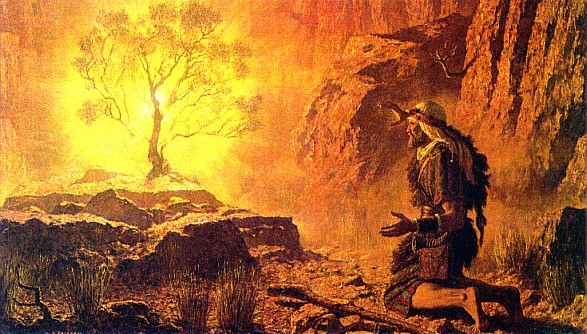
Moses and the Burning BushThe God of the bible is different from any of these other conceptions of god. Contrary to polytheistic views, God is everlasting and consistent. He is nothing like us, and cannot be approached on human (or similar) terms. He stands outside of time and never changes. Contrary to Jewish or Muslim beliefs, we do not work our way to God; rather God comes to us. No matter how good we think we are or how hard we work, we could never reach God, so God draws us to Himself, making a way for us to know Him. Contrary to Buddhist and Hindu views, God is an actual Being, who possesses real (non-physical) personhood. He desires an intimate relationship with us. God not only saves us, and makes a way for us to know Him, but adopts us as His very own children.

And this God reveals Himself as … He claims to be … perfectly good.

How do we know that God is good?

Let’s assume this is all true about God. How do we know He’s good? How can we trust Him not to act like the animistic gods and suddenly deal treacherously or ruthlessly with us for no apparent reason? An all-powerful God whose goodness is in question is terrifying, not comforting. There is a very real sense in which we should fear the Lord, but it’s not because God’s goodness is in question.

Still, how do we know?

Some have serious problems with the entire concept. Maybe you’ve been hurt or have not gotten something you felt you needed or deserved or just really wanted. Maybe it’s even something you intended to employ in your life to honor God and serve others. Why did God withhold that? And if God is good, why do bad things happen to good people? Why do good things happen to bad people? What about all those times in the Bible when God changed His mind (e.g. Gen 6:6, Ex 32:14, etc.)? I thought you said God was consistent and unchanging! And where did evil come from? If God is so good and He made everything, why is there so much bad stuff?

These are great questions, and a discussion of God’s goodness should address them. I will save these “level 2 questions” for follow-up posts, but there’s more than enough to cover upfront in addressing the basic question: How do we know that God is good?

God is good because He says so

Oh give thanks to the Lord, for he is good; for his steadfast love endures forever! (1 Chronicles 16:34)

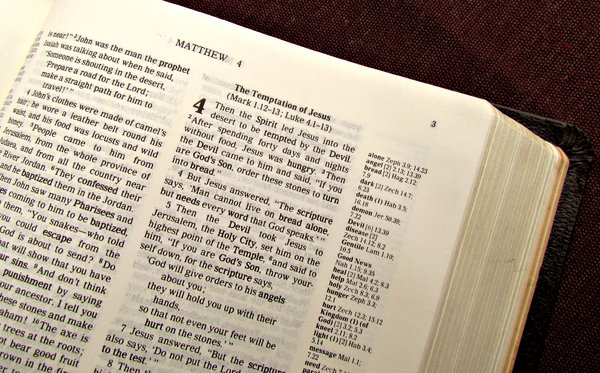
Open BibleThe Bible, as the authoritative Word of God, unequivocally proclaims God’s goodness (Psalms 25:7-8, 145:9 and many others), evenly claiming God is uniquely (the only) good (Mark 10:18). As the all-powerful God of the universe and final authority in every matter, God has revealed Himself, declared Himself to be good. He points to His thoughts and ways, His decisions and the outcomes of those decisions, and calls them “good” (Genesis 1:31; 1 Timothy 4:4). By His own authority, God defines good and bad in reference to Himself alone (throughout Genesis 1). And if you think about it, by what else could “good” be defined than by the character of the One who stands beyond creation, created everything, and authored the rules for how the universe works?

God is good because nature demands it

In the beginning, God created the heavens and the earth. (Genesis 1:1)

Laws of NatureThis brings us to a key philosophical argument…

In contrast to the other perceptions of god we discussed earlier, the Christian God — the God of All Creation — must be good by definition. This is because God Himself stands as the backdrop against which all moral decisions in the universe are made. His thoughts, words and actions are therefore inherently right and good, and every moral assessment in the universe is made in that context. No measuring rod exists (or can exist) to refute Him. There is nothing beyond God or even of the same kind as God, by which you could measure Him. By what would you evaluate God’s decisions as good or bad? Against what criteria would you grade Him?

Ultimately, those who protest that God is not good make themselves the measure of God’s goodness. To believe we have the right, to fancy ourselves — as creatures God made from nothing — to be in a position to assess the rightness or wrongness of God’s decisions … is the height of arrogance and the definition of rebellious idolatry. To do so is to demand that God be run out of town, to rise up against Him, to try to remove Him from His throne … to de-god God (as Don Carson is fond of saying). If I have the right to grade God’s actions, then God is no longer God, I am. It is fundamental to the very concept of God and of a created universe that it be God’s place to decide rightness and wrongness, not ours.

This is exactly what earned us exile and death in the Garden of Eden. Represented in Adam and Eve, mankind demanded that God give us the knowledge of good and evil … that we didn’t need or want God’s assessment of right and wrong. We will pronounce our own judgments, God, thank you very much! And from that moment of horrifically overstepping our authority has come every murder, rape, war, abuse, abandonment, heartache, and every tear ever shed in pain … all because we refused to accept God’s goodness as a fundamental law in the created order.

God is good because we know right from wrong

The law of the Lord is perfect, converting the soul;
The testimony of the Lord is sure, making wise the simple;
The statutes of the Lord are right, rejoicing the heart;
The commandment of the Lord is pure, enlightening the eyes;
The fear of the Lord is clean, enduring forever;
The judgments of the Lord are true and righteous altogether.
More to be desired are they than gold, yea! than much fine gold;
Sweeter also than honey and the honeycomb. (Psalm 19:7-10)

Rock of GibraltarEvery time someone demands justice or bemoans injustice or insists that they have been wronged, they affirm both that there is a God and that He is good. If there were no God, then why would there exist criteria of any kind to distinguish between right and wrong? You might alternatively point to the laws of man, but where did those come from? Our collective sense of what is right (and should be supported by government) vs what is wrong (and should be outlawed) … would ideally shape the laws of our nation. You might point to survival instinct, but then how do explain self-sacrificial behavior — which is universally acknowledged as perhaps the highest, most admirable good?

CS Lewis makes this argument in an incredibly compelling way in his timeless book, Mere Christianity.

If the whole universe has no meaning, we should never have found out that it has no meaning. Just as, if there was no light in the universe, and therefore no creatures with eyes, we should never have known it was dark. “Dark” would be a word without meaning… The universe contains much that is obviously bad and apparently meaningless, but [it also contains] creatures such as ourselves who know that it is bad and meaningless.

This has many implications, but not the least of them is that if God were not just and good, we would have no concept of justice and goodness. Without a universal measuring rod with which to measure, there would be no reason for any two people to agree on any concept of morality. The concept of “measuring” wouldn’t make sense. The only law would be to benefit oneself. And every time anyone, Christ-follower or otherwise, rises above this base selfish impulse, they prove that God exists and that He is good.

God is good because He keeps His promises

Blessed be the Lord, who has given rest to His people Israel, according to all that He promised; not one word has failed of all His good promise, which He promised through Moses His servant. (1 Kings 8:56)

Promise Hands RingsGod is a promising God. From Adam and Eve to Noah to Abraham to David to Solomon to the apostles to you and me, God keeps His promises. If you think about it, it’s a sign of God’s goodness that he promises us things at all. If He weren’t good, why would He care? Why create the world at all (a promise in and of itself, really)? Why make it so beautiful and perfect for sustaining human life (another kind of promise)? Why consistently cause the sun to rise and the rain to come and the crops to grow? Sure, there are droughts and famines and floods and fires, but for every day of those, there are 1,000 days of rains and harvests and calm seas and cool breezes. And how many droughts, famines, floods, and fires are caused by man’s misuse of the world? Why does God always get the rap for them? Even leaving cosmic brokenness due to sin out of the equation for a second, aren’t calamities often due to our abuse and neglect of nature? Not always, but often. Meanwhile, think about all the ways that the consistencies of nature are in fact God keeping His promises!

But it goes beyond that. God didn’t destroy Adam and Eve when they sinned in the garden. Instead, He promised a Savior. God didn’t destroy the whole world in the Noahic flood, instead He spared Noah’s family and promised never to bring the flood again. God didn’t give up on man when “every inclination of the thoughts of the human heart was only evil all the time” (Genesis 6:5). Instead, He chose Abraham to build a nation from whom would come a King (Jesus) who would set up a Kingdom in which we could all live in peace and righteousness and right relationship with God. Even when Lot — Abraham’s cousin, living in the wicked city of Sodom, which God destroys — presumes on God’s goodness with a fairly liberal interpretation of God’s commands and then “lingers” in his obedience, God literally forces Lot to obey in order to save him (see Genesis 19:12-16). This is for the sake of God’s good reputation, because He promised Abraham — first in their covenant in general (Genesis 15:7ff) and second that He would specifically rescue Lot (Genesis 18:22ff).

And God promises His presence, His counsel, and His shelter when life is hard. On and on! It would take a year to map out all the promises God makes us in Scripture. And you won’t find an instance in which God fails to keep His promise to His people and His creation. This faithfulness demonstrates the character of a good, good father.

God is good because of Jesus

Thanks be to God for his inexpressible gift! (2 Corinthians 9:15)

Cross Crucifixion of JesusSpeaking of God’s fatherhood, the fact that God sacrificed His one and only Son for us surely speaks to His goodness. Jesus is the ultimate “good thing” God has given us, and the foremost proof that God is good.

Jesus is God’s agent of creation, the means by whom God created the universe (John 1:3) – we exist in the first place because of Jesus.

Jesus is the word and image of God, revealing God to us (Colossians 1:15) – the only way we can truly know God is through Jesus.

Jesus is God’s great agent of reconciliation (2 Corinthians 5:16-21; Romans 8:15-17) – God wants a loving Father-child relationship with us, sacrifices His son to acquit us of horrific guilt before Him, and adopts us into His family so we can no longer be left as rebellious orphans … all through Jesus.

We will get new perfect bodies, free of pain and sorrow and aging and death, because of Jesus (1 Corinthians 15:40-49).

These are some pretty amazing things, and I could probably go all day. Suffice it to say that Jesus is the ultimate expression of God’s goodness.

God is good because He gives good things

Every good gift and every perfect gift is from above, coming down from the Father of lights with whom there is no variation or shadow due to change. (James 1:17)

GiftsThe Bible says that “every good and perfect gift” comes from God. But this doesn’t mean that everything you could conceive of having will be FedEx’d to you from heaven on your timetable. It means that if it’s good, then it comes from God. There is no other ultimate source of goodness in the universe. And any secondary source of goodness is reflecting God’s goodness the way the moon reflects the sun. There is no other light source in the solar system.

It also implies that what God gives us is good. Even things we don’t perceive as good or can’t explain or don’t understand… God is giving us “good and perfect gifts”.

Great, but I have questions…

I am very aware that all this naturally leads to bigger questions, as mentioned above. I’m going to hold off addressing these for another day, each in their own post. Here’s the list I think need discussing. If you have others, please post them in comments below.

Go in peace!

Even without the answers to these questions, we have a significant point of application to contend with…

God is good. God seeks our good. God gives us good things. God sends us Jesus. With or without the answer to every question, our role is to trust His goodness. So, I challenge you to do just that… Will you trust this good God even if you don’t understand Him?

This is how Mother Teresa put it (captured in Brennan Manning’s book, Ruthless Trust):

When ethicist John Kavanaugh went to work for three months at “the house of the dying” in Calcutta, he was seeking a clear answer as to how best to spend the rest of his life.  On the first morning there he met Mother Teresa.  She asked, “And what can I do for you?” Kavanaugh asked her to pray for him.

“What do you want me to pray for?” she asked.  He voiced the request that he had borne thousands of miles from the United States: “Pray that I have clarity.”

She said firmly, “No, I will not do that… I have never had clarity; what I have always had is trust.  So I will pray that you trust God.

Why? How? Because God is good!

Couple walking in a garden


The Goodness of God Series

  1. How do we know that God is good?
  2. If God is good, why didn’t I get what I want?
  3. Why do bad things happen to good people?
  4. Where does evil come from?
  5. How can a good God directly cause suffering?
  6. Should we actively avoid suffering?
  7. How can a good God send people to hell?
  8. Does God change His mind?
Posted in Real Life, Theology | Tagged , , , , , | 9 Comments

Distrust your heart, and live

Children Jumping with Joy

All the ways of a man are pure in his own eyes, but the Lord weighs the spirit. (Proverbs 16:2)

Some of the worst advice you could ever receive is to “follow your heart”. It’s a well-meaning platitude, and it fits right into our self-indulgent, self-righteous, self-sufficient culture, but it’s terrible advice. It basically means to embrace your desires, to trust your instincts, to go with your gut. Someone unfairly demeans you at work, and your angry heart could easily lead you to seek revenge or at least start playing the political game more ruthlessly. Someone criticizes something you worked hard to achieve, and your wounded heart could lead you to be insecure or depressed or try even harder next time to show them you’re somebody. Someone compliments you, and your fickle idolatrous heart could convince you that your identity is in any sense established by what they think. Every evil ever perpetrated upon human history originated in the desires of the human heart — desires which were not governed under God’s lordship, ran wild and “free,” germinated into sin, and ultimately blossomed into full-on death (see James 1:15).

God gave us our desires and emotions for our good and they are wonderful and valuable in many ways, but they were never meant to be in change. We shouldn’t be following them anywhere. Your heart is not a ruler, it’s a throne (the seat of government of your internal life; your “will”), and God has given you the authority (shudder!) to appoint it’s monarch. The human heart isn’t to be followed, it’s to be subjugated and subdued (Genesis 4:7).

Subjugate (verb) — to bring under domination or control, especially by military conquest (more)

Contrary to our modern social platitudes and earthly wisdom, the Bible gives clear and scathing analysis of the human heart. It condemns the heart as primarily deceitful and “desperately wicked”, “desperately sick”, “beyond cure”, etc (Jeremiah 17:9, depending on your translation). So, unless you want to be led down the fast track to the dark side, the heart makes a phenomenally poor leader.

But it makes an excellent deceiver. There is almost no end to the ways our hearts can trick us into justifying our sinful, broken, hurtful thoughts and actions. And this is the point Solomon is making in Proverbs 16:2. Everything seems like a good idea to us when our hearts are ruling us, because by definition we are acting out of our desires. Our actions are easily justifiable – to ourselves and even to others who are also being ruled by their hearts and happen to be making decisions at that moment in the same desire-dark alley we are. When we ignore wise counsel or selectively listen only to those who have failed to seek the transforming wisdom and leadership of Christ, we can plow ahead recklessly and trample others mercilessly … because we are blindly following where our wicked hearts lead us to go. If history tells us anything, it’s that there is no depth to which we can’t stoop, given the right conditions and a willingness to accept that the voice in my head telling me to follow my hearts has my best interests in mind. It doesn’t.

But the Lord weighs the spirit. God absolutely does have your best interests in mind. He designed you. He has a dream for you. He made you the way you are for a purpose. And He has declared you (His creation) and that purpose (His dream and will for you) to be “very good” (Genesis 1:31).

God knows better than your heart

SecretsGod knows every fiber of your being — not just the atoms and molecules, but the thoughts, feelings, and intentions. Charles Spurgeon said it well, “our thoughts are speech before God.” You have no secret thoughts or deeds before God. He knows it all intimately. He even knows why He made you the way He did, why you have the thoughts and desires you have, where your life is going, and how best to get you where He dreams it would go. So God’s authority on what is best for you is far greater and higher and better than whatever authority you might be tempted to ascribe to your feelings. Given that truth, wouldn’t we be far more wise to seek the counsel of God’s Word and God’s Spirit and God’s people than to rely on our hearts, which are “more deceptive, untrustworthy and cunning than anything else in the world” (Jeremiah 17:9, my translation)?

Deceitful (adj) — guilty of or involving deceiving through concealment or misrepresentation of the truth; deceiving or misleading another; dishonest, untruthful, mendacious, insincere, false, disingenuous, untrustworthy, unscrupulous, unprincipled, two-faced, double-dealing, underhanded, crafty, cunning, scheming, calculating, treacherous, Machiavellian, sneaky, etc. (more)

God judges rightly

Another implication in Solomon’s claim that God weighs the spirit is related to determining the value of that spirit. In ancient times, people didn’t use money the way we do. They transacted their business by trade, bartering goods and services with one another. I need a cow, so I’ll trade you 10 chickens for yours. I need a fence, so I’ll help you put harvest your wheat if you help me build one. Money, when it was initially developed to make those transactions easier (who wants to carry around 10 chickens?), was denominated by weight. If you have a bag full of gold or silver nuggets, then I can set the price of a cow or a fence to be a certain weight of gold. That’s where British “pounds” came from, for example. Later, nuggets were replaced by coins, and coins by paper currency (essentially government-backed IOU’s), and currency by credit cards (you-backed IOU’s), and credit cards by Apple Pay. But I digress.

Scales of JusticeBut even still today, some things are also sold by weight. You don’t by a number of jelly beans, you buy a number of pounds (or kilograms) of jelly beans. Same for wheat, produce, precious metals, and many other commodities. So in many instances, especially in ancient times, trade is very much bound up in weights… both of the commodity being purchased and the implement used to purchase it. Therefore, the Bible tends to talk about integrity in terms of honest weights and scales (e.g. Proverbs 11:1). If you rigged your scales or pressed your thumb down a little harder on your side of the scale, then you could sell someone less grain than what they should be purchasing, or pay a smaller weight of gold nuggets for your new oxen. God hates this dishonesty.

What’s most important for our discussion is that God knows how much things are supposed to weigh. Whatever your scale says, He is ultimately the one who weighs your gold and your goods, and thereby knows their rightness before your trading partners. Similarly, God weighs your spirit, and thereby knows its rightness before Him. Your heart may be able to deceive you, but it won’t deceive God. It may be able to talk you into justifying your bad behavior. You may be able convince others around you to call bad choices “good”. You may even get elected and pass laws that legalize your heart’s desires. But you won’t fool God. He weighs the spirit, and He knows what it should weigh, because He calibrates all weights and measures (establishes their rightness), whether spirits, gold nuggets, corn, oxen or otherwise. And all the justification, consensus, or legal wrangling in the world won’t change what God has decreed.

We must choose

Two PathsSo we must choose who will set the weights of our scales … who will steer our wills … who will guide our words and actions … who will sit on the throne of our hearts. Will it be our deceitful hearts or the God of just balances? I love the contrast Scripture provides us in describing this choice…

On the one hand, “your adversary the devil prowls around like a roaring lion, seeking someone to devour” (1 Peter 5:8). He is the voice that whispers in your ear, “Do what you want! Follow your heart!” … the siren singing beside the wide road which leads to destruction.

On the other, “the eyes of the Lord run to and fro throughout the whole earth, to give strong support to those whose heart is blameless [whose spirit is weighed rightly] toward him” (2 Chronicles 16:9). He is the Word of Truth, the voice that says, “Delight yourself in me! Follow me!” He is the door, and the Companion who walks with you on the narrow road that leads to life.

Heeding Solomon’s advice, the wise will distrust their heart, run to God, and find life.


An amplified proverb (see more in series)

Posted in Proverbs and Wisdom Literature, Real Life, Theology | Tagged , , | Leave a comment

What is the Gospel?

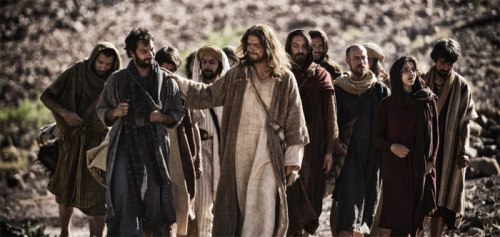
Jesus and His disciples

“Behold, the Lamb of God, who takes away the sin of the world! Repent, for the kingdom of heaven is at hand.”  -John the Baptist

“Behold, the Lamb of God, who takes away the sin of the world!” (John 1:29)

“Repent, for the kingdom of heaven is at hand.” (Matthew 3:2)

“It is now possible for ordinary human beings like you and me to live in the presence and under the authority of the God of the Universe.”  —John Ortberg

This may sound like a funny question, or at least a question with an obvious answer, but I don’t think so. Between experiences I’ve had over the last several years and the reading I’ve been doing lately, particularly for my Foundations of Evangelism class at TEDS, it’s become clear to me that the question isn’t as simple as you might think.

What does the word “gospel” even mean?

To get to the term “gospel”, we have to start with a different but related set of terms: “evangelical”, “evangelism” and “evangelist”. These are all common words in 21st century English-speaking countries, but they are no longer very well understood. What’s worse, they have for the most part been thoroughly imbued with negative connotation. Increasingly, the secular public equates these terms with bigotry, homophobia, fanaticism, and other negative ideas. Unfortunately, they don’t seem to be much better understood in Christian circles than they are in secular ones. In my experience, if you ask most church-going Protestants these days, they would define these terms as follows:

  • Evangelical (n) — the state of being a “real” Christian (vs Catholic, Muslim, atheist, etc)
  • Evangelism (n) — the act of sharing one’s faith with people who don’t know God
  • Evangelist (n) —
    1. a professional “preacher” (vs a pastor or priest)
    2. someone who yells about Jesus from a soapbox on a city street corner or on a TV station few people watch, and who is either a) crazy, b) a well-dressed silver-tongued charlatan, or c) both

These terms are all, of course, related. They are all rooted in the Greek word group whose noun form is εὐαγγέλιον (transliterated, “euaggelion” or “evangel”). This is a special word meaning “good news”. It’s not the same word translated “message” (ἀγγελία) or “news” (λόγος) elsewhere in Greek writing (the original language of the New Testament). The “good news” of Scripture is not a neutrally-communicated piece of information, like you might hear on CNN tonight after work. It’s a special kind of news — good news — and a special kind of message — the heralded proclamation of a king!

So, all these words — evangelical, evangelism, and evangelist — are related to this concept of good news. I would define them as follows:

  • Evangelical (adj) — of or related to the good news
  • Evangelism (n) — the proclamation of the good news
  • Evangelist (n) — one who proclaims the good news; also, an Evangelical (n)

So these terms are highly focused on the concept of “good news”, and the word “gospel,” which significantly predates the time of Jesus, is what is used in Scripture to refer to this very specific good news.

Good news about what?

King's HeraldsJesus?

Most Christians, when asked, “What is the gospel?” will immediately reply, “Jesus”. But let’s also double click on that … “the good news about Jesus” … meaning what exactly? What Jesus did? Who Jesus is? What Jesus did for you? Who Jesus is to me? How Jesus affects ones life today? What are we really talking about?

This may shock you, but although “Jesus” is clearly the Sunday School answer to this question, and in some sense “Jesus” is the right answer to every question, I don’t think simply responding “Jesus” is the best answer. At least, it’s a fairly cryptic, deep, mystical answer that most people wouldn’t be able to build there life on.

Salvation?

Another very common (most common?) answer given by adult Christians (not in Sunday School) to the question “What is the gospel?” is what Christians call “the plan of salvation”. This is the “plan” or process or steps by which someone is “saved”. Over the years, the plan of salvation has been clearly and concisely stated by many people in many ways (for example, the Four Spiritual Laws or the Romans Road). Here’s how I would quickly summarize it:

  1. God … created everything, is completely good, and deserves our uncontested worship
  2. Man … was created by God, rebelled, has become entirely corrupt, and needs saving
  3. Jesus … died on the cross to save man from His sin and restore Him to God
  4. Receive … Jesus personally to be forgiven of sin, to be reconciled to God, to realize God’s plan for your life, and to go to heaven when you die

This is incredibly important truth, and no one will be rescued from sin and death (the consequences of sin) or have any meaningful relationship with God (now or in eternity) without believing (by life-changing action, not academic ascent) each of these things and appropriating them personally into their lives. BUT — and this too might surprise you — as critical and essential as salvation (and the plan of salvation) is, I still don’t think we have arrived at a definition of “the gospel”.

In other words, if you were to ask Jesus or Peter or Paul or the early church fathers or Martin Luther or Augustine or scores of other prominent theologians through the ages, I don’t believe many of them would say that “the plan of salvation” is what the apostles meant by “the gospel of Jesus Christ, the Son of God” (Mark 1:1).

Why not?

I contend that the gospel is bigger than the plan of salvation … that two very important elements are missing from a “salvation gospel”. Unfortunately, that means they are also missing from the modern Christian’s belief, life and practice. These two concepts might be labeled “context” and “conclusion”. They aren’t optional. Their absence critically depletes power from the gospel message and has (in my opinion) helped to create a world in which millions of people claim the name of Christ (call themselves “Christians”) but are not necessarily all that different from those around them who don’t care two bits about Jesus. Even those who are very sincere in their devotion to Christ struggle to understand how to read the Old Testament or apply a practical theology of sanctification or build effective evangelism and discipleship strategies in part because their gospel is very limited, focused only on personal salvation. If we view the gospel merely as the steps of a plan, resulting in a (typically highly emotional) moment of decision for Jesus, then we miss key elements of who Jesus is and what God is doing in our midst, and we weaken the power of “the gospel” to impact our daily lives.

Bible in Sunlight 2The Gospel Story

The gospel is not a set of steps, it’s a story. Jesus is absolutely the lead character in that story. What Jesus did to save us (“salvation”) and how a person turns from their sin and throws them on the grace of God to appropriate it (“the plan of salvation”) are critical parts of the story. But these are elements of the story, not the story itself.

1) A salvation gospel lacks context

Jesus didn’t just come out of nowhere to become the Savior of the world. Nor ware His life and work a reaction to your sin (or mine). God’s plan to create a people for Himself “from every nation, from all tribes and peoples and languages” (Revelation 7:9) began long before your bad choices, and long before the manger in Bethlehem or the cross of Calvary. Before even the Garden of Eden, God planned to create for Himself a family of kings and priests. And that’s where the story of the gospel begins…

Garden of EdenBefore the ultimate beginning, there was only God. Perfectly satisfied and perfectly loving. Because love gives (by definition), God created the world and all that is in it. And what He created was good. Astoundingly, God then created human beings in His image to rule the world God owns as “underkings” and to mediate between God and His creation as “priests”. And the kingdom of Adam was born. But we rebelled, rejected God’s authority, and broke everything.

Moses and Israel at the Red SeaGod then selected one man, Abraham, and promised that he would be the father of a great nation of kings and priests. Abraham’s grandson Jacob was renamed Israel, and the kingdom of Israel was born. God gave this nation His law and His word, settled His presence among them, worked astounding miracles, provided for their every need, and protected them against a hostile world. But despite all that, Israel’s descendants were no less wicked and idolatrous than were the descendants of Adam.

Kings of IsraelEventually, God acquiesced to the peoples’ demands for a king (other than God). After demonstrating how bad an idea the whole thing was (in their first king, Saul), God appointed David (a man after His own heart) to the throne and the kingdom of David was born. Knowing it would continue to break bad, God promised David that from his descendants would one day come a Messiah, or “Chosen One,” who would reign forever in righteousness, peace and justice, as both priest and king … the way God designed the human race to live, but which no descendant of Adam had yet even approximated. Within a matter of years, however, the kings who should have been setting the example for the people instead were leading them to new heights of evil and idolatry. Eventually, the nation of Israel was destroyed, and God’s people scattered all over the earth. And for a time, it appeared that God had had enough.

jesus-mary-joseph5Until one day a poor ordinary teenage peasant girl from an obscure village in the Middle East was chosen by God to miraculously bear a son named Jesus. But not just any son, but God clothed in human flesh. God Himself entered human history — retaining all of His God-ness, yet becoming fully human. This God-man Jesus “recapitulated” (relived the important moments of) the life of Adam and Israel and David (and others), facing over and over again the same choices they faced, but with one key difference … without sin. Where Adam had attempted to ascend God’s throne, Jesus emptied Himself of glory and descended to be a servant of all. Where Israel had turned to idolatry while wandering in the desert, Jesus turned to God’s Word and remained strong when tempted in the wilderness. Where Israel’s kings had been wicked and her priests had been blasphemous, Jesus was righteous and just and perfectly submissive before God. Where mankind under Adam had failed at living under God’s rule, Jesus succeeded gloriously in living human life as it was meant to be.

Cross Crucifixion of JesusBut the religious power brokers of the day hated the threat Jesus posed to their well-managed system of looking good rather than being godly … so they killed Him. And when Jesus died, He took with Him into the grave all the failure and destruction, consequences and death that was owed to Adam and his race (that’s you and me) as wages for their sin. But Jesus didn’t stay dead. Three days later, when He rose form the dead, He inaugurated a new humanity in a new kingdom … the firstborn from among the dead … the firstborn of the regenerated human race. And the Kingdom of Heaven was born.

Most people I know would view the story to this point as “optional back story”. Many Christians these days don’t even really think the Old Testament (where this story is told) is necessary or particularly nurturing to the Christian faith. That is so far from true!

The story of the Old Testament is the story of God’s plan for mankind. It’s the story of a kingdom gone wrong and of God’s restoring it. It’s the story of God’s great promises. It’s the early chapters of the story of God’s people, who are now called “the Church”. It’s where we came from and why we’re here. It’s the story that makes sense of the story of birth, death, and resurrection of Jesus, and the opening act(s) of the gospel of Jesus Christ.

When God expelled Adam and Eve from the garden, I can imagine their looking back to catch one last glimpse of paradise and the flaming sword that ensured they would never re-entered it. I bet they mourned bitterly. I can almost feel their shame and regret. Or when the people were forced to wander in the wilderness because they didn’t believe God would provide a place for them… Or when the city of Jerusalem and the temple of God were destroyed by the Babylonians… Or when good kings died at the hand of evil usurpers, who then rebuilt the pagan altars the good kings had torn down… Or when enemy armies invaded… Or when God’s people felt the crushing weight of yet another consequence of sin… Can’t you just hear the people crying out loud, “Woe to us! What shall we do? How will we ever get home? How will we ever find our way back to God?”

And this is not just the cry of the psalmist or the ancient Hebrew people, it’s the heart’s cry of every person in all of history who has looked at their lives or their world or up at the sky and realized that life isn’t what it is supposed to be.

They were right. And the story of Israel and of the Old Testament tells us why. When we arrive in history at the birth of Jesus, we have come to the fulfillment of millennia of promise, and a great turning point in the story … but not the story itself.

2) A salvation gospel lacks conclusion

Kingdom of HeavenBecause of the life of Jesus (getting right what we couldn’t) and the death of Jesus (dying in our place) and the resurrection of Jesus (inaugurating the Kingdom of God), anyone who falls on the grace of God will have their sins erased (transferred to Jesus from our accounts) and receive righteousness from God (credited to us from Jesus’ account). This person is saved from death and enters into a new life. But neither these moments of realization, decision and commitment, nor the process of arriving at them in my personal life, are the gospel. This is just one chapter in the gospel story.

The Story of the Gospel starts with the God who created the world, climaxes in the life, death, and resurrection of Jesus, includes you (if you follow Christ), and results in the invasion of a new kingdom under the perfect rule of the Messiah, the long-awaited King.

We are in the second to last chapter of this story — what the Bible calls “the last days” (Hebrews 1:2, and many others). After His resurrection, Jesus met with many people, continued to proclaim the Kingdom of God, and then returned to His Father. He sits bodily in heaven today at the right hand of God, reigning over and building His Kingdom. What was inaugurated with His rebirth (the resurrection) as the smallest of all seeds is now working through the universe like yeast works its way through dough (Matthew 13:33). When we put to death our lives of sin and rebellion (with Jesus on the cross), we are reborn (with Jesus in resurrection), and God adopts us (with Jesus as sons) … legally transferring us from the kingdom of this world into the Kingdom of God (John 3:3; Colossians 1:13; Galatians 4:5).

But to live in this new kingdom means to accept the rule of a new King. To be a Christian means explicitly that you are no longer in charge. You no longer rule over or own your life. There is no sense in which Jesus is your savior unless He is also your absolute monarch. There is no hint of democracy in the Christian life. King Jesus is “the Messiah,” which means “the one chosen to be the ultimate prophet, priest and king.” Not just for the whole world, but for you and me personally. The gospel story extends far back into the past to setup the problematic of false kingdoms and false kings, moves forward through the saving work of Jesus and the establishment of His Kingdom on earth, draws into His kingdom through the ages all those who believe on and follow Jesus (from every corner of the earth and history), and culminates in the final regeneration of all things.

The final chapter is this consummation – when King Jesus returns to the earth in power, defeats every enemy with finality, defeats with finality all earthly kingdoms, regenerates even space, time and matter, and reigns over His people in righteousness forever.

Then comes the end, when Jesus delivers His Kingdom to God the Father after destroying every rule and every authority and power. For He must reign until He has put all His enemies under His feet. The last enemy to be destroyed is death. For God has put all things in subjection under His feet … that God may be all in all. (1 Corinthians 15:24-28)

Arriving at a Definition

So, any definition of “the gospel” cannot be limited to a single decision or a single act in history, even the cross or the resurrection.

  • The gospel is NOT about sin management. It’s certainly not about erasing your personal sin, so you can get out of jail free.
  • The gospel is NOT about a moment of decision … a point in time when you pray a specific prayer or chant a specific incantation that cancels your sins. It’s certainly not a once-for-all moment that frees you up to nurture sin (as long as it’s well-hidden) for the rest of your life, while handily claiming the perseverance of the saints.
  • The gospel is NOT fire insurance. You can’t go to heaven because you were wise enough at one point to buy insurance against hell, even if it seems like you’ve kept current on your premium payments.
  • The gospel is NOT membership in a club. Nobody goes to heaven because they joined a great church, hang out with really godly people, and/or faithfully devote themselves to some daily, weekly, or annual rituals — even really good ones.

The gospel is the good news that the Kingdom of Heaven has drawn near. What was lost to us in history (after exile from the garden) but promised by God to someday become available again has finally come upon us in power! The long-awaited day has dawned. The long-awaited King has come. The long-awaited Kingdom has been inaugurated.

  • The gospel isn’t about sin management, it’s about the death of an old life and the inauguration of a new one, right down to our physical bodies.
  • The gospel isn’t about a moment of decision, it’s about the reign and authority of King Jesus, and hundreds of decisions every day.
  • The gospel isn’t about escaping hell, it’s about desperation to be granted entrance into the Kingdom of God, because that’s where we long to be and what we long to be like, and because no cost would be too high if it meant we could be with God.
  • The gospel isn’t about membership in an earthly club, it’s about citizenship in a heavenly kingdom and belonging in a heavenly family.

The gospel isn’t just that we are saved. It must include what we are saved from (the rebellious act of setting up our own kingdom), what we are saved to (God’s kingdom and rightful rule), and the context in which we were saved (redemptive history).

The gospel isn’t about me. It’s about the King-dominion of Jesus, and His perfecting for Himself a kingdom of underkings and priests. Amazingly, His grace extends that opportunity to us … to all who desire to be ruled by Him the way we were designed to be in the first place.

If I had to sum up the gospel in a single sentence, I’d steal John Ortberg’s definition…

It is now possible for ordinary people like you and me to live in the presence and under the authority of
the God of the Universe!

If we limit this message to a personal salvation decision by removing from it the history of God’s promise of a King and the coming of His Kingdom, then (as D. A. Carson puts it) “we will invariably promulgate an anemic and truncated gospel.” In this mode, we may tell a good story about the saving work of Jesus on the cross, but we are not telling the story of the apostolic gospel.

Come Let us Worship and Bow DownSo what?

A “anemic and truncated gospel” devoid of the King-dominion of Jesus is a gospel that demands relatively little from us. It opens us up to a life of conflicted priorities, lukewarm commitment, or even outright sinful rebellion … even after having “believed the gospel” and “committed ourselves to Christ.” A “gospel” that equates to the plan of salvation or a single, personal moment in the story of redemptive history results in the drive toward a single transaction before a judge, not a lifetime of submitted followership before a King. And I contend, as is demonstrated in North American Christianity today, that this makes a world of difference.

The true gospel is about the power of God in conquering our lives, and establishing the Kingdom of Heaven and the Spirit of God within them, so that when God regenerates all things and we are ushered into His presence, there will be no place we’d rather go or be. we’ll have no need to look back, no thought of regret in leaving something behind, no preconditions for admittance. We’ll rush to God. We’ll finally be home. And we’ll know it’s “home” because the whole story of the gospel has been pointing us (and all of mankind) toward it since that fateful day in the Garden of Eden.

The time has come. The kingdom of God has come near. Repent and believe the good news!   —Jesus, in Mark 1:15


Dr. D. A. (Don) CarsonDr. Scot McKnightMany thanks to Dr. D. A. Carson (left) and Dr. Scot McKnight (right), on whose insightful works I have leaned heavily in this brief and comparatively shallow discussion. If you wish to pursue this topic further, I recommend Dr. Carson’s brief essay “What is the Gospel? Revisited”, chapter 8 in For the Fame of God’s Name by Storm and Taylor (eds.), and Dr. McKnight’s excellent book, The King Jesus Gospel, as great starting points.


Posted in Theology | Tagged , , , , | 3 Comments

Sunday School Answers

jeopardy-logo

I serve twice a month at my church in what would traditionally be called “Sunday School” (we call it “HarvestKids“). Typically, I teach 3rd grade. I love it. Children are amazing. They are so simple and trusting and full of life (and energy … especially boys)! It shows me who I am in God’s eyes when I see kids being kids. And it’s instructive to my faith to be continually required to reconstitute a Biblical message or some point of theology into terms a 10-year old can — at least at some level — relate to and internalize. Like I said, I love it.

I don’t know if you went to Sunday School as a kid, but I did. It didn’t mean as much to me at the time as I wish it had, but I was pretty much there every Sunday. One thing I remember from my own experience as a child, and which is certainly true with the kids I teach today, is that children tend to give what I call “Sunday School answers” to the questions adults ask. You could probably walk into a classroom full of kids on Sunday morning pretty much anywhere in America, ask almost any question, and a large portion of the room would blurt out without hesitation, “God!” or “Jesus!” or some other pat answer they have learned will move the conversation along.

Adult: Who created the universe?

Third grader: Jesus!

Adult: Who died on the cross to pay for your rebellion and reconcile you to God?

Third grader: Jesus!

Pastrami on Rye

Divine [looking] pastrami on rye

Adult: Who made the pastrami on rye I had for lunch on Tuesday?

Third grader: Jesus!

It’s predictable, occasionally really funny, and sometimes frustrating. But we tend to laugh, roll our eyes, maybe ask the question again and persist in getting a “real answer”, and go on about our days. So this might sound like a bit of overthinking at first blush, but let me ask, “How bad [or good] are their Sunday School answers really?”

What if the kids know more than than we think they do? What if “Jesus” might actually be the answer to all of life’s important questions?

Who is God? What is He like?

Jesus.

[Jesus] is the image of the invisible God. In Him, all the fullness of God was pleased to dwell. (Colossians 1:15, 19)

Jesus is God. In a way we cannot possibly fully understand, the almighty God of Angel Armies became a man just like you or me (fully a man, not partially), but lost none of His God-ness in the process. He is therefore the only bridge between our world and God’s — way to see the transcendent, invisible God. The man Jesus is God’s perfect self-expression. “No one has ever seen God; [Jesus], the only God, who is at the Father’s side, He has made Him known.” (John 1:18)

If you want to know what God is like, look at Jesus.

Where did the universe come from?

From Jesus.

For by [Jesus] all things were created, in heaven and on earth, visible and invisible, whether thrones or dominions or rulers or authorities — all things were created through Him. And He is before all things. (Colossians 1:16-17)

Big BangJesus is the Agent of creation. The Bible says that God spoke, and the universe came into being (Psalm 33:9). Jesus, the eternal second person of the Trinity, is God’s Word (John 1:1). Like a fire is the agent of creation of heat and light, so Jesus is God’s means by which the universe is created and sustained. Mystical, mind-warping stuff, but none the less true. Don’t take the analogy too far, of course, because there was no source material for God’s “fire of creation”. God, in Christ, created all things simply from His mind and will. The Latin term is “ex nihilo,” which means “out of [absolutely] nothing.”

So, whether you’re talking about the angels in heaven or jaguars in Africa, ostrich ferns, remote galaxies, or mitochondria, it was created by God the Father through Jesus the Son as His agent (or means). If you can see it … made by Jesus. If you can’t see it — solar radiation, quark pairs, human feelings, physical hunger, or changing weather patterns … made by Jesus. All power of any kind … not just the flow of electrons in a copper wire but the flow of human, angelic and even demonic power in history … whether thrones or powers or rulers or authorities … even the political official you’d be tempted to say is worthless … made by Jesus … put in power by Jesus … given their authority by Jesus.

ALL things were created by Him.

How does the universe work?

Because of Jesus.

 In [Jesus] all things hold together. (Colossians 1:17)

Atomic Structure

Please forgive the crudity of this model; I didn’t have time to draw it to scale or to paint it.

Do you remember your high school chemistry? The basic structure of an atom? There are protons (positive charge) and neutrons (no charge at all), packed together into a dense little clump (the nucleus) at the core of every particle of matter (atoms) in the universe. Then tiny little electrons (negative charge) race around the outside of the atom so fast and so small we can only talk about their probable location in a “shell”. If a football stadium were an atom, the nucleus would be the football at the center of the 50 yard line, and the electrons would be like supersonic gnats orbiting the outside of the stadium. Got the picture?

So, let me ask, why doesn’t the nucleus of the atom explode? If I got a bag, and dumped in 79 positively charged high-powered magnets and 118 wooden ball bearings, each about the same size but carrying no magnetic charge, then I’d have an extremely large representation of the nucleus of an atom of gold (atomic symbol “Au”), which has 79 protons and 118 neutrons. If I then wanted to compact this large bag of ball bearings down to the size of our proverbial football (with no space between the individual ball bearings), put it in the middle of the stadium, and commissioned 79 supersonic gnats to orbit it (not sure where I got those, but they represent the 79 electrons in the atom), then we’ve arrived at a rough, large-scale approximation of a gold atom.

Strong ForceBut out here in macro world, I can’t even get two positively charged magnets to compress together. They resist it, pushing away from each other. In order to keep 79 positive charges packed into a dense little ball from exploding, I’d have to exert constant pressure to hold them in place. A lot of it. Physics calls this constantly-exerted pressure “strong nuclear forces“. It is one of the observed-and-labeled-but-unexplained forces (along with gravity, and a few others) which forms the very fabric of the universe and holds it together.

I submit to you that Colossians 1 does what all of chemistry and physics has never been able to do: it explains that God Himself holds the nucleus of every atom (therefore the entire fabric of all matter) together in the palm of His hand. If, even for an instant, God were to withdraw this powerful sustaining force, all matter in the universe would instantly fly apart in an explosion of released energy we couldn’t even imagine.

I’m no physicist, and I’m sure others could tackle this and many other topics much more thoroughly and knowledgeably than I can. But the main point would be the same… God stands behind the universe, and science has not and will not explain Him away. I’m certainly not saying science is non-valuable. Nor am I saying we can just ignore science, continue in ignorance, and assume that everything we can’t explain must be Jesus. Nor am I saying that we use God to fill in the (ever-shrinking) gaps left by our (ever-expanding) understanding of the universe. What I am saying is that science works because of Jesus. His eternal, unchanging consistency is what creates the laws that we study, identify, and label as “science”. We can observe and categorize forces in the atom precisely because God is unchanging and unfickle and utterly consistent in how he designed, build, and sustains atoms. Not to mention the fact that our creative urges and desire to study atoms in the first place also comes from our being made in the Image of God — but let’s leave that for another day.

Why am I here?

For Jesus.

[Jesus is] the firstborn of all creation…. All things were created … for Him. (Colossians 1:15-16)

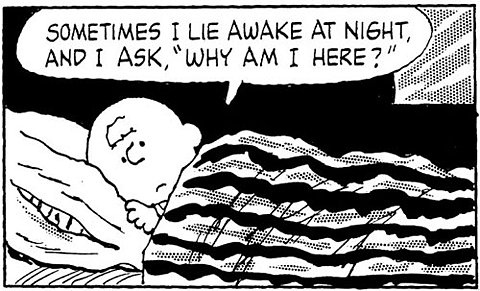
Charlie Brown: Why am I here?If Jesus is the answer to our physical universe questions, then He is certainly the answer to our metaphysical universe questions. I don’t know about you, but I love that the Bible makes it unambiguously clear that we were put on this earth and given our lives FOR Jesus. All those solar rays and funky ferns we mentioned above. They too were made for Jesus. Strong nuclear forces in the atom … made for Jesus. Distant galaxies … made for Jesus. Beautiful sunrises … made for Jesus. My heart and will and hands and eyes, used to love and serve, to study (atoms and galaxies) and behold (ferns and sunrises). Everything was made by God through His Son and for His Son. He created the universe and gave us life arbitrarily — no external pressure compelled Him or need drove Him — for His own good pleasure. We exist for Him.

And that really should change the way we live, shouldn’t it? Are you working for your bills or your comfort or your family’s comfort, or are you working for Jesus? All the “why’s” behind your job are about Him, not you. Do we really live that way? Is our money for Him or for ourselves? When we earn it, do we earn it for him? When we spend it? What about your friendships? Your possessions? Your hobbies? Your thoughts? Your feelings? Your secrets?

The reality is that, in a vacuum, it is right and good to earn money or buy toys or go on vacations or pick up a hobby or invest in a relationship. God created all these things, and much more, for our enjoyment, and for His glory (which means for the display of His greatness — so, ultimately, for Him). But that presumes that we are actively walking with God in making the choices of life. If we have the ears to hear, then He will say to one to earn a dollar and to the other to live without that same dollar … He instructs one to take the promotion and the other to walk away … to the one to buy and to the other to sell. For everything there is a season, and a time for every matter under heaven (Ecclesiastes 3:1), and God our Father desires and delights to personally direct each of us as to what time it is for us at any given moment. Listening KidsBut that requires more than just a few minutes in Scripture a few times a week. It even requires more than “including Him” in our decisions. It requires treating God as the absolute monarch of our hearts and lives, to discipline ourselves to listen to His voice even in the face of the frenetic clamor of 21st century North American life, and to do what He says.

If we learn to walk that way, in a posture of listening, then the purposes of our individual lives will become far more clear, and we will find out how God meant our lives to be…

How do I find real life?

In Jesus.

[Jesus] is the head of the body, the church. He is the beginning, the firstborn from the dead, that in everything He might be preeminent… Through Him [God was pleased] to reconcile to Himself all things, whether on earth or in heaven, making peace by the blood of the cross of Christ. (Colossians 1:18-20)

Throne RoomFirst, God created us for community. To know God is to be in fellowship with His people, a kingdom of priests (1 Peter 2:9), the members of one body (Romans 12:4-5), indeed one just as Jesus and the Father are one (John 17:20-23). So, whatever you’re doing in life, you don’t have to do it alone. Seek out those who will point you to God and help you live in wisdom and grace. And we look to Jesus as the perfect Leader of that community. Real life (that for which you were designed and redeemed by God) is found a) together and b) under the kingship of Jesus.

Secondly, Jesus came to earth, lived the life we were supposed to live, died the death we deserved to die, and was raised from the dead in victory and glory to show us what our lives are going to be like someday. As “the firstborn from the dead,” He is both our qualification for eternal life and the prototype of what it will be like. So, if you want to see what life is supposed to be like, look to Jesus.

Third, real life is about reconciliation — both with God and with others. God’s wrath toward sin is turned away by the cross of Christ, and He rushes to embrace rather than condemn us. God reconciles us to Himself, and in so doing, He reconciles us to one another. So, the blood of the cross means peace, both with God and with people. That is real life.

Now what?

Run to Jesus.

And you, who once were alienated and hostile in mind, doing evil deeds, he has now reconciled in his body of flesh by his death, in order to present you holy and blameless and above reproach before him, if indeed you continue in the faith, stable and steadfast, not shifting from the hope of the gospel that you heard, which has been proclaimed in all creation under heaven. (Colossians 1:21-23)

Run to GodIf Jesus is not your King, then you have declared yourself to be God, and are by definition an alien and stranger in God’s kingdom. You are either a child of God or an enemy of God. There is no middle ground.

But you do not have to be God’s enemy. You don’t have to be trapped by your evil deeds. It is now possible for ordinary people like you and me to live in the presence and under the authority of the God of the universe! Those who have submitted to God’s rightful kingship, He has now reconciled to Himself in the death of Jesus, in order that we might live the life of Jesus — holy, blameless, and above reproach before Him. In all its amazing glory, this life is available to all people everywhere, but so few appropriate it for themselves. Instead, people love darkness more than light, because their deeds are evil (John 3:19). But if you want it — life in all its fullness; peace; freedom; eternal life under God’s loving rule and authority — it’s already been bought and paid for, for you. But you must lay down your supposed godhood, run to Jesus and ask for it. Not with empty words, but with your heart and life.

Back to Sunday School

Obviously, when a ten year old blurts out “Jesus!” to half the questions asked in Sunday School, they are not likely doing so out of a recent critical exposition of Colossians 1. More likely, they think their answer will win them the teacher’s favor and get them out of the spotlight. But there’s a reason we adult Christ-followers talk so much about Jesus that our kids think it’s the answer to everything. And I would argue that there’s a definite sense in which He really is.

I am the Alpha and the Omega, the first and the last, the beginning and the end. (Jesus, in Revelation 22:13)

For all the promises of God find their “yes” in Jesus. That is why it is through Him that we proclaim, “So we agree!”, so that we bring God glory for all that He’s done in Christ. (2 Corinthians 2:20, author’s translation)

Sunday School Kids


Posted in Real Life, Science, Engineering and Technology, Theology | Tagged , , , , | 1 Comment

The Weight of Glory

City and Suburbs Skyline

If anyone would come after me, let him deny himself and take up his cross daily and follow me. For whoever would save his life will lose it, but whoever loses his life for my sake will save it. For what does it profit a man if he gains the whole world and loses or forfeits himself? For whoever is ashamed of me and of my words, of him will the Son of Man be ashamed when he comes in his glory and the glory of the Father and of the holy angels. (Luke 9:23-26)

C.S. Lewis (1898-1963) was a prominent British (specifically Irish) writer, professor (Oxford and Cambridge), Christian theologian, and apologist. If an award were conceived for “most prolific reader of the 20th century,” Lewis would doubtless be in the running for it, and he was perhaps one of the most brilliant thinkers of his time. He wrote many books, probably the most famous of which is the collection of 7 children’s stories called The Chronicles of Narnia, and was a highly-sought-after lecturer. His imagination, which he repeatedly credited as a vivid channel by which God communicated with him, awes me. Though the breadth and volume of my own reading in comparison to his is meager and anemic, I have yet to discover its equal. And as I study his life and writings, he is quickly becoming a personal hero.

It was on June 8, 1941 — 33 years to the day before I was born and in the midst of World War II — that Lewis first preached one of his most famous sermons, entitled The Weight of Glory (pdf), at the Oxford University Church of St. Mary the Virgin.

The sermon describes Lewis’ view of the glory of God and the hope of heaven, and ends in a call to live in light of (under the weight of) this glory. I listened to it again today, and was deeply moved by its closing call to action and its stark and humbling view of the people in our lives. Any lover and follower of Jesus Christ, purchased from death by God for His glory, cannot possibly ignore this view of the eternal nature of all people. I have reproduced it here with minor paraphrasing, amplification and annotation, less with the intention of changing or adding to it than of maximizing it’s accessibility. May it ignite both in my heart and yours a relentless sense of urgency to love broken people the way God does, and may it expand our own stories to include them. Not tomorrow, not after breakfast, but immediately and with great joy.


For each of us, the cross (Luke 9:23-26) comes before heaven, and tomorrow is a another ordinary day. Each day, a cleft is opened in the pitiless walls of the world, and we are invited to follow Jesus inside. Following Him is, of course, the essential point.

That being so, it may be asked what practical use there is in speculating on heaven and the glory of God, which will be visited upon men as they meet Him face-to-face someday. I can think of at least one such use. It may be possible for one to think too much of her own potential glory in eternity, but it is hardly possible to think too often or too deeply about that of her neighbor. The load, the weight, the burden of my neighbor’s glory should be laid daily on my back, a load so heavy that only humility can carry it, and the backs of the proud will be broken.

It is a serious thing to live in a society of possible gods and goddesses, to remember that the dullest and most uninteresting person you talk to may one day be a creature which, if you saw it now, you would be strongly tempted to worship, or else a horror and a corruption such as you now meet, if at all, only in a nightmare. All day long we are, in some degree, helping each other to one of these two destinations. It is in the light of these overwhelming possibilities, it is with the awe and the circumspection proper to them, that we should conduct all our dealings with one another in this life — all friendships, all loves, all play, all politics.

There are no ordinary people. You have never talked to a mere mortal. Nations, cultures, arts, civilization — these are mortal, and their life is to ours as the life of a gnat. But it is immortals whom we joke with, work with, marry, snub, and exploit — immortal horrors or everlasting splendors.

This does not mean that we are to be perpetually solemn. We must play. But our merriment must be of that kind (and it is, in fact, the merriest kind) which exists between people who have, from the outset, taken each other seriously — no flippancy, no superiority, no presumption. And our love for them and service toward them must be a real and costly kind, with deep feeling for the sins in spite of which we love the sinner — no mere tolerance or indulgence which parodies love as flippancy parodies merriment.

Next to the blessed sacrament of Holy Communion itself, your neighbor is the holiest object presented to your senses. And if he is your Christian neighbor, he is holy in almost the same way, for in him also Christ Jesus, the glorifier and the glorified, Glory Himself, is truly hidden.


What would the world be like if we lived like we believed Lewis’ words and like it mattered deeply to us that they are true? For my part, I want to find out…

Posted in Sermon | Tagged , , , | Leave a comment