
Giants in the Land

Giant!

The Lord spoke to Moses, saying, “Send men to spy out the land of Canaan, which I am giving to the people of Israel….” [So,] Moses sent them [saying], “Go up into the Negeb and go into the hill country, and see what the land is, and whether the people who dwell in it are strong or weak, whether they are few or many, and whether the land that they dwell in is good or bad, and whether the cities that they dwell in are camps or strongholds, and whether the land is rich or poor, and whether there are trees in it or not. Be of good courage and bring some of the fruit of the land.”

At the end of forty days they returned from spying out the land. And they came to Moses … and they told him, “We came to the land to which you sent us. It flows with milk and honey, and this is its fruit. However, the people who dwell in the land are strong, and the cities are fortified and very large…. We are not able to go up against the people, for they are stronger than we are.” So they brought to the people of Israel a bad report of the land that they had spied out, saying, “[This] is a land that devours its inhabitants, and all the people that we saw in it are of great height. There we saw [giants]. We seemed like grasshoppers in our own eyes, and we looked the same to them.”

—From Numbers 13, emphasis mine

This was the story we discussed in children’s church a few weeks ago, where I volunteer as the modern evangelical equivalent of a Sunday School teacher. The goal of the lesson was to teach the kids to trust God, even when we’re afraid, even when the odds (humanly speaking) seem to be stacked against us.

It was a great morning. The kids asked all sorts of questions (some of them really good) about the story. To help them understand and apply it, I found myself searching for analogies centered in their worlds… What if big kids took your bike? What if you had to go to a new school? What if someone was mean to you on the playground? Etc.

I typically teach the kids during the first service, and attend adult church the second service an hour later. This was no exception. But for whatever reason, during worship in second service, I found myself dwelling on this story from the life of Moses — about Israel’s fear of the giants in the land. The kids had had a hard time relating to it at first, but we were ultimately able to work through it in terms children could understand. But what about us adults? We don’t typically get bullied on the playground or have our lunch money stolen. We look at new jobs way differently than kids look at new schools. We have a different kind of stress than kids have, and most adults would certainly feel (probably justifiably, at least most of the time) that what stresses us out are more important things — mortgages vs lunch money, careers vs kindergarten, etc — but I wonder what the average North American Christian would consider to be a “giant” in their world. What are we really afraid of? And how do we typically respond?

marching-soldiersHow should we respond?

For Israel, the giants were literal. God had told them to move in and possess the land that He had given to them, and the spies they sent in for reconnaissance reported back that there were literally giants living there. Some Bible scholars believe that these may have even been men descended from women who had intermarried with angels — at least that’s one theory in reading Genesis 6:1-4, where the same term for “giants” is used: “nephilim”. In any case, they were evidently very large and very scary. The spies reported, “we seemed like grasshoppers in our own eyes, and we looked the same to them.” (Numbers 13:33)

Imagine you are a nomadic vagrant, wandering around the suburbs, homeless, with your extended family and friends (a couple million of them, in Moses’ case). But God appears to you in a vision, and explains that the sub-division on the other side of town — the really nice one on the right side of the tracks, off Park Street, with the flowering cherry trees by the road and the three houses with in-ground pools … and of course a Taco Bell and a
Costco less than a mile away — has been earmarked just for you. All you have to do is go over and take the subdivision by force, because linebackersGod has told you it’s yours for the taking. But the catch is that your cousins are all 5’9″ and haven’t seen the inside of a gym in a while, and the folks already living in your future home all seem to be descended from WWE superstars and NFL linebackers. Not one of them weighs in under 280, start at about 6’7″, and bench electric cars rather than drive them.

You seem like grasshoppers in their eyes.

Okay, that’s a little hard to imagine, I get it. And that’s my exact question… What wouldn’t be hard to relate to? In our comfortable Western culture, what do we fear?

(Before I get into a list, please permit me to make it clear that every single one of the following fears comes from my personal experience at one point or another. So if you think my goal in listing them is to sit in a place of strength and abstractly pass judgment on those inferior to me, then… well… you’ve missed the point. We’re all the same. My hope is that each of us, starting with me, would look at ourselves here and be open to what God might have to say to us.)

failureI think we fear failure.

In our culture, we believe we should always be able to accomplish whatever we set our minds to. Some of us are more ambitious than others, of course, and on the whole I think ambition is a good thing. We should strive for excellence. But I think the relative ease with which our lives generally function makes us confident in our own ability to achieve what we want for ourselves. And if that confidence falters and we become afraid, it’s often a fear fundamentally centered around an inability to fulfill our (predominantly self-centered) dreams. Even when we want something passably noble for someone else — our spouses, kids, friends, etc —, our desires are typically self-generated. We’re the ones who typically decide what noble dream should be chased. And it’s scary to think we might fail to attain them.

I have to take this promotion to meet my financial goals; if I don’t I might not be asked again and we might not have enough to … whatever. I know I’ll be even busier, but…

shameI think we fear shame.

Of all the terrifying notions in our culture, the fear of being exposed has to make the top-5 list. What if they see through me? What if I fail to portray the right image? What if they don’t like me? What if something or someone makes me look stupid? For me personally, this has been a particular struggle my entire life. We want to manage our images. We want to appear to have it together. And most of us will do just about anything — from buying keep-up-with-the-Jones’ lawn gnomes to putting another pair of shoes on the credit card to lying about our sin at small group to deflecting watching eyes to some other ostensibly weaker party (via gossip, passive aggressive comments, jokes, sarcasm, even open hostility) — in order to manipulate for our benefit the way people see us. For most people, real authenticity is just flat-out terrifying.

If I tell them I’m struggling with that, they won’t like me anymore, but no matter
how often I swear things will be different tomorrow, they don’t change.
They say confession and accountability will help, but I can’t risk it…

weaknessI think we fear weakness.

Self-determination is as American as apple pie. Freedom. Controlling my own destiny. The power to direct my life wherever I want it to go. We used to view ourselves as blessed by God with the right to pursue happiness; now many of us leave God and hard work out of it, and simply expect to always be happy. For a vast (and still growing) portion of society, the fundamental assumption is that if I can dream it, I deserve it. And if I’m smart, hard working, well-connected, or have a little more cash than the national average, then I really deserve it. For many, it’s outright terrifying to contemplate falling short of the expectations we imagine everyone around us to have of us — husband, girlfriend, parents, teacher, boss, friends, even total strangers. What if they think poorly of me because I … whatever … or fail to (wasn’t strong enough to) whatever else? Notice how similar / related this is to the first two in the list. I’m too weak to pick that up, so I’ve failed, and now I’m shamed.

What if I don’t get an A on this test or absolutely rock this work assignment or plan the perfect party or get the raise? Does that make me less worthy of love?

Man who has lost his jobI think we fear loss.

We viciously protect what’s ours! It’s not just the 2-year old who maintains a highly developed sense of “MINE!”. For some people, that’s clearly very stuff-oriented, but even if you can honestly say that you’re not gripping your possessions with a kung-fu death grip, what about your time or money or health or friendships? How does it make you feel, really, that God could take any of that away at any time? Would you risk a “friendship” to tell them the truth they need to hear? (I put the word in quotes, because I question if true friend would really abandon you if you lovingly tell him/her the truth.) Do you feel wronged by the universe if the light turns red when you’re rushing to get somewhere? And many live (frankly) in abject terror that the current administration or some radical, wacko terrorist group or an economic downturn might somehow interrupt my daily freedom and comfort, or reduce the power base of my hard-earned bank account, or otherwise sap my power to instantly turn my (nearly) every whim into reality. We fear that life would be made hard (the loss of ease and comfort). We expect to be able to do or be or have whatever we want, in many cases immediately when we want it, and I think we’re threatened by anything that might get in the way of that.

I can’t believe politician X is pushing for another law that will raise my taxes and cut deeper into my paycheck. If they keep this up, I’ll have nothing left. Then what will I do?

painI think we fear pain.

If life inAmerica (especially middle-class and up) is anything, it’s comfortable. Extremely comfortable — even for those who would swear life is pretty hard. I would argue that for most of us it depends on perspective, and on definitions. Poverty here isn’t like poverty elsewhere. Hunger and sickness here aren’t like hunger and sickness elsewhere. Bad healthcare here isn’t like bad healthcare elsewhere. Etc. Sure, we experience legitimate and sometimes even horrible pain, but for most of us, that’s very rare. The vast majority of us spend our lives in fairly easy circumstances, and as a result, the pain most of us fear is pretty minor by global standards, both modern-day and historic. We fear the pain of interrupted schedules and inconvenience, long lines and traffic jams, lost jobs and failing health, bad grades and broken arms, damaged relationships and high tuition bills. And again, it’s not that these pains aren’t real or legitimate, it’s that (if I might be so bold) I think many of them are seen in a fairly narrow frame of reference. But regardless, we fear and will go to great lengths to avoid what we perceive as painful, especially given how pain-free we generally expect life to be.

I know I’m “supposed” [1] to be bold and free in talking about what God in Christ has done for me, but what if people think I’m some kind of fanatical religious nut job…

That stuff doesn’t make me afraid, it makes me mad!

One more thought about this list before we move on… Remember that, much of the time, anger is simply our reaction to or insulation against fear. Run a quick experiment and re-read the last couple paragraphs with that thought in mind. Substitute “afraid” for “angry”. Does that make anything resonate a little more clearly? If you’re anything like me, it might help explain a few things that have seemed a bit illusive about why you react the way you do in certain circumstances. It’s at least worth a quick second pass.

all about meMe, me, ME!

So, did you notice that there’s an awful lot of “me” in the above list of fears? When I read thought it, I see a lot of my goals, my rights, my strength, my ability, my plans, my provision for the future, etc. Me, me, me. That’s also pretty typical of our culture.

Which leads me to my point…

What if we’re afraid of the wrong things?

Failure, shame, weakness, loss, and pain … Are they legitimate fears?

Well, it depends. Sure, there is a real potential for all these things in life. And some trials in life are quite serious, and a healthy fear of them can drive us to God, which is a great thing. It’s easy to dream up examples… cancer, a lost job, the death of a loved one, a horrible car accident that leaves me disabled, terrorists blowing up another building, etc. But, these potentially serious, even devastating, possibilities in life aren’t what most of us worry about. Most of us spend a ton of calories on the smaller “me” stuff — the inconveniences. And even for the “big” stuff, should we really “fear” them? Or is it a question — for all our worldly concerns, big and small — of taking those concerns to God in prayer and supplication, with thanksgiving (Philippians 4:6-7)? Of, like Jesus, continuing to entrust ourselves to Him who judges justly (1 Peter 2:23)? And if we are experiencing hardship, Peter exhorts us to suffer according to God’s will, while entrusting ourselves to a faithful Creator and doing good (1 Peter 4:19). James says we should count even our suffering as joyful, because God’s perfecting love is at work in our suffering to make us “perfect and complete, lacking nothing” (James 1:2-8). As another quick exercise, ask yourself / dwell for a second on what you think Jesus would say about your fears.

For most of us, the things we fear and the way we fear them doesn’t honor God. Maybe that’s because most of what we fear aren’t the real “giants”. I content that much of what we burn calories being afraid of is, to be blunt, a by-product of selfishness. Maybe the giants in the land are actually closer to the opposite of what we fear. Is it possible we’re looking 180 degrees in the wrong direction? Maybe the “giant” is in fact the very lie that somehow failure, shame, weakness, loss and pain should be avoided at all cost. Maybe the exact problem we face — what stagnates our ability to really glorify God in our everyday lives, to walk with Him in the garden in the cool of the day — is that we need a little more of the stuff we’re afraid of, and a little less success, positive image, self-possessed strength, and comfort.

Maybe what we call rights and ambition and freedom aren’t really helping us as much as we think they are. Maybe our fat wallets are producing lean souls. Maybe it’s easier for a camel to pass through the eye of a needle than for a rich person to enter the kingdom of God. (Matthew 19:24) — and I really don’t think Jesus was just talking about money here. Maybe the sons and daughters of God would be more closely identified with their Father by their suffering and weakness than they could ever be by their self-generated “strength”. After all, for those who claim the name of Christ, we serve and worship the only God with wounds — the great priestly King (Isaiah 9:2-7), but also the suffering Messiah (Isaiah 53), who because He humbled Himself, was exalted and glorified (Philippians 2:5-11). Perhaps we should not expect to be so comfortable, popular, strong and pain-free, when the Master, though He was in His very nature God, suffered so greatly.

What if we could re-calibrate our fears?

marinesGod is calling us to take possession of the Promised Land. But this land has nothing to do with wealth and security. It bears little resemblance to the American dream. It doesn’t necessarily have a two car garage and a picket fence. It probably won’t involve a vacation home or a boat. It isn’t about short lines or modern convenience, faster operating systems or quicker access to data. Is that really all it takes to please us? Instead, the Land of God’s Promise is the Kingdom of Heaven, which is a pearl of such great value that anyone, Jesus says, with wisdom and the eyes to see it would sell everything they had to possess it. (Matthew 13:45-46)

  1. If it costs us worldly success to be more like Jesus, then perhaps we should be afraid that too much worldly success would rob us of who we were created to be.
  2. If it shames us / costs us our pride to obey Jesus, then perhaps we should be afraid that being too easily recognized by, too similar to, too friendly with this world might cost us the next.
  3. If it makes us look weak to humble ourselves before God, then perhaps we should be afraid that too much strength would deceive us into believing that we don’t need God’s saving grace and transforming mercy as much as we really do. (2 Corinthians 12:9-10)
  4. If we lose this world to gain the next, then we lose next to nothing to gain everything. If however, we are holding fast to the things of this world, then perhaps we should be afraid that we could end up keeping those things instead of heaven. Keep in mind that Jesus said you cannot have both. (Luke 14:25-35)
  5. If it’s painful to die to ourselves (with Jesus) that we might also live and reign with Jesus, then perhaps we should be afraid that, in our ease, we would become unrecognizable as a child of the King and therefore be mistaken as an orphan.

I think these are the real giants. And I thank God that He’s been teaching me to fear them. Jesus commanded us to count the cost of following Him, and He was quite upfront that it won’t be free or easy. The apostles encountered this first hand, and I doubt that a single one of them would be able to reconcile our laundry list of earthly fears with the life hidden in Christ. (Colossians 3:1-4)

They feared God more than man. They feared missing out on heaven more than missing out on anything this world has to offer. And they knew, and we need to know, that life is too short and the stakes are too high — “All authority in heaven and on earth has been given to me. Go therefore and make disciples of all nations, baptizing them in the name of the Father and of the Son and of the Holy Spirit, teaching them to observe all that I have commanded you.” (Matthew 28:18-20) — to be afraid of the wrong things.

courage

And Jesus called the crowd to him with His disciples, and said to them, “If anyone would come after me, let him deny himself and take up his cross and follow me. For whoever would save his life will lose it, but whoever loses his life for my sake and the gospel’s will save it. For what does it profit a man to gain the whole world and forfeit his soul? For what can a man give in return for his soul? For whoever is ashamed of me and of my words in this adulterous and sinful generation, of him will the Son of Man also be ashamed when he comes in the glory of his Father with the holy angels.”

— Mark 8:34ff


[1] — In any case, don’t share Christ with others because you’re “supposed” to. Those who love Jesus will have a story to tell about Him. God demands testimony in His person more than in His commands.


Related post: On Enemies [March 31, 2015]

Posted in Bible Stories, Counseling and Psychology, Real Life | Tagged , , , , , , , , | 2 Comments

My Light and My Salvation

sunrise2

The Lord is my light and my salvation… -Psalm 27

Psalm 27, ESV

1 The Lord is my light and my salvation; whom shall I fear?
The Lord is the stronghold of my life; of whom shall I be afraid?
2 When evildoers assail me to eat up my flesh,
My adversaries and foes, it is they who stumble and fall.
3 Though an army encamp against me, my heart shall not fear;
Though war arise against me, yet I will be confident.

Aslan and the White WitchGod defends you.

God is very real. He created all things by the word of His power, and in the palm of His hand the very quantum particles that comprise the universe are held together. We lack the faculties or language even to describe the extent of His power. And yet He has set His love upon us and promised that He is for us. So, whatever might present itself in our lives and suggest (demand) that we should fear it … nothing can compare with His glory and power, which stands between us and our enemies.


4 One thing have I asked of the Lord, that will I seek after:
That I may dwell in the house of the Lord all the days of my life,
To gaze upon the beauty of the Lord and to inquire in his temple.

A couple in loveGod is worthy of your love.

God stands alone, in a class entirely by Himself. He is not the greatest of any set of other things. He is alone in a category by Himself, subject to no valid comparison of any kind with anything or anyone. And yet He has revealed Himself to us, invited us to know Him, and even adopted us as His children. So we may literally dwell in His house all our days, which He grants to be eternal. To know Him, to be His child, is worth more than the whole world — any power or prestige or treasure or comfort or accolade. Nothing we could desire compares to Him. He is infinite in beauty, and there is a day coming — Come, Lord Jesus, come! — when we will see Him face to face, and know Him as we are known by Him. And there will be no other beauty required to satisfy or imaginable to please the hearts of those who are joined with His.


5 For he will hide me in his shelter in the day of trouble;
He will conceal me under the cover of his tent; He will lift me high upon a rock.
6 And now my head shall be lifted up above my enemies all around me,
And I will offer in his tent sacrifices with shouts of joy;
I will sing and make melody to the Lord.

Kids dancing on a beachGod should make you want to dance.

I do not fear the future. I do not fear enemies that rise against me. I do not walk in any sense alone. I will not be put to shame. I will not be disappointed. But I will see the promises of God fulfilled, even in the land of the living … and how much more so in heaven.

I will sacrifice — not bulls or rams or goats, but such worldly affections as might have become idols, because worship cannot be worship without sacrifice.

I will sing and dance and shout with joy — not small cheers, but roars of delight. For nothing I could pay would be worth the price of life in God’s house, and there is nothing of equal value to the blood of the very Son of God, that I might return it to God. So instead, I will shout for joy in the presence of the nations, that they would hear my testimony and know that there is indeed a God in Israel. Will I not risk being undignified before the Lord? For my God moved heaven and earth for me. I will certainly dance before Him in freedom and love and with great joy.


7 Hear, O Lord, when I cry aloud;
Be gracious to me and answer me!
8 You have said, “Seek my face.”
My heart says to you, “Your face, Lord, do I seek.”
9 Hide not your face from me. Turn not your servant away in anger,
O You who have been my help. Cast me not off; forsake me not,
O God of my salvation!
10 For my father and my mother have forsaken me,
But the Lord will take me in.

Calling for helpGod hears you when you call.

Your sin is wretched. Despicable. To be loathed, not excused. And feared. It will tear you apart. From seemingly insignificant lies to lust to complex webs of deception, from gluttony to adultery, from murder and abuse to harbored bitterness, your sin is evil and deeply offensive to a perfectly holy God, If you haven’t faced it and called “evil,” then you do not understand the most basic truths about the nature of the universe. But if you understand, then cry out to God. Seek His face. And if you do, then He will be your help. You will not be cast off. He will not forsake you. He will not leave you as an orphan. No matter who else discards you, God will be your home and your hope. He will come for you. And though you cannot know exactly where He will take you or who you will become, you can know for sure that someday you will be like Him.


11 Teach me your way, O Lord,
And lead me on a level path because of my enemies.
12 Give me not up to the will of my adversaries;
For false witnesses have risen against me, and they breathe out violence.

A light to my pathGod shows you the path.

We need not wander aimlessly. And we certainly need not take the advice of fools. We need not be led astray by those who callously disregard the law of life. And we must guard against the enemy, who prowls around like a roaring lion, waiting to devour anyone not paying attention.

The Lord desires that we would know His ways. He will raze mountains and fill in valleys that we might enjoy a straight, level road beneath our feet. He will guide us, like a lamp on a stormy night. He sets before us clear choices. But we must love His law to see. And we must trust His Word to hear.


13 I believe that I shall look upon the goodness of the Lord
In the land of the living!
14 Wait for the Lord;
Be strong, and let your heart take courage;
Wait for the Lord!

God can be trusted.Walking with God

Do you not see the goodness of the Lord? If not, ask Him to help your heart to see. Taste and see; you will find Him to be the greatest good. But you must believe to see, not see to believe. And you do not have to wait for heaven to see Him act in power.

He is not tame or domesticated. He does not assess your criteria or expectations for success, then work to meet them. He sovereignly and rightly acts. You’re in His story; He’s not in yours.

He is not slow or late. His timing is perfect. Your demands for more or faster or different or better are little more than self-worship. Trust Him. Be still. Allow Him to be God. He’s amazing at it, and … well … you’re not.

Be strong. Let your heart take courage. Wait for the Lord!


I recommend you close in song.

I came across a new (to me at least) singer songwriter, named Joel Case. He and the “Cageless Birds” have written a beautiful song that drives home the message of this psalm, so I thought I’d close with it…

Posted in Psalms, Music and Worship, Theology | Tagged , , , | 1 Comment

The Inerrancy of Proverbs

Listening in Prayer 1

How much better to get wisdom than gold!
To get understanding is to be chosen rather than silver.

Proverbs 16:16

It just hit me.

Anyone following me on Twitter knows that I’ve been spending a lot of time in Psalms and Proverbs lately. The other day as I was plowing through statement after statement from Solomon on “wisdom and folly” thinking, “So many confident statements about how the world works or is supposed to work! Can all this be right?” As I read, I realized I was having a pretty skeptical reaction, “The world just doesn’t work like that!” Also ringing in my mind was what James MacDonald (along with a few others I’ve heard) has said about the Book of Proverbs: that is not intended to be taken as infallible truth claims the way the rest of the Bible is, but rather as the way things are supposed to be. In his mind, Proverbs are guide posts, but don’t necessarily represent the way things always are. In other words, when conservative Evangelicals say that the Bible is “inerrant” (without error), they (we) are explicitly “grading” Solomon’s proverbs (e.g. Proverbs 11:24 — “One gives freely, yet grows all the richer; another withholds what he should give, and only suffers want.”) differently than the truth claims of Jesus, Moses, or Paul (e.g. Romans 6: 23 — “For the wages of sin is death, but the free gift of God is eternal life in Christ Jesus our Lord.”).

What is Biblical Inerrancy?

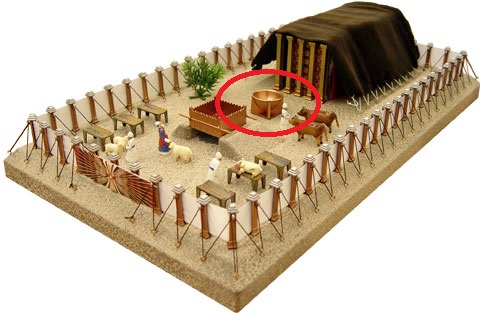
Dr. John Feinberg — a well known systematic theologian, who represents a learned and respected segment of modern conservative evangelicalism — has described the “inerrancy of Scripture” by saying that the Bible is “infallible in all that it asserts to be true” (there are a few other disclaimers in there too, but they are off topic for today). This creates an unavoidable distinction between nit-picking at Scripture and honestly evaluating its truth claims. For example, one passage I’ve heard skeptics reference when claiming that the Bible is riddled with errors is 1 Kings 7:23, where God is instructing His people how to create one of the implements of worship for tabernacle-basinHis tabernacle. Look closely; there seems to be some fuzzy math going on…

He made the Sea of cast metal, circular in shape, measuring ten cubits from rim to rim and five cubits high. It took a line of thirty cubits to measure around it. (1 Kings 7:23)

Whooooaa! I took geometry! I’m quite sure I remember that the circumference of any circle (C) divided by its diameter (d) equals π (pi) = 3.1415…, not 3.0000. But the Bible says right here that C / d = 3, not 3.14…, doesn’t it? What gives!? Is the Bible in error? Aren’t we, from this, forced to re-evaluate everything Jesus ever said?!

At this point, conservative Biblical scholars like Dr. Feinberg would ask what the Bible is actually trying to claim here. Is Scripture really attempting to assert a mathematical equation? Or, is it trying to give instructions to a group of people on what size to make a bronze bowl? Do you see the difference? The Bible doesn’t claim to be a math textbook, so to read it like a math textbook and then criticize the math it “teaches” is to setup a straw man scenario. math-jokeAnd even if the standards for precision weren’t totally different in their pre-enlightenment age (which they were), we wouldn’t assess this as an equation to be learned but rather as God’s instructing His people to complete a task in a specific way. In Dr. Feinberg’s eyes (and mine), this is not a legitimate argument to support the claim, “The bible has errors!”


Or in another example, when the Apostle John records in his gospel that “Jews do not associate with Samaritans” (John 4:9), this should be read in a certain way. The Bible is relaying a historic fact, not asserting a claim about what Jews and Samaritans should or shouldn’t be doing. On this basis, to argue that somehow the Bible is erroneous — because we in our culture see it as obviously wrong to create divisions between Jews and Samaritans (as implied by this statement) — isn’t really putting our focus in the right place in studying this passage.

And so on.

(BTW, there are many far more difficult apparent contradictions than these. My purpose is not to blithely ignore them, but rather to make a point about how inerrancy is currently being defined by the larger Evangelical community so that we can talk about Proverbs in a certain way. The larger debate is … well … much larger. icon_wink)

How do we interpret Proverbs?

I believe both Pastor James and Dr. Feinberg would likely say that much of the Book of Proverbs should be “categorized” with these kinds of statements … that Solomon’s proverbs are not statements that the Bible “asserts to be true,” but rather, they are wise observations that instruct us in the best course of action, given that our world is broken and imperfect.

However, in my experience with Proverbs, this explanation has left me wanting more. And since I feel God graciously granted me an insight on this the other day, I wanted to share. Let’s start by seeing if we can categorize Proverbs a little further and come up with a beneficial lens through which view them in our studies.

teacher1Proverbs teach us about God

You can learn a lot about who God is from studying Proverbs. They show us important qualities in His character, as we see it reflected in the physical world. Consequently, they teach us how to live — in step with His righteousness, and out of step with the sinful world around us. Of course, you have to read them in faith and carefully watch for glimpses of God as He passes by on the page.

A few examples…

The wicked accepts a bribe in secret to pervert the ways of justice. (Proverbs 17:23)

Solomon is observing that bribes are ultimately a perversion of justice. We know God loves justice (partially even from passages like this), so we work with integrity and refrain from offering or accepting bribes.

The name of the Lord is a strong tower; the righteous man runs into it and is safe. (Proverbs 18:10)

God is revealing Himself here as a place of strength and shelter for any person who loves God’s law and seeks to obey it.

Many are the plans in the mind of a man, but it is the purpose of the Lord that will stand. (Proverbs 19:21)

Whereas I might have all kinds of things planned for my life, it is God’s sovereign will (not mine) that will ultimately be done and be seen to be done. It’s not about God’s getting on my program, it’s about my getting on His.

teacher2Proverbs teach us about the world

Some proverbs are explicit observations of a broken world. They describe how things work, even if they aren’t supposed to work that way. They also teach us how to live, but often by counter example or by calling out some really bad behavior.

The poor use entreaties, but the rich answer roughly.
(Proverbs 18:23)

In our world, the poor are typically weak. They have to ask nicely, even beg, and still might not get what they want or need. In contrast, the rich are typically powerful. They tell other people what to do, and expect to be deferred to both regularly and automatically by those of lesser station.

Wine is a mocker, strong drink a brawler, and whoever is led astray by it is not wise. (Proverbs 20:1)

Because our world is broken and the tendency of the heart is to abuse and overindulge, Solomon warns us about the dangers of alcohol (and the like). If the world were a perfect place, this wouldn’t be necessary, but…….

It is better to live in a desert land than with a quarrelsome and fretful woman. (Proverbs 21:19)

As much as anywhere else, our sinfulness surfaces in our relationships, especially marriage. Proverbs like this one come directly from the curse of sin on the marriage relationship (Genesis 3:16-19) — opening the possibility for the man to love his wife poorly, and for the woman not to respect her husband as she should. Add a “healthy” dose of worldly fear into the mix, and you get a “quarrelsome and fretful woman” … and a very challenging marriage relationship.

teacher3Proverbs teach us what should be true

Some proverbs are describing the world the way it was supposed to be, but isn’t. Here’s an analogy I find helpful…

Much of the book of Proverbs is like the manual for a beautifully intricate clock that was severely broken in your last move. Just as you wouldn’t expect that clock to work correctly (since it’s broken), neither should you expect our broken world to work the way it was designed to either. And when we read Proverbs, some of it reads like the user’s manual for this broken clock. The descriptions of many of the clock’s function in the manual don’t (and won’t) exactly match the function of the clock itself … precisely because the clock is broken. Some match, because the clock isn’t completely destroyed, but many don’t. But in either case, you can get a really great idea of how the clock was designed to work by reading the manual.

And I think if this analogy were to really hold, we would have to see the clock’s user manual as one to which a junior clock worker (Solomon) tried to make some meaningful revisions after he discovered the clock was busted. In other words, some of Solomon’s proverbs are giving instruction in light of the brokenness of the world — they are less about “the way it should be,” and more “the best way to deal with how it actually is”. But that really applies more to the 2nd kind of Proverb discussed above; at the moment, we’re focused on the “how it should be” group.

Let’s look at a few of these…

A little sleep, a little slumber, a little folding of the hands to rest, and poverty will come upon you like a robber, and want like an armed man. (Proverbs 24:33-34)

Solomon is observing that laziness typically leads to poverty; so be diligent. But this isn’t always true. Sometimes lazy people get rich, and sometimes very wise, hard-working, diligent people become or remain poor. Why? Because our world is broken. Life isn’t fair. But a diligent work ethic is still the best way to live. To observe in the brokenness of this world a counter example or two (or even many counterexamples), and conclude that it doesn’t matter if you work hard is … well … foolish … and an excuse for laziness. It’s like finding the 1 car accident per year in which a person was saved by not wearing their seat belt, and concluding that seat belts are bad … which requires ignoring the thousands upon thousands of lives (~13,000 according to the NHTSA) saved every year by wearing seat belts. Like I said, foolish.

No ill befalls the righteous, but the wicked are filled with trouble. (Proverbs 12:21)

We wish! But unfortunately ill often does befall the righteous, and sometimes the wicked clearly live on easy street. Should we therefore consider the Word of God to be in error? Is God lying? Is He too weak or apathetic to bring about the result he “promises” through His Word?

Or, another classic example (with which I know people often struggle):

Train up a child in the way he should go; even when he is old he will not depart from it. (Proverbs 22:6)

Are we to assume that this guarantees a happy, fruitful, pain-free life for any child whom we Christian parents work diligently and prayerfully to raise well? Good job, high salary, amazing husband, etc? Does this mean that if I am deeply devoted to Christ and work diligently to pass that faith along to my kids, then they will live long lives devoted to the Lord as well, with no intrusion of sin or failure? Certainly no defiant unbelief, right? Does it mean that the son or daughter of every Christian inevitably dies a Christian someday (even if they backslide a little in the middle)?

To respond to both of these banks of questions… Sadly, no; it means none of these things. Just as the prior example doesn’t guarantee physical protection in this life for those who trust in God, neither does good parenting guarantee anything. Children of devote Christians become prodigal sons and daughters every day, and not all of them return. And there is certainly no shortage of Christians who are being persecuted, even murdered for their faith around the world. If our world were unbroken by sin and we saw these results, we might very well conclude that something is horribly wrong with Solomon and his “wisdom”. But in our sin-twisted world, we view his wisdom writings more as a way to plot the best course possible in this life — the theoretical true north. It’s what we should do, what we desire to be true, what we should pray for. And it’s God’s heart for us as well. But the Genesis 3 shattering of our world means that those bets are all off. Our reward — life as it is supposed to be — is not in this world, it’s in the next.

teacher4Proverbs are ultimately true

So, where does that leave us? In some proverbs, we see God. In some, we see our broken world. And in some, we see how the world was supposed to be. But I want to throw out a theory that might tie it all together. Maybe Solomon’s proverbs ARE always true … just not necessarily in this life. Here’s my thinking…

In this life, Solomon’s proverbs are instructive, but not necessarily true in an absolute sense. But in the life to come, in the New Jerusalem, I contend that they are either absolutely true or absolutely meaningless. To whatever extent they depict God’s character or the way the world was meant to, they serve as a prophetic voice that will be consummated and fulfilled in heaven. To whatever extent they depict sin and the brokenness of our world system, they serve as valuable instruction for navigating that system today, but they will be wholly obsolete and unnecessary once this world has passed away and those who love God dwell with Him in heaven.

Therefore, we are not left wondering if the Proverbs are “true”, or if the Biblical author intended they be taken as “truth claims” — something the Bible asserts to be true. In both cases, they are. Some are transparently, obviously true in this life, given they describe sinful man’s behavior, but they will fade away in the next. Some are true now, dealing primarily with God’s character and revelation of Himself, and their wisdom will be realized even more fully when the Kingdom of God invades this world. And some are true sometimes, should be true all the time, but won’t be absolutely and consistently true all the time until we get to heaven. One might say that interpreting these different kinds of proverbs require different “frames of reference”, but each is always true in some sense.

Maybe that’s a great insight, but now what?

So, instead of asking, “Are they true?”, we should assume they are definitely true (as we do with the rest of Scripture, knowing that it’s God’s Word) and ask, “By what means do we interpret / apply a given proverb?” How do we know which frame of reference to use so that it can be instructional for our lives?

bible_studyWell, it may seem cliche, but interpreting the Proverbs — or any other passage in Scripture for that matter — requires context. How does a proposed interpretation jive with the rest of Scripture, starting “locally” with the rest of the Book of Proverbs? Does that interpretation tell you the same thing that other passages tell you? Having studied the gospels, can you picture Jesus giving that interpretation? For that matter, how have NT authors interpreted that passage or similar OT passages — given that NT authors quote the OT more than 200 times (1 out of every ~23 NT verses references the OT), and are said to “allude” to it more than 600 times. What would they say?

As we are increasingly steeped in the overarching redemptive message of Scripture, we will be increasingly able to see in some proverbs the character and glory of God, in some the sinfulness and desperate need of man, and in some the expectation of what heaven will be someday be like. And in all of them, wisdom for how best to live today in light of the coming Kingdom.


Does not wisdom call?
Does not understanding raise her voice?
On the heights beside the way,
At the crossroads she takes her stand;
Beside the gates in front of the town,
At the entrance of the portals she cries aloud: …

“Take my instruction instead of silver,
And knowledge rather than choice gold,
For wisdom is better than jewels,
And all that you may desire cannot compare with her. …

For whoever finds me finds life
And obtains favor from the Lord,
But he who fails to find me injures himself;
All who hate me love death.”

Proverbs 8

proverbs

Posted in Proverbs and Wisdom Literature, Real Life, Theology | Tagged , , , , , , , | 2 Comments

Thankful for Family

thanksgiving-dinner-prayer1

“Gratitude is the attitude that sets the altitude for living.” This is the very first “proverb” (“Jamesism”) I remember learning from James MacDonald when I visited Harvest Bible Chapel for the first time back in the 90’s. He was right then, and he’s right now. One of the most significant things that will impact (even play a role defining) the course of our lives is our thankfulness … or lack thereof.

On this special day of gratitude, I want to express my deep and abiding thanks to God for my family, but I thought I’d add a little twist and consider “family” in two distinct-but-very-real senses of the term. First, I am exceedingly grateful to my earthly family for their love and their patience as God continues to be about His sanctifying work in my life, and to God for the gift of their lives intertwined with mine. I thank God…

  • For my beautiful, godly wife, who challenges me to pursue God with my whole heart, just as she pursues Him with hers
  • For my beloved son who teaches me more about my Father than any sermon could
  • For my 60%-adorable, 40%-pathetic dog whose only ambition in life is to be together
  • For my brother, with whom I laugh like I can with nobody else
  • For my parents, who have given me reasons for gratitude beyond number
  • And for dear friends — you know who you are — who show the love and grace of God to me, and who truly are family

But secondly and most of all, I want to express my gratitude for my adoptive Father, to whose crazy-amazing love and faithfulness I want to bear witness, on this Thanksgiving Day.

As you may know, I’m in my second year of seminary at Trinity Evangelical Divinity School. As part of my biblical theology class this semester, I am required to select and trace a biblical theme through the Scriptures. Because my wife and I ourselves adopted a child, and because I have always felt that being a father – particularly an adoptive father – has been an invaluable source of insight into the heart of God the Father towards His children, I elected to write my paper on the theme of divine adoption. Having recently completed this study, my primary reaction to its implications is one of profound awe and deep gratitude. It has been intensely worshipful for me to meditate on the reality that the Son of God Most High, “though he was in the form of God, did not count equality with God a thing to be grasped, but emptied himself, by taking the form of a servant, being born in the likeness of men. And being found in human form, He humbled himself by becoming obedient to the point of death, even death on a cross” (Phil 2:6-8) … that I might be accepted into His family and share in an incomprehensible inheritance with Him. That is a breathtaking truth!

jesus-with-children

So, in honor of the Thanksgiving holiday and in overflowing gratitude to God for His love for me, I thought I’d share some of what I discovered in my study. A few times in the past, I have directly shared sermons or academic papers in their entirety (e.g. — on racism and racialization, on belonging to Christ, etc.). But this time, I thought I’d adapt just excerpts of the paper to more of a blog format. We’ll see how that goes (feedback welcome). And if by some crazy stretch you are reading this and want the whole paper, just ask and I would think we could work that out.

Divine Adoption is a Pauline Metaphor

The Greek word “huiothesia” (Strong’s 5206), translated “adoption as sons”, appears only five times in the whole of Scripture – all in Paul’s epistles in the New Testament, and each referring to the Christian’s divine adoption by God. There is no equivalent construction in the Old Testament, but the concept of adoption in general and divine adoption specifically is well represented by other terms and formulae, such as Hebrew words like “nachalah” (Strong’s 5159), translated “inheritance”. Because word studies are not the best way to develop a Biblical theme, however, the goal of this conversation is to a) show in Scripture that God has adopted Christians as sons, b) explore what that really means, and c) demonstrate that this metaphor thoroughly deserves the awe-induced response it inspired in me during my studies.

Adoption in Biblical Times

gratitude12First it’s important to establish how those who originally heard Paul preach live would have understood Paul’s adoption metaphor. This is a key step in interpreting Scripture well.

Adoption in the 1st century Roman world significantly resembles its equivalent in our day. It was and is “the legal establishment of a kinship relationship … equivalent to one based on physical descent,”[1] in which “a child from one family becomes part of another family by adoption.”[2] Adoption in Rome took place solely at the initiative of the adoptive paterfamilias (the father or head of a Roman household), whose will was absolute.[3] Adoptees completely severed ties with any former family, including any benefits or right to inheritance, and came completely and permanently under the authority of the adopting paterfamilias.[4] “All of [the adopted son’s] previous debts and other obligations were eradicated,”[5] and he became completely legally indistinguishable from a natural son.[6] The adopted son inherits the new father’s honor, with the obligation to uphold it and guard against any action which would bring dishonor upon the father’s name or house.[7]

Jewish (Old Testament) custom regarding adoption was bound up less in “continuing the adoptive parent’s line” than in “conferring the benefits of the family on the adoptee.”[8] Though “formal, technical adoption is absent [in the OT],”[9] we see several examples of adoption. For example, Moses is clearly adopted by Pharaoh’s daughter (Ex 2:1-10) and Mordecai “took [Esther] as his own daughter.” (Esth 2:15) She was “almost certainly adopted, probably according to non-Israelite law.”[10] Both demonstrate the presence of an adoption pattern in the OT, but neither adds significantly to a trajectory of divine adoption.

An Adoption Formula

As I traced the theme of divine adoption through Scripture, I developed a specific “adoption formula,” which seems to me to conjoin Roman and Jewish traditions and to repeatedly represent how God interacts with us to draw us to Himself. In this formula, God

  1. Sovereignly chooses someone who is estranged and enslaved
  2. Redeems him
  3. Adopts him as His own son
  4. Seals him / the adoption with the Holy Spirit
  5. Bestows upon him a glorious inheritance.

Tracing the Adoption Trajectory Through the Scriptures

gratitude13Romans 8:15, 23; 9:4

I view Romans 8:14-17 to be the pivotal verse in Scripture on divine adoption. Earlier in the chapter (8:1-13), Paul sets up a dichotomy between living “in the flesh” – by which we are “slaves” and face “death” – and living “in the spirit” – by which we are “free” and can anticipate “life” (c.f. vv2, 12-13). It is in this context that Paul says, “All who are led by the Spirit of God are sons of God. For … you have received the Spirit of adoption as sons.” (vv14-15a). Paul explicitly links life in the Kingdom of God with being led by the Holy Spirit (v13) and with adoption by God the Father (v15). By this we understand that life in God’s Kingdom is also life in God’s family as adopted children. The Spirit of life is in fact the Spirit of adoption! And we confirm receipt of this Spirit as we cry “Abba!” (v15b) – “an informal Aramaic term for ‘father’, connoting intimacy, tenderness, dependence, and complete lack of fear or anxiety.”[11] In fact, “Abba” is how Jesus referred to His Father in Gethsemane (Mark 14:36).

Paul continues, “The Spirit himself bears witness with our spirit that we are children of God.” (Rom 8:16). God’s promises of life result in His sworn testimony that we are His children. This legal language reminds us of the Roman legal process of adoption, which required formally attestation by seven witnesses.[12] The Spirit of God both makes possible our adoption and testifies – with great “vigor, certainty, [and] unassailability”[13] – to its fulfillment. Once we were slaves, but now we are children of the Father. Paul’s listeners would readily have attributed this change to the legally-attested process of adoption.

The concepts of heirship and inheritance further validate the Christian’s full and legal status as a child of God. Paul states, “if children, then heirs – heirs of God and fellow heirs with Christ” (v17a). Today, heirship is mostly a financial concept, but inheritance in the OT is bound up with having a place (in the Land) and with the “rest” that awaits God’s people.[14] “The land [is] an inheritance to Israel as an expression of their filial relationship to Yahweh.”[15] Jesus also equates God’s Kingdom with our inheritance, inviting us to “inherit the kingdom prepared for [us] from the foundation of the world.” (Matt 25:34)

gratitude7Paul’s next reference to adoption is in Romans 8:23 (“we wait eagerly for adoption”). At first blush, when combined with what we already saw in Romans 8:15 (“you have received the Spirit of adoption”), this may seem like a contradiction. But in fact, it forms a classic eschatological formula theologians commonly refer to as “the already, but not yet”. In one sense, God has fully completed the transaction of our adoption (v15), but in another sense, its fullest realization of our establishment in God’s family won’t be until the we live directly in God’s presence in the New Jerusalem (v23, c.f. Rev 21).

In Romans 9, we read Paul’s third and final use of the term “huiothesia” in his letter to the Romans. Referring to the nation of Israel, Paul exclaims that “to them belong the adoption, the glory, the covenants, the giving of the law, the worship …” and many other blessings (Rom 9:4-5). Here we see an explicit correlation between God’s adoption of Israel and the Abrahamic covenant. In the context of his larger argument, Paul is also implying that Israel’s rejection of God’s promises has resulted in God’s offering this same glorious adoption to the Gentiles (c.f. Rom 11:11). By applying the same adoption metaphor both to Christians in Romans 8 and to Israel (and by implication, even to Gentiles) in Romans 9, Paul establishes that adoption is synonymous with God’s election of a chosen people – a subset of broader humanity to bear His name and mediate His presence to the world, “a kingdom of priests” (Ex 19:6; 1 Pet 2:9). Here we establish a clear pattern for divine adoption: Both with Israel and with the Church of Jesus Christ, God the Father sovereignly chooses those who do not deserve to be chosen, frees them from slavery, adopts them into His family, seals them with His Spirt, and grants them an inheritance.

Galatians 4:5

In Galatians, Paul establishes the superiority of God’s promises, emphasizing that the covenant between God and His people is ratified by God’s promise, not by the Mosaic Law. He concludes chapter 3 by proclaiming that “if you are Christ’s, then you are Abraham’s offspring, heirs according to promise.” (Gal 3:29) Paul’s description of the Christian as an “heir of the promise of God” refers to “the spiritual promises given to Abraham.”[17] He then argues that Christ’s death and resurrection fully accomplishes our adoption as sons and guarantees our inheritance of eternal life. In the course of this argument, Paul, using the familiar term “huiothesia” (Gal 4:5), replays the classic adoption formula we saw in Romans: God sovereignly acts (v4), choosing us who were “slaves” to the world (v3), redeems us (v5a), adopts us into His family (v5b), making us both sons and heirs (v7), and seals us by His Spirit (v6). Here again, God’s seal of the Spirit prompts us to call out to our “Abba, Father” (v6). “The fact that a believer has an intimate relationship with God, and can confidently cry out to Him as Father, is beautiful and magnificent proof of sonship.”[18]

gratitude11Ephesians 1:5

The opening verses of the Book of Ephesians constitute an “outline of God’s master plan for salvation”, including our election (Eph 1:3-6a), our redemption (vv6b-11), and our future consummation (vv12-14).[19] God chose us to be holy and blameless before Him (v4). This was impossible to achieve on our own, because we were slaves to sin, but God the Father, in Christ, chose to draw us to Himself to be adopted sons. Paul relates our “adoption” to God’s love for us (v4) and “the purpose of His will” (v5), by which He grants us “redemption through his blood, the forgiveness of our trespasses” (v7) and “unite[s] all things in Him” (v10). The “result of God’s election is our adoption as sons … more than citizens and servants, and even more than friends … God lovingly draws redeemed sinners into the intimacy of His own family”.[20] Making us His sons is thus bound up in God’s loving us, choosing us, redeeming us from sin, and uniting us by Christ’s blood with Himself. And we know this transaction is full and complete because we have obtained our inheritance (v11) and have been sealed “with the promised Holy Spirit, who is the guarantee of our inheritance” (v14). Here again, each element of the adoption formula is present.

The Eschatological Hope of Adoption

As with many Biblical themes, we find the culmination of our adoption as sons in the New Jerusalem: “He who overcomes will inherit these things [the Kingdom of Heaven; eternal life in God’s very presence], and I will be his God and he will be My son.” (Rev 21:7 NASB) With finality, the sovereign God has elected those who will be His sons (v27). Our justification by the blood of Christ is the ultimate legal transaction, purchasing our freedom from slavery, our pardon from sin, and our acceptance before God (Rev 1:5, 5:9, 12:11). God declares that we are His sons (Rev 21:7b) and that we have a glorious inheritance in the New Jerusalem (vv1-7a). In fact, God Himself is our inheritance: “Behold, the dwelling place of God is with man.” (v3) “The greatest blessing God’s children will have in heaven will be the eternal presence of their God.”[21] This is the true culmination of the adoption metaphor; we are adopted by God to ultimately and finally be with God.

Wrapping it up

I realize that this has been a little long, and a little more academic than much of what I write, but I hope it serves God and you. If you have turned from your sin and accepted Jesus Christ as Lord and Savior, then God has not just sent His Son to die for your sins, as astounding and profound as that is. He chose you. He rescued you from death and hell. He adopted you into His family — legally transferring you from a family of shame and dishonor to a family of infinite greatness and glory. He sealed you with His very Spirit, who lives in you as a downpayment on and guarantor of your inheritance. And He has made you a co-heir with Christ, to inherit with Him the Kingdom of God — life directly and eternally in God’s presence.

That is a wonder beyond wonders! And on today of all days, I am overcome with exceeding thankfulness. I hope that you too find it worshipful (and it moves you to deep gratitude) to remember your fleshly family of origin, your forever family of the Spirit, and your ultimate destination in a room in God’s house as His beloved adopted child.

Happy Thanksgiving!

thanksgiving-dinner-prayer2

[1] T. Desmond Alexander et al., eds., New Dictionary of Biblical Theology (Downers Grove: InterVarsity Press, 2000), 376.
[2] James M. Scott, Adoption as Sons of God (Tübingen: Mohr, 1992), 75.
[3] Trevor J. Burke, Adopted Into God’s Family: Exploring a Pauline Metaphor (Downers Grove: InterVarsity Press, 2006), 64.
[4] Burke, 68-9.
[5] John MacArthur, The MacArthur New Testament Commentary: Romans 1-8 (Chicago: Moody, 1991), 437.
[6] Burke, 63.
[7] Ibid., 153-4.
[8] J. D. Douglas et al., eds. New Bible Dictionary. 2nd ed. (Downers Grove: InterVarsity Press, 1962), 17.
[9] David A. Gundersen, “Adoption, assurance, and the internal testimony of the Holy Spirit,” Journal of Family Ministry 2, no. 1, Fall-Winter 2011, 25.
[10] Douglas, 16.
[11] MacArthur, Romans, 437.
[12] Burke, 68.
[13] Gundersen, 21.
[14] Douglas, 514.
[15] Alexander, 623.
[16] MacArthur, Romans, 464.
[17] John MacArthur, The MacArthur New Testament Commentary: Galatians (Chicago: Moody, 1987), 101.
[18] Ibid., 110.
[19] John MacArthur, The MacArthur New Testament Commentary: Ephesians (Chicago: Moody, 1986), 5.
[20] Ibid., 15.
[21] MacArthur, Romans, 444.

Posted in Family and Friends, Theology | Tagged , , , , , | 4 Comments

Why Aren’t More Intellectuals Believers?

thoughtful-christian

I came across an interesting article on Facebook recently entitled, “Why Aren’t More Intellectuals Believers?” (link to the original article), written by David Denison. His article is essentially a reaction to a study conducted by the University of Rochester entitled “Studies have shown that atheists tend to be smarter than Christians” (couldn’t find find a link to the study itself; this was the best I could do in a few minutes), which Denison took as the byline for the article I read.  Of course, I encourage you to read the original article, but here’s how I would sum it up…

The author argues that increasingly over time, fewer and fewer “intellectuals” are believing in Christ and playing an active role in the church. He cites a statistic originating with atheist Richard Dawkins that “7 percent of American scientists believe in a personal God”, in support of what is essentially a thesis that smart people tend not to be Christians. He then gives two basic explanations / reasons for his conclusion:

  1. There is an significant bias against theism within higher education
  2. The present Christian Church culture in America is unfriendly to intellectual scrutiny

I do not disagree with either of these claims. I’m quite sure Denison is right on both counts. And I have nowhere near the credentials to judge or the time to investigate the statistics / his basic conclusion that few intellectuals are Christians, and that even those numbers are shrinking. I will say that I’ve met and certainly read some monstrously intelligent men and women whose godliness I aspire to. Instead, my purpose in writing this response is to expand on Denison’s conclusions and perhaps to redirect the focus of the discussion a bit.

First, two additional reasons why I believe it’s difficult for highly educated people to trust Christ…

Knowledge Has a Moral Dimension

For the wrath of God is revealed from heaven against all ungodliness and unrighteousness of men, who by their unrighteousness suppress the truthFor what can be known about God is plain to them, because God has shown it to them. (Romans 1:18-19, my emphasis)

All knowledge comes from God (c.f. Job 12:13ff, Prov 2:1-15, Deut 29:29). He is the source of all things, created everything, sustains everything, and reveals Himself in and through and beyond His creation. God gives us the faculties to observe, record, and understand. He is not only the source of knowledge, but the means by which it is revealed to man. And God is clear that, in addition to being far weaker and smaller than we think we are, manking is singularly gifted at choosing not to see, not to understand, not to desire the truth. It is extremely common — I have encountered this countless times personally — for the human heart to demand a particular conclusion to a logical debate, because it is unwilling to face the implications of another conclusion.

judgmentA classic scenario…

Jill says, “Science proves that there is no God.”

But what is actually meant, deep in Jill’s heart (perhaps suppressed out of the reach of her conscious mind), “There cannot be a God, because if there were, then that God would, by definition, be someone more powerful and more knowledgeable than me, to whom I might have to give account of my life.”

In this way, men and women (by the billions) “suppress the truth of God in unrighteousness” (Rom 1:18). I refuse to believe, because I refuse to give up the autonomy that I both deserve and demand, and which my unbelief permits me.

Abundance Is Poisonous to Faith

It is easier for a camel to go through the eye of a needle than for a rich person to enter the kingdom of God. (Matthew 19:24)

Speaking of anything except God Himself… The more we have, the more secure we (wrongly) believe we are, while, simultaneously, the more restless and demanding and insatiable we become.

First, the more we perceive ourselves to have, the more foreign the concept of dependence on God becomes. In our abundance, we grow up and become independent. Our money or intellect or connections take care of us, so we no longer need God to. Paul Miller says it well when he lamented how hard it is to understand praying for daily bread, when we have 3 days of bread in our fridge, 30 days in our checking account, and 3,000 in our 401(k). But Jesus was extremely clear that the Kingdom of Heaven is accessible only to those who, like little children, depend entirely on God to provide it. There will be no spiritually self-made men (or women) in heaven. The spiritual life knows no home-grown millionaires. Only the poor in spirit, who by God’s grace ultimately inherited the Kingdom of God. (Matthew 5:3)

Second, the abundance of possessions, wealth, human relationships, pleasure, even knowledge do not fill the heart. None of these can produce satisfaction. Anyone who works to fill themselves with worldly things stretches out their soul, and produces in themselves a lust for more, not less. The satisfaction they seek gets more elusive, not less. Instead of getting closer, the oasis is farther away with the crest of every desert hill.

This is satan’s great lie, “Take what belongs to God for yourself. It will satisfy you.”

CS LewisSo the more we fill ourselves with worldly things, the greater and deeper our lust for those things becomes, and the harder it is to see God … who is the only “thing” in all the universe who can fill the human soul. Augustine said it so well over 1,500 years ago, “Our hearts are restless, until they can find rest in [God].” I like CS Lewis‘ take (less than 100 years ago) on it ever better, “We are far too easily pleased.” We should reject the notion that one more achievement or acquisition will fulfill us in any way, and rest in God. Even acquiring theological knowledge is no better than collecting stamps or facebook friends, unless its goal is to know and love God more, not just know more about Him.

That’s not to say that anyone who’s rich or smart or beautiful or has some earthy possession in abundance is thin of soul, stretched out, idolatrous, or blind to the things of God. By no means. But it is to say that they more of any of these things one has, the closer one circles to a black hole. Many teeter on the edge of the event horizon (or have even swirled past it into the abyss) without knowing it, and then they wonder why it’s so very hard to hear God’s voice or see God’s truth. It’s because they have so much of what gets in the way, that they can’t see through it to what their hearts were designed to see in the first place.

black hole

A New Direction with the Discussion

But on top of these two points, at the core of it, I am somewhat concerned with the underlying implications of the article. Again, it’s not that I disagree with either point he makes, but I think the undercurrent of his argument might take us where we really shouldn’t want to go. Here’s what I mean…

From my perspective, the author is saying that we need to be more willing to engage “thinkers” on the hard questions. There are too many Christians giving pat answers to very difficult questions, and effectively adopting (and espousing) a blind faith. Too many Christians neither ask tough questions, nor think through complex issues, nor challenge rote answers. And what’s worse, when others DO ask tough questions or raise complex issues or challenge rote answers, many Christians discourage our even outright disparage them. And I agree with the author that this has to stop. We should be less lazy and more confident. God’s truths have stood up to unparalleled scrutiny for thousands of years, and not because the Hubble telescope or the quantum microscope weren’t invented yet. It’s because God is actually real, and is who He claims to be. There is no question that the most hardened skeptic could bring to God that He (or for that matter many Christians through the ages) would find intimidating. Go crazy. Ask away.

BUT… There are a few fundamental starting points — an essential orientation of perspective — that I believe Christians should adopt when wading into this much needed openness to intellectual scrutiny…

Adopt the motto, “Credo ut Intelligam”

Medieval ScholasticismThis is not the first time in Christian history that this argument has been made, and I’m sure it won’t be the last. One previous incarnation occurred about 1,000 years ago during the lifetime of a man named Anselm of Canterbury. In his day, as Europe emerged from the dark ages and science was soaring to amazing new heights — handily explaining away all the mysteries in the world (in the eyes of Anselm’s contemporaries) — “Medieval Scholasticism” sought to intellectualize Christianity. People were asking the tough questions. They worked hard to define God more succinctly. They wanted to better understand. All so that they could develop a better, deeper, more intellectually-grounded faith. But in response to this movement, which for sure had some positive sides, Anselm responded the same way I responded when I read Denison’s article, by saying, “I do not seek to understand in order that I may believe, but rather, I believe in order that I may understand”, or in the Latin, “Credo ut Intelligam.” Here, here!

It is right and good to approach God (and the church) with questions. God is not turned off or intimidated by honest skepticism. And neither should Christians be! But let us not come to believe that somehow we will understand our way into faith, or domesticate God in some way. God is too large for that. And the deepest truths about God and the universe He created are revealed by God. We will not find God in knowledge. We will find knowledge in God.

Reconsider the “pat” in “pat answers”

In his article, Denison makes quick dismissive work of a number of Christian platitudes, such as “His ways are higher than our ways” or “it’s a relationship, not a religion”. And I agree that these cannot be answers designed to shut down deep or even uncomfortable conversation. For that matter, let’s all work on getting uncomfortable far less quickly. Questions are good. Doubt shouldn’t scare us. Nor should not having all the answers. In all things, we go to God and His Word.

But I want to caution us not to swing the pendulum too far the other way. The truth is that God’s ways are higher than our ways (Isaiah 55:8-9). It is a relationship, not just a set of truth claims (John 14:6, 11:25, and many others). And Christianity isn’t a religion at all; it’s completely different from every other form of faith for exactly that reason. Again, the danger of looking with disdain at the “pat” answers is that we would lose sight of the fact that these pat answers are some of the truth claims Denison is advocating we ferret out. There is simply no way to approach God, for instance, without the acknowledgement that we are never going to come close to fully understanding him. At the very heart of what’s “messier than the Sloppy Joes” (see his article) is the ability to live with the mystery and ambiguity and difficult balances between opposing forces that are at the heart of Christianity. mysteryIf you’re not prepared to do a lot of head scratching and looking at each other muttering, “Deep, brother! Deep!”, then you’re going to have a really tough time digging too deeply into theology (the “discourse about God”). If you approach God with a box you’re hoping to fit Him into, you’re going to be sorely disappointed, no matter your IQ or academic credentials.

Ask God for wisdom

Again, all knowledge comes from God. The cold hard truth is that, in the grand scheme of things, you are not wise. Neither am I. But God is, and He has clearly stated that He gives wisdom freely without reproach (James 1:5) … or one might say, without holding our weakness and smallness against us, or favoring one “asker” over another. If you want answers, ask the author of all knowledge. Every other plan is … um … inferior.

Summing it Up

In my opinion, Denison’s article is a really good one. Much needed, and important for the Church to hear. But we must also guard against losing ourselves in academic questions. God is not just a topic of study. Christianity is not just a set of truth claims. We only approach God on His terms, and His terms are far more about trust and dependence, than about knowledge and self-confidence. And when we strive to acquire data about God, let’s make sure we are striving to know God so that we might love Him more, not so that we can have Him all figured out.

The root cause is the same as in most cases of error in the Church — the intruding of rationalistic speculations, the passion for systematic consistency, a reluctance to recognize the existence of mystery and to let God be wiser than men, and a consequent subjecting of Scripture to the supposed demands of human logic.

— J. I. Packer

Posted in Book Review, News, Politics and Culture, Science, Engineering and Technology, Theology | Tagged , , , , , , , | 6 Comments

The Potential Sin of Time Travel

Back-to-the-Future-2

Well, today’s the day. October 21st, 2015. Thirty years ago, intrepid time travelers Emmett Brown and Marty McFly journeyed to the future to avert disaster and save the McFly family from untimely (sorry!) decline. As a result, so many questions linger in our minds… Will the Cubs really take the series this year? (Wouldn’t *that* (re?)energize the conspiracy theorists!) What happened to the other 15 Jaws movies? Where’s my flying car, my Mr. Fusion, and of course my self-sizing, self-drying jacket? Am I crazy for not being as gaga as everyone else seems to be over the hoverboard? Why haven’t we developed a less smelly and disgusting way to fertilize the garden? Etc.

Back to the Future 2 TimeBut instead, I’d like to pose a slightly more serious question… With all due respect to Doc Brown, I would ask if there is in fact a moral dimension to time travel? Is it morally neutral? I’m not so much asking if it’s possible or a good idea socially, but if it’s an affront to God?

Assuming time travel were possible, would it be sinful?

In my opinion, it depends.

We are called by God to consider the present far more than the past or the future. Consider Jesus’ words in Matthew 6:34 (ESV). After a paragraph about trusting God and not worrying, He commands, “Therefore do not be anxious about tomorrow, for tomorrow will be anxious for itself. Sufficient for the day is its own trouble.” Or look at Paul’s words in 2 Corinthians 7:10 (ESV), where he explains, “Godly sorrow brings repentance that leads to salvation and leaves no regret, but worldly sorrow brings death.” Respectively, these are calls to trust God (vs fret about the future) and turn our hearts from sin to submission (vs wallow in regret). And although it’s deeper and broader in its meaning, Isaiah 43:18-19 (NIV) is amazingly pointed, “Forget the former things; do not dwell on the past. See, I am doing a new thing!” And if you’re looking things up, check out Philippians 4:6 too, while you’re at it. God makes it pretty clear that His focus for us is on TODAY (and arguably – in another discussion – on the ultimate tomorrow you can read about in Revelation 21-22), but God is for sure not encouraging us to live in the past or worry about the future.

This is the day that the Lord has made; let us rejoice and be glad in it!” (Psalm 118:24, my emphasis)

But most of us don’t think or act like that at all. It is incredibly common for people (for me) to get seriously distracted dwelling on either the past or the future. Or both. We regret decisions and wish we could go back and change them. We worry about the future and wish we knew what was going to happen. I suppose that there are some who, if they had the power to travel through time, would use it only to observe the past or the future … which I guess could be argued to be “morally neutral”. But for the vast majority of us, time travel would instead be fundamentally about making the present better. And if we were going to extract moral lessons out of Back to the Future 2, this would be one of them… Doc adamantly insisted that they only observe the timeline, but ultimately neither he nor Marty could leave well enough alone (not to mention the cascading unintended consequences), and disaster nearly resulted.

How does this connect with our understanding of sin?

Thoughts and intentions of the heartScripture is very clear that sin is really about the heart. We act in sin, but our sin is borne out of the thoughts and intentions of the heart. (Matthew 15:18-20; James 1:14-15)

We are murders, not only when we shoot someone in a dark alley or poison their breakfast cereal, but because we nurture hatred against them in our hearts. (Matthew 5:21-26)

We are adulterers, not only when we sleep with someone that belongs to someone else, but because we have looked lustfully at another person. (Matthew 5:27-30)

It’s not just the actions that are sinful; they are multiplying our sin. We were “guilty enough to convict” when murder and adultery were still in seed form in our hearts.

This is because looking at a woman with lust in your heart means that really the only reason you aren’t engaging in an inappropriate relationship with her is because you fear the consequences. Your heart and motives aren’t pure. You don’t love God to the exclusion of sin. Instead, you’re just constrained by fear … even if it is the very appropriate fear of God. The truth is that you want her, but you just can’t have her. Sin and righteousness is less bound up with appropriate or inappropriate actions with her, and more bound up in not wanting her in the first place … with appropriate or inappropriate thoughts about her.

The same is true with hatred and murder.

The train came off the tracks in your mind and heart long before it did so in your hands and feet.

But the argument works in reverse as well. If you kill someone (action), then by definition you started with hatred in your heart (desire). If you sleep with someone that isn’t your husband, then by definition you started with lust in your heart.

And if you travel through time to fix what you perceive as broken, then I would say that by definition you started with divination and idolatry in your heart.

  • If only I could change that decision I made in college…
  • If only I know what the stock market was going to do…
  • If only I hadn’t taken that promotion, gone on that trip, or stayed at the bar that night…
  • If only I knew how this disease would ultimately affect me or someone I love…

Time TravelBound up in each these scenarios – and every other time-travel-could-fix-it scenario I can think of – is the desire to “reset” today and make it better, and in the self-inflated (likely totally wrong) estimate that you would know what to do when you got there even if you could. With the right scientific breakthrough, you could set yourself on a more solid foundation, reinforce your own strength and smarts, better position yourself for tomorrow, undo mistakes, get rich, right wrongs, and ultimately recast your life. You could change the past and predict the future in order to generally make the world – your world – a better place.

God has no place in this scenario. Who needs Him!

Seriously, what gives you the right to redefine reality – even if we assume for a second that it would only be your reality that got redefined (which is ridiculous)? Even if your estimation is correct that you know more now than you did then, what makes you so sure the new choice you have in mind for that past failure would be a better one? Even if you could see the future, what makes you think you would understand what you’re looking at well enough to make a better decision?

Divination

Used this way, time travel becomes a form of divination and witchcraft. How does the desire to supersede nature and go back and change what’s past not equate to sorcery? How does trying to see the future and interpret it properly for today not equate to reading tea leaves? In either case, you demonstrate that don’t trust God to redeem your past or control your future … so you take matters into your own hands. Or at least you wish you could.

Why do you think God hates divination (et al) so much? See Leviticus 20:6, where God lumps those who “prostitute themselves [with] mediums and spiritists” in with those who sacrifice their children to foreign gods. Ouch! Maybe it’s because doing an end-run around God to understand the future is to God among the worst forms of idolatry. And we’ve already seen that wallowing in the past “brings death”. (Corinthians 7:10)

Forget time travel! You’d be better off trusting God.

Spend your energy walking with Him in the garden in the cool of THIS day (c.f. Genesis 3:8). God is not in the past or the future. He’s the unchanging God of right now. Let go of what’s happened – God will use it for His glory (Isaiah 43:18-19). If locusts have eaten years of your life, God can restore them (Joel 2:25). Seek God NOW, while He may be found (Isaiah 55:6). And heaven awaits you (or at least, it’s your choice), where all wrongs will be righted (Revelation 21:1-8). Let go of wanting to control the future. It’s God’s place to be in control, not yours. When you try (to control the future), you set yourself up against God! And the truth is that you’re not strong enough or smart enough or good enough to be in control of anything cosmically important anyway.

As we nurture these forward- or backward-looking desires or anxieties, we dishonor and disregard God and we miss out on what He has for us now. So even if I could whip up a flux capacitor out of used pinball machine parts, I wouldn’t. I’d rather be here with God Golden Calfnow, not wandering around with Doc Brown and my crazy endless machinations about how I could somehow perfect history if I just had the tech to do so.

It’s sinful idolatry to believe that changing the past or knowing the future will make you happy. The moral entanglements far outweigh the quantum entanglements. (Yes, I admit I was looking for a way to work that one in!) For those who would claim to be sons and daughters of God, our hope and joy and confidence and peace cannot be in “fixing” the universe. Instead they need to be “resting” in Christ’s work to reconcile all things to Himself (Colossians 1:15-23). Our delight is in the law of the Lord, and on that law we meditate day and night (Psalm 1). Our trust is in the Lord, who has been a sanctuary and shelter in every generation (Psalm 90). Our peace is in asking God to do for us what we – even with a DeLorean and some plutonium – could never do for ourselves (Philippians 4:4-7).

What great benefit we would all see from turning our regretful and worrying hearts toward the Lord, and the great hope of the PERFECT life He is establishing for us… “an inheritance that is imperishable, undefiled, and unfading, kept in heaven for you, who by God’s power are being guarded through faith for a salvation ready to be revealed in the last time.” (1 Peter 1:4-5)

Even with a time machine, there is simply no topping that!

new-heaven-new-earth

“Then I saw a new heaven and a new earth, for the first heaven and the first earth had passed away, and the sea was no more. And I saw the holy city, new Jerusalem, coming down out of heaven from God, prepared as a bride adorned for her husband. And I heard a loud voice from the throne saying, “Behold, the dwelling place of God is with man. He will dwell with them, and they will be his people, and God himself will be with them as their God.” (Revelation 21:1-3)

“For in [Christ] all the fullness of God was pleased to dwell, and through Him to reconcile to Himself all things, whether on earth or in heaven, making peace by the blood of his cross. And you, who once were alienated and hostile in mind, doing evil deeds, He has now reconciled in His body of flesh by His death, in order to present you holy and blameless and above reproach before Him…” (Colossians 1:19-22)

Posted in Science, Engineering and Technology, Theology | Tagged , , , , , , | 2 Comments