On Enemies

Ambush

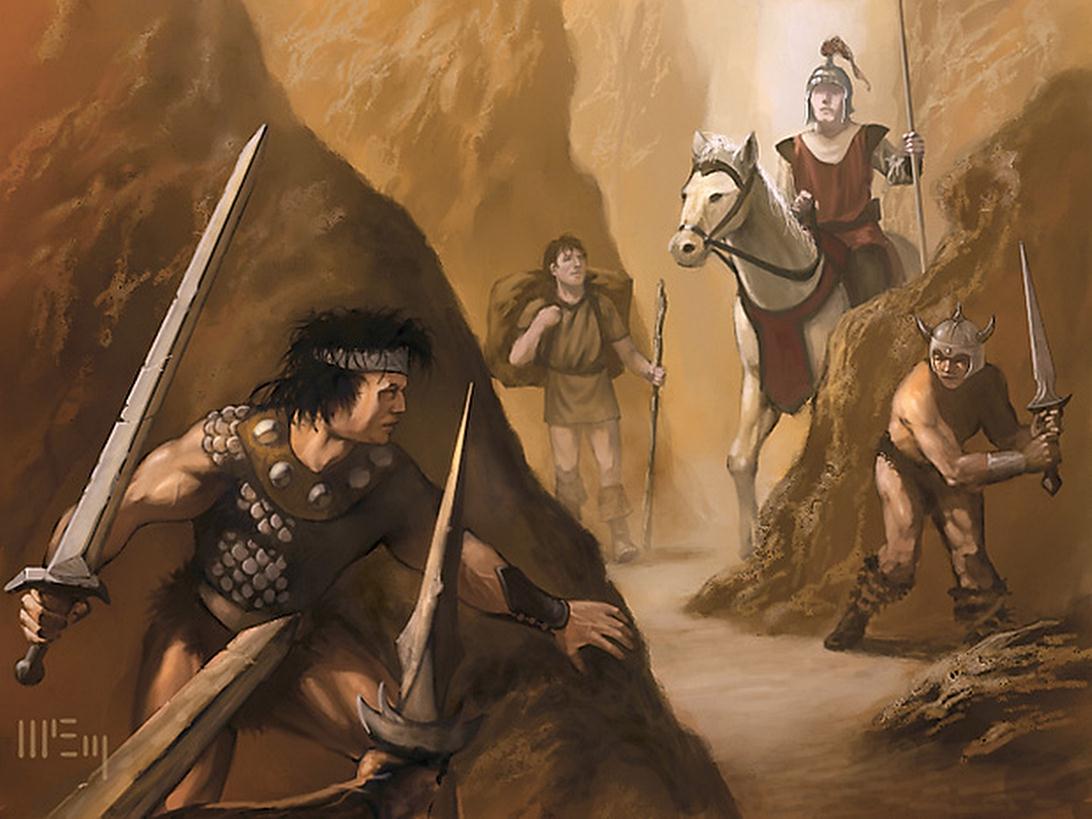
The wicked lie in wait to destroy me…

The wicked lie in wait to destroy me, but I consider your testimonies. (Ps 119:95)

I’m not a very poetic guy, but I love the psalms. For those of you who aren’t terribly familiar, Psalms is a huge book of poetry in the middle of the Old Testament in the Bible. It contains poems and hymns and prayers written thousands of years ago that call out to God in worship, pain, fear, and rejoicing. Many were written by kings, others by prophets. Many are anonymous. But all speak the heart of those who feared and worshipped God in their day. They form a tapestry of deep richness and vivid color.

But I remember when one aspect of the Psalms used to really frustrate me. In verse after verse, the authors of the psalms (particularly King David) talks about his enemies, asking God to slay them, silence them, protect him from them, overcome them, give victory over them in battle, etc. And that confused me.

I’m not a king. I don’t have an army. I’m not riding out to war next Thursday to defeat an invading enemy army. I don’t need protection from those lying in wait to slay me.

Do I?

Battle of Helms Deep

Here are just a few representative psalms that demonstrate what I’m talking about…

Lead me, O LORD, in thy righteousness because of mine enemies; make thy way straight before my face. (Psalm 5:8)

Arise, O LORD, in thine anger, lift up thyself because of the rage of mine enemies: and awake for me to the judgment that thou hast commanded. (Psalm 7:6)

When my enemies are turned back, they shall fall and perish at thy presence. (Psalm 9:3)

God has delivered me from my strong enemy, and from them which hated me: for they were too strong for me. (Psalm 18:7)

It goes on and on like this. There are 150 psalms and over 100 references to “enemies” in the psalter (what monks and seminary types call the book of Psalms in Scripture). Wow! So, what’s the deal? How should we read these references?

Well, the truth is that I do have enemies. So do you. The lesser variety is the kid who teases you on the playground or the boss that makes your life difficult, the estranged family member or the neighbor who’s openly hostile to you. I suppose you could consider those “enemies”, but only in a sense. I’m pretty sure God does not consider them someone to be “overcome in battle”. It’s hard to imagine writing a modern poem to God about the kid on the playground or a troublesome coworker “perishing at God’s presence”.

In fact, Jesus is pretty clear that we are to love these “enemies” and pray for them (see Matthew 5:43-48; in fact read all of Matthew 5-7 and you’ll clearly see Jesus’ heart on interacting with people in general). This certainly doesn’t seem to mesh with the kinds of things David (and others) write about in the psalms.

What God has been teaching me is that these aren’t the “enemies” David is talking about. We have another kind of enemy… one who is in fact lying in wait for us, seeking to destroy us. The Apostle Paul explains…

“We do not wrestle against flesh and blood, but against the rulers, against the authorities, against the cosmic powers over this present darkness, against the spiritual forces of evil in the heavenly places.”  (Ephesians 6:12)

ambush1Peter describes it this way…

“Be sober-minded; be watchful. Your adversary the devil prowls around like a roaring lion, seeking someone to devour.” (1 Peter 5:8)

The truth is that there is a spiritual reality all around us. And in this realm, enemies abound. Demonic enemies. Great and purposeful evil that wants to see you utterly and eternally destroyed. Not the kind of enemies that you love and pray for, but the kind you resist in Christ’s Name, so that they will flee from you (James 4:7). These are in fact the enemies we should be asking God to slay, silence, and overcome. These are our analogy to David’s invading armies. And like David, we humble ourselves before God and submit to His protection from them and victory over them in battle. So the truth is that we too could have written David’s psalms. And the day I realized this was the day my appreciation of the psalms skyrocketed.

Once we’re in the right mindset, it’s pretty straightforward to start identifying the weapons of our enemies (led by The enemy) as well. Their entire arsenal consists of lies. Satan’s pretty much a one-trick pony, but his lies are creative, subtle, powerful and persistent … and he’s quite good at wielding them.

Here are some examples:

  • The things we fear or worry about (that occupy our minds instead of prayer and thanksgiving)
  • The things we believe we cannot do (even though God’s Word says we can)
  • The things we believe will never change (though God’s has assured us that He will finish what He started — Philippians 1:6)
  • The things we accept as proof that God is not really good (countless lies center on this mother of all deceptions)
  • And I could go on

spiritual_armor1 But God — who commands us not to fear, who never lies, and who has clearly reassured us that He is orchestrating all things for His glory and our good (Romans 8:28) — has instructed us to beware of this enemy and to gird ourselves for Battle.

Thomas à Kempis says, “Cease not to array thyself for battle, for both on the right hand and on the left are enemies that never cease.” (Imitation of Christ, Book 2, Ch 9)

Paul says, “Be strong in the Lord and in the strength of his might. Put on the whole armor of God, that you may be able to stand against the schemes of the devil” (Ephesians 6:10-11)

Like David, we too are to do battle with the enemy hordes. But not unarmed, and not alone.

The image that God — using C.S. Lewis, Walt Disney, and Andrew Adamson — has given me for this posture before our enemies is depicted in The Chronicles of Narnia: Prince Caspian. Lucy (a child with a small dagger) stands on a bridge opposing the entire enemy army. She is outnumbered 1000-to-1 by bigger, stronger, scarier, better armed, better trained, better-equipped soldiers. On the surface, she’s in serious trouble. But she stands firm, pulls out her dagger, and her body language clearly communicates that they don’t stand a chance. It’s ludicrous… except… Behind Lucy stands Aslan, the Lord of Narnia, all-powerful, unstoppable, and representing in C.S. Lewis’ epic tale the Son of God. He is infinite in majesty and power, and the very Creator of all things. Lucy does not stand alone. She is not the vulnerable weakling she appears to be. For her strength is in the mighty arm of God. The ancients knew this too (check out Psalm 89:5-26 and Psalm 28:6-9 just to get started). And so should we. Neither are we alone. Neither are we the vulnerable weaklings we might appear to be.

aslan_and_lucy

Our enemies are very real. Some are in this world — whom we love and sacrifice for that they might see Christ in us. Some are in the spiritual world — whom we resist in God’s power and before whom we stand firm in God’s strength. But in all cases, we do not fear, we do not shrink back, we do not ignore them or believe that somehow they are not real, and we certainly do not believe their lies.

It’s my prayer that you will never read the Psalms the same way again.

God is our refuge and strength, a very present help in trouble.
Therefore we will not fear though the earth gives way,
though the mountains be moved into the heart of the sea,
though its waters roar and foam,
though the mountains tremble at its swelling.

“Be still, and know that I am God.
I will be exalted among the nations,
I will be exalted in the earth!”
The Lord of hosts is with us; the God of Jacob is our fortress.

(Psalm 46)

Posted in Real Life, Theology | Tagged , , , , , , | 8 Comments

A Tribute to Norm Whitney

Norm Whitney

My friend, Norm – 2004

Norman L. Whitney, 73, passed away on Tuesday, March 24, 2015, surrounded by loving family. Norm was born July 16, 1941 in Newton, Massachusetts to Norman and Barbara (Collins) Whitney. He spent his childhood in New England. He loved sports and fishing the jetties in Oak Bluffs on Martha’s Vineyard. Norm and his wife, Maryann, would have been married 50 years in August. After many years of corporate life at Xerox, Norm devoted his life to ministry, serving in leadership roles at International Bible Society and Awana International. He spent his retirement years volunteering as Executive Pastor at West Ridge Community Church in Elgin. Even to his last days, Norm always took great pride in serving others, and he saw each moment with family as a chance to build into future generations. He is survived by his wife, Maryann; his children and their spouses, Jodi and Darren Niesley, and Tim and Jennifer Whitney; grandchildren Chelsea (Andrew) Stinson, Hannah Niesley, Jack Whitney, and Natalie Whitney; and by his younger siblings, Marjorie Whitney, Ruth DeWilde-Major, David (Susan) Whitney, Barbara (Len) Bernstein, and Jean (Joe) Vinci; and nieces and nephews.


“The mouth of the righteous man utters wisdom, and his tongue speaks what is just.” (Psalm 37:30)


Norm Whitney was a amazing man and a dear friend — a man of great ability but greater humility before the Lord. He loved the Lord and people well, especially God’s church. He was always eager to serve, always ready with a kind but challenging word, always generous, always gracious, fun to be with, and so zealous for Christ!

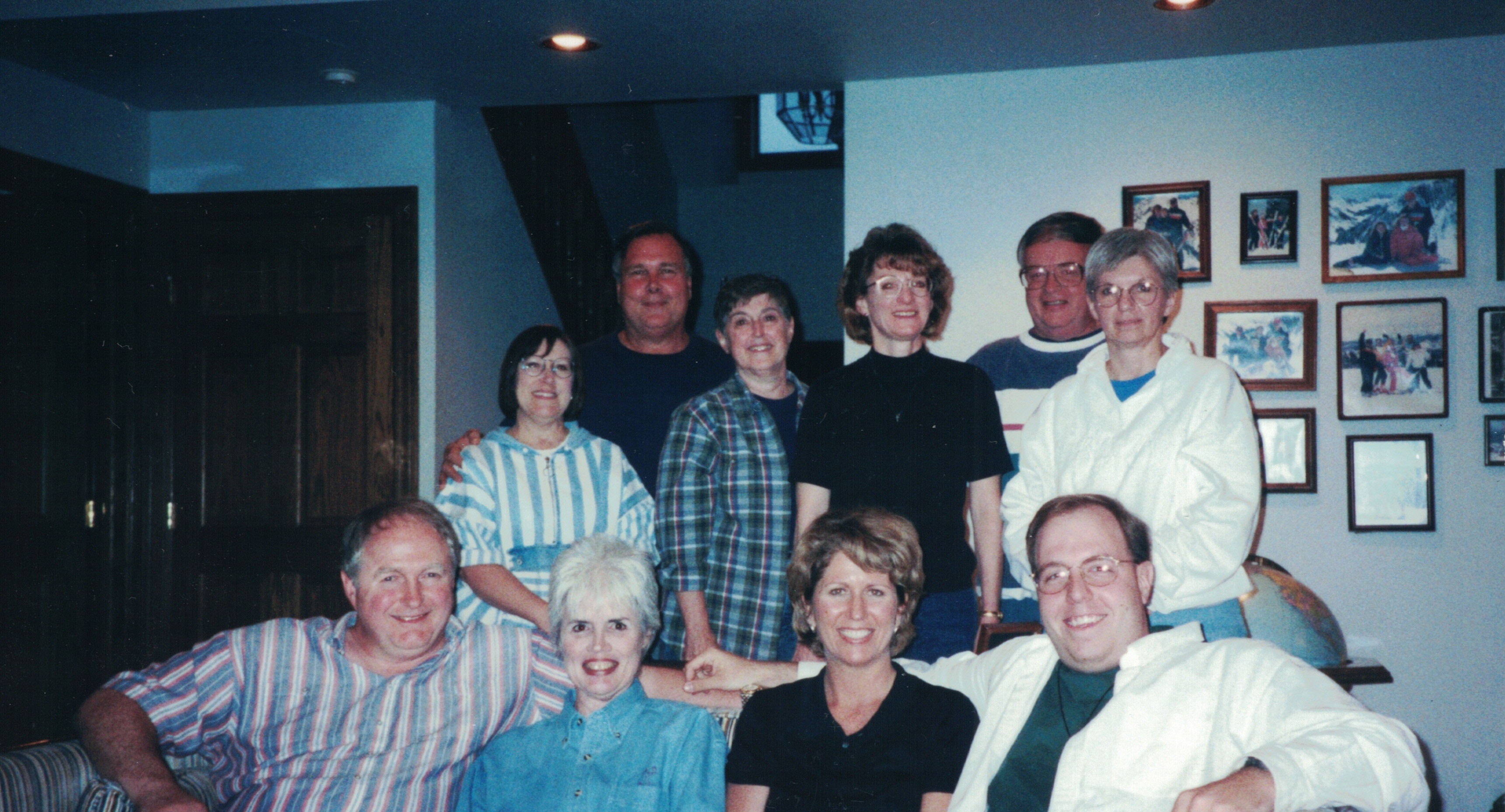
I met Norm right after I graduated from college. When I moved to the Chicago suburbs, I began attending Willow Creek Community Church. I met Norm when I attended a spiritual gifts class there. He was a leader in the ministry, and encouraged me to step up into leadership as well. I did. Over the next few years, I joined Norm’s small group (picture of us below), and followed him into ministry in Willow’s financial and “Spiritual Pathways” ministries as well.

Norm Small Group

Our small group – late 90s

Norm was a gifted leader and shepherd. God gave him as a gift to so many, including as a mentor to me personally. I was often blessed by his wise counsel and his Christ-like example, often challenged by him to draw near to God and trust Him.

Whether you can tell it or not, I’m the youngest person in the above picture. I was about half the average age of the group. In and out of small group, Norm was a spiritual father to me. He was quick to listen and offer needed advice. And I took every problem, fear, concern, victory, failure, and in between to him. I have so long in my life struggled with the fear of man — wanting everyone to think highly of me — and Norm was quick to assume the role of the one who could see through me. When others fell over themselves to tell me I was wonderful because I could score a reasonable paycheck or solve a hard problem, Norm was instead quick to ask about my heart, and to demand that Christ be first in it. He was simply too experienced with the lure of the world and the power of the human heart to deceive us to let me talk my way out of not giving God my heart in all things. His impact on my spiritual development in that regard cannot be overstated.

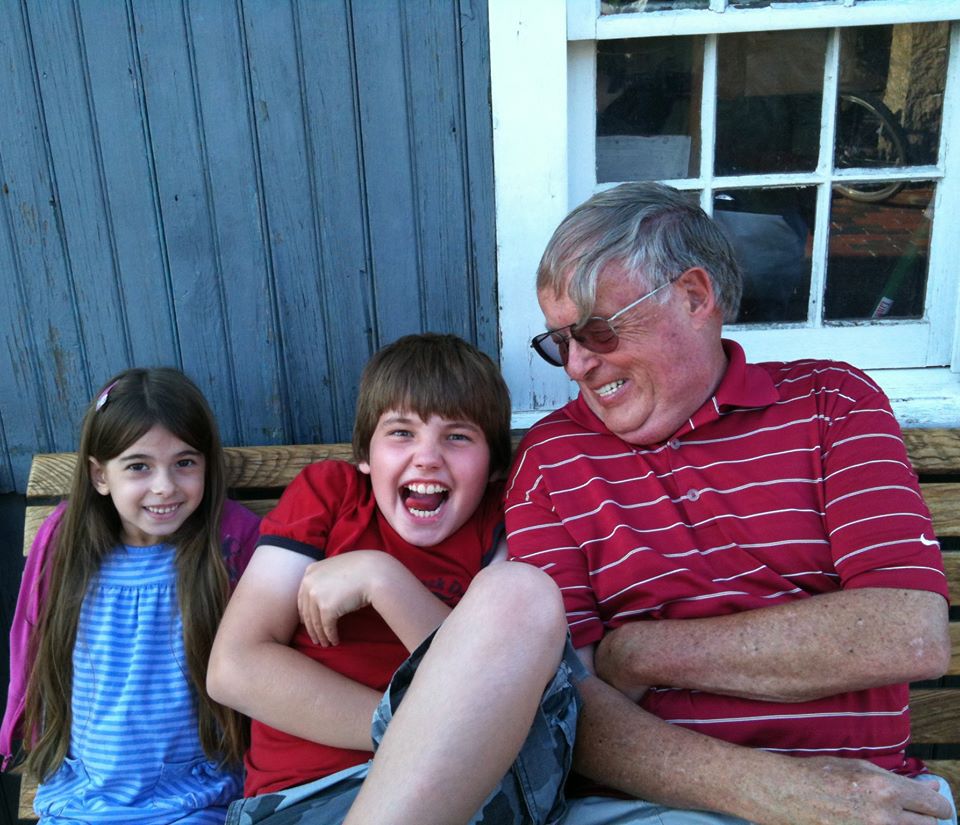
norm_maryann_faithIn 2004, Norm and his wife Maryann moved out East. Faith and I helped them move, but we were not as connected to them after that as we wish we had been. Even after they moved back to the area, we saw each other too seldom — both of us busy with work and ministry.

The list of things that I regret about my seeming willingness to sacrifice everything in my life on the altar of work over the last 20 years is very long. The crushing weight of that list, headed by God’s call to repentance and redirection, has driven me to finally make the changes God has called me to for a long time. So, for me, it’s halftime. I’ve written more about this elsewhere, but I mention it hear for two reasons. First, on this list is not staying better connected with Norm. But even though our breakfasts and coffees were less frequent than I wish they would have been, I treasured Norm’s friendship and continue to benefit from his counsel.

Secondly, as I make my own half-time transition, many of Norm’s reflections on his own experience, as well as his Christ-centered words of advice and encouragement, ring in my ears. Norm came to Christ later in life (in his 30’s), and God radically redirected his life from the business world into ministry. And I cannot even imagine how many people will someday find him in heaven and thank him for his obedience to Christ. There will be innumerable people in heaven because of Norm’s faithfulness and God’s work through him, and countless more will have been impacted by Norm’s tireless service for the gospel.

One of the last few times Norm and I saw each other, I was laying out what felt like 1,000 decisions that faced me in connection with potentially quitting my job as an executive and going to seminary. I remember so clearly… I was mid-monologue when he leaned back in his chair, glint in his eye, huge smile on his face (anyone who knows Norm can picture what I’m describing), and settled in to wait for me to finish my long list of “What do I do with…?” questions, having obviously already come to conclusion in his mind. I stopped in my tracks, “What?!” He said, “I was almost exactly your age when I left Xerox. You may think God needs [all the things I was fretting over], but He doesn’t. Just do what He tells you to do, and don’t be afraid.”

norm_and_kidsAmen. God help me, that’s exactly what I’m going to do. In fact, I’m writing this from the campus of Trinity Evangelical Divinity School.

Norm wasn’t just wise, he was a great example, and a good friend. I pray that the second half of my life is as fruitful and pleasing to God as Norm’s was. All his fun, all his joking around, all his godly ambition to take new ground for the gospel, and all his passion to love God with all his heart and help others do the same. As a foolish, single, ambitious, obnoxious 20-something, I thought, “If I can become half the man this man is, I’ll have done well.” And I can say now, as a slightly-less-foolish 40 year old, I still believe that. I suspect that if God gives me another the 30 years, I’ll still be thinking of Norm when I make decisions about my career, or wrestle to find God’s heart for what “leadership” is (how many countless hours Norm and I spent talking about what “leadership” should look like in the church!), or being a mentor to another man. Again I say, it would be a worthy goal to approximate anything like the amazingly godly man that Norm was.

I love you, Norm. Thank you.

I will deeply miss my friend and I don’t think the tears are all behind me, but I also thank God for Norm’s life and, along with his family and the many others whose lives he touch, I celebrate him. I am overjoyed that he is home with the One he loves, and I can assure you that Norm is having an awesome day today. I can’t wait to see him again!

Our hearts and prayers — my wife’s and mine — go out to Maryann and the rest of Norm’s family. God’s peace and comfort be with you! We know you are surrounded by a loving church family and many friends whom your lives have touched. We are praying for you all.

Well done

“Well done, good and faithful servant! You have been faithful with a few things; I will put you in charge of many things. Come and share your master’s happiness!” (Matthew 25:23)

For more about Norm’s life and the official tribute page, sponsored by his church family, check out the official Celebrating the Life of Norm Whitney page at West Ridge Community Church.

Posted in Family and Friends, Tribute | Tagged , , | 2 Comments

On Jesus

Paraphrase and amplification of Imitation of Christ (Book 2; Chapters 7, 8, and 11) by Thomas à Kempis…

Loving and Trusting Jesus

Blissful is the one who understands what it is to love Jesus and to despise himself for Jesus’ sake.

It is fitting for one in love to forsake all things for the one they love, for Jesus would be loved alone above all things. The love of any creature is failing and unstable, but the love of Christ is true and persevering.

Snuggling Baby 1He that binds himself in love to any creature or thing shall fall with it, for all creatures and all things perish. But he that embraces Jesus shall be made steadfast forever. Love the Lord and hold fast to Him as a friend who, when all else has passed away, shall not forsake you and will not allow you to perish in the end.

From all things, you must be eventually departed, whether you want to be or not, for nothing lasts forever. Everything is temporary. But, whether living or dying, hold yourself fast to Jesus, who never had a beginning and who will have no end. Commit yourself to His trust who, when everything else fails, will alone remain to be your help and your comfort.

It is God’s right and privilege to accept as friend who He desires to accept, to adopt who He desires to adopt. Your Beloved (Christ) is of such a nature that He will admit no stranger into His family, but He alone will have your heart and sit as a King on his own throne. So, if you could free yourself from every other creature, then Jesus would gladly dwell with you. But He will not share that place with another, nor should we expect Him to.

If you trust in any creature, you will eventually find that all is lost. No creature or thing can hold you up! Trust not, nor lean upon, a windy reed … for all flesh is like grass and its glory shall fall as the flower of the field. (see 1 Peter 1:24-25)

Finding and Drawing Near to Jesus

If you look only to the outer appearance of men, you will be quickly and easily deceived. If you seek solace and benefit in others, you will find that it becomes a hindrance to you. If you seek yourself, you will find yourself, but you will discover that it is to your own harm.

Snuggling Baby 2But if you seek Jesus in any and all things, then you shall find Him. And you will find that He is both enough for you and at the same time more than anything else for which you have ever searched.

A man hurts himself more if he chooses not to seek Jesus than all the world and all his adversaries can hurt him.

When Jesus is near, everything becomes goodness and nothing seems hard, but when Jesus is not near, everything is hard. Not that we won’t have trials who trust in Christ, but we will see them for what they are — God’s loving discipline and perfecting reproof.

When Jesus speaks not within your heart, whatever comfort the world would give you is of little value, but if Jesus speaks even one word, then there is found great comfort. Blissful is that man who, when Jesus comes, is called from tears into the joy of the Spirit by His mere presence and understanding embrace.

How dry and how hard we are without Jesus! How unsavory, how vain is our covetousness, even as what we seek would often harm us even unto death. What good would even the whole world be without Jesus? To be without Him is a grievous hell, but to be with Jesus is a sweet paradise.

If Jesus is with you, then no enemy may hurt you.

The one who finds Jesus finds a great treasure, even a treasure of more value than all other things together. But the one who loses Jesus loses more than if he lost the entire world.

Knowing and Therefore Loving Jesus

It is a great craft for a person to sit and speak with Jesus, to know how to simply be held by Him is a great wisdom.

Be meek and peaceable, and Jesus will hasten to be with you. Be devout and restful, and Jesus shall abide with you. It is easy to chase Jesus away and lose His precious presence if you allow your heart to prefer other things. And if you chase Him out and lose Him, to whom will you turn? What other friend will you seek? You cannot live well without friends. And if you turn away from Jesus, no other friend will be able to assuage your guilt or loneliness, or offer you real wisdom, or give you rest from your weariness … no matter how highly you esteem or trust them.

It would be better for the whole world to hate you than to be estranged from Jesus.

Snuggling Baby 3Among all, therefore, that is dear to you, let Jesus be your dearest love and most special friend. Let all love be for Jesus. He only is to be loved, who is alone found good and true before all other friends. For Him and in Him let both friends and enemies be dear to you, and pray for them – friends and enemies alike – that they would know His love.

Never desire to be singularly praise or loved, for that belongs to God alone, and there is none like Him.

Nor desire that anyone would be preoccupied in their minds in love for you alone, for that place too is reserved for God. Better to be pure and free within, without the impediment or encumbrance of any other creature. Not that we would refuse or reject love, but always that we would refuse worship and hold it in our hearts for only One.

Receiving Grace from Jesus

If you want to taste and see how sweet God is, lay yourself bare and bear to God a pure and contrite heart. And to become pure, seek God’s grace. For without it, you cannot see God. But when the grace of God comes to a man, then he is mighty to all things. But if it goes away, then that man is poor and weak and left only to pain.

Snuggling Baby 4In all these things, do not despair or be cast down, but stand simply at the will of God and suffer whatever comes while praising the Lord, for after winter comes summer, and after evening comes morning, and after the tempest comes great calm. And God’s loving grace brings them all.

Sacrifice for Jesus

Jesus has many who love the kingdom of heaven, but few who bear the cross. He has many who desire consolation but few who desire tribulation. He finds many fellows of the table, but few of abstinence.

All desire to joy with Jesus, but few will suffer pan for Him. Many follow Jesus unto the breaking of the bread, but few unto the drinking of the cup of the passion. Many worship his miracles, but few follow the reproof of His cross.

Many love Jesus when there is no adversity.

Many praise Him and bless Him while they take away consolations from Him, but if Jesus hide Himself and forsake them a little, they fall into complaining or even great dejection.

But they that love Jesus for Jesus, and not for any consolations, they bless Him in every tribulation and with anguish of heart, just the same as in the highest consolation. As if He would never give them consolation, still they ever praise Him and thank Him. We chose gratitude because God is worthy of it, not because we understand our circumstances well enough to warrant it.

O how mighty is the pure love of Jesus when it is mingled with no love or profit of self. Drunk and charmed with ourselves we will never worship God as He deserves nor walk with Him as He desires.

Bring your Heart to Jesus

Take your eyes from yourself, whether your opinion is high or low, and ascribe to the Lord the glory due His Name. Worship the Lord in the splendor of holiness. Tremble before him. Bring a worthy offering when you come into His courts. For God desires nothing from the field or the forest or the waters or the heavens, but rather your very heart, your very soul. Bring this offering to the Lord, to discover that He is worthy and that you in that place are who you were made to be.

Walking Together

Together with Jesus…


Posted in Book Review, Real Life, Theology | Tagged , , , , | Leave a comment

Back to a Better Church?

In a recent assignment for my Church History class, I was confronted with the following question that I found extremely interesting and thought provoking. Other than having to respond to it with pen and paper (confirming forever the reality of Carpal Tunnel Syndrome), I very much enjoyed tackling this question, so I thought I’d share it here. Hopefully, it will spawn discussion and even debate, not just reading. Please feel free to comment your opinion / answer to the following question…


ConflictA friend who is planting a church tells you: “We find the divisions, controversies, and spiritual lethargy of the contemporary Church completely unacceptable. Therefore, our vision for church planting is to create an authentic community of believers modeled entirely on the theology and practices of the early Christian church, before the reign of Constantine.” Write a letter to your friend in which you assess the wisdom of this proposal.


Dear friends…

I so admire your desire for unity in the Church and zeal for the Name of Christ. We should all desire that and pursue it with passion. However, I submit that you may be romanticizing church history and ignoring key elements both of the development of theology and the cultural / historical influence on church practices.

Before we do anything else, let’s establish the period we’re discussing. “Before Constantine” would equate to the period from the Apostles to AD 312, when Constantine rose to power over the re-united Roman empire. So, roughly, the first 300 years of church history.

TheologyTheology

In that time, Christian theology was anything but free from division and debate. Many of the orthodox beliefs we now take for granted were either being hotly debated during that time, were still in their infancy, or were not yet even universally defined (some yet to be even debated).

For example, it was unclear in that time (and certainly not a foregone conclusion) how to understand the continuity between the Old and New Testaments or between the Jewish God and God the Father of the Lord Jesus. Debate raged concerning the authority of Scripture, and was even more pronounced concerning the authority of the church to interpret the Scriptures. There were many ideas (from flat denial to myriad explanations of) the incarnation of Christ and the nature of the Trinity. The questions of the nature of sin, the will, and grace hadn’t really begun to be tackled yet. That debate would heat up later in the 4th and 5th century with Pelagius and Augustine of Hippo, as would the nature of Christ as the God-man, in the monophysite controversies beginning in the mid-5th century.

The canon of Scripture — the “boundary” around which documents were to be considered part of the New Testament — had also not yet been formally and finally recognized. There was broad agreement on the authenticity and historicity of many of the books we now call the New Testament, but it wasn’t universal. And a great many forgeries and other aberrant works plagued the churches all over Europe, Asia Minor, and N. Africa. The Church at this time was in the throws of weeding through all that to identify the true writings of the Apostles and teachings of Christ. You would be putting yourself in the heart of that debate, not rising above it.

Also, heresies abounded. Extreme controversy swirled around such non-orthodox views as…

Gnosticism

A dualistic philosophy which considers matter (and the God who created it) “evil”, and the spirit “good”. The soul is trapped within man, and the spark of the divine (experienced only by some through the discovery of “secret knowledge” unto “enlightenment”) can empower the soul to transcend the body in death and be released to be with God. This view held that the God of the Old Testament was evil, having created the physical world, and that Jesus could not have been fully man. (Read more)

Monarchianism

A philosophy which sees God as One, but leaves no room for a Trinitarian concept of God. Many varieties exist, but all consider God the Son and God the Spirit to be some kind of illusion or manifestation or “mode” of God’s unified Being, denying their true personhood. (Read more)

Arianism

A philosophy which sees Jesus as a little “G” god who was created by the Father, and is lesser than Him. The Spirit is typically seen as lesser still. This view denies the Trinitarian formulation that was agreed upon by the church at the Council of Nicaea in 325, seeing God as a Trinity: one “essence” in three “persons”. (Read more)

So, you see, turning back the clock to this early ages of Christianity would not eliminate controversy or division, but likely intensify it.

ChurchPractice

With regard to church practices, I have a couple thoughts. First, you would be erasing many generations of rich tradition (from which we have and can continue to learn), resetting back to a period in which very limited material would exist to guide you in organizing the church. You would certainly make use of the Didache, published c.110 to describe a theology of the paths of light vs darkness, and to instruct on church organization, dispensation of the sacraments, and liturgical practices. But other than that, you would be limited to the writings of a few Patristics (early Church father), and a not-yet-ratified canon of Scripture.

For example, the nature of baptism and the appropriate way to confer it was hotly debated then as it is today. Tertullian‘s De Baptismo, as just one instance, was written in the early 3rd century to contest the practice of infant baptism.  So again, I doubt you would be escaping controversy in any meaningful way.

Persecution

Lastly, remember that you are describing a time of significant persecution, which greatly shaped church practice and policy. There were only house churches then, and Christians typically met in secret. The first church buildings didn’t appear until mid-3rd century, and even then were rare due to rampant persecution — which didn’t end until the time of Constantine (who legally ended it). Martyrdom was extremely prevalent, as was the debate over how to deal with apostasy Underground Churchand canonical penance. Because the stakes were so high, the Church deeply struggled with how to apply discipline and grace, especially when it came to someone who renounced Christ to escape execution at the hands of the Roman government — a daily phenomenon. By placing yourself and your church in that era, you would be right in the heart of these bitter hardships and exceedingly difficult decisions in the face of them. Although you may be correct that some (not all) in that time took their faith very seriously, you cannot reproduce those conditions with the persecution and hardships that created them.

Conclusion

All that said, I do feel there is wisdom in seeking simplicity and deep commitment to Christ in daily life among His people. “Divisions, controversies, and spiritual lethargy” are indeed problems today, but have always been there. These are the legacy of human nature in general, not just of Constantine or of any one time in history. Every era of history has its strengths and weaknesses, its conflict, its openness to the gospel, and its challenges. Let’s work together to learn from the totality of church history and build the Church of Christ in our time, not blindly unwind it in search of a utopian past which didn’t really exist. God is calling us to go into all this world, and make disciples, not to a rose-colored past. Either way, I’m in it with you!

Planting

“Go therefore and make disciples of all nations, baptizing them in the name of the Father and of the Son and of the Holy Spirit!”

Love,

Jeff

Posted in Theology | Tagged , , , , , , , , , , , , , , , | 1 Comment

Just as you received Christ, so walk in Him

To the Christian, specifically my fellow seminary students…
A sermon manuscript on Colossians 2:6-7, prepared for my homiletics class at Trinity Evangelical Divinity School
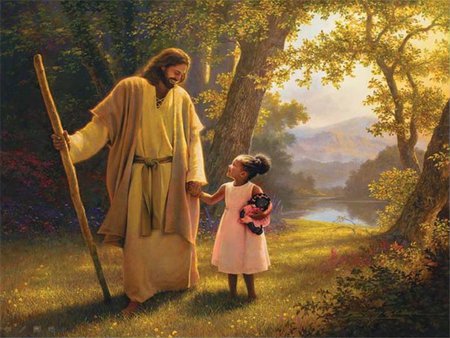
Walking with God

Just as you received Christ Jesus the Lord, so walk in him…

Introduction

Close your eyes. Think back to the first memory you have of knowing Christ. Can you picture it? Allow it to fill your senses. Feel what you felt then. Re-experience it. Do you have it? In that moment, what were the first thoughts and feelings you had? Okay, now open your eyes.

For me, it was June 20, 1994. I was a sophomore in college, and I thought my sin had destroyed a relationship with someone very dear to me. I remember being up crying much of the night – which was very unusual for me. I was overwhelmed with grief. But suddenly, in the midst of all my twisted notions about no longer being good enough for God to love me, the Lord brought rushing back upon me all the Bible trivia I’d played as a child. If I wanted to, I could be free. I wasn’t trapped in my sin, and I hadn’t forfeited God’s love because of it. Far from earning something from God, I could literally hand over the broken pieces of my life to God, and He would make them something beautiful. On my own, I was dead … wretched and weak, destructively sinful and completely helpless. But if I let Him, Broken and contrite heartChrist would save me … and give me a new life. Even all these years later, I remember those feelings of utter dependence on Him like it was yesterday.

Over the next year, God healed that relationship and literally overwhelmed me with His amazing goodness. Although I had glimpses right away of the life God had planned for me, it would take well over a decade after that day for God to drive home to me the truth that Paul is expressing to the Colossians in our passage today: that we are just as dependent on Christ to walk in new life with Him as we were to receive the gift of new life from Him in the first place.

Invitation to Turn to Passage

Open your Bibles with me, please, to Colossians 2:6-7. <Repeat reference>

Introduction to the Text

While you’re turning there, let me briefly introduce and give you some context for this passage.

Within only a few decades of Christ’s ascension, the church at Colossae had begun to blend elements of the pagan worship of angels and Jewish mysticism into their concept of Christianity. In response, the Apostle Paul wrote this letter to the Colossians to elevate Christ’s supremacy and sufficiency for them in all things. He desired that they would abandon these “useless arguments” and trust fully in Christ. Paul argued that it is neither necessary nor profitable to turn to anything in creation for spiritual life, but rather – as he states just a few verses earlier – that in Christ are found “all riches”, “all understanding”, and “all the treasures of wisdom and knowledge”.

In the context of this larger argument, we come to the portion of His Word that God has for us tonight. But before we read the passage, let’s pray that He would illuminate it for us.

Prayer for Illumination

Please bow with me in prayer…

Reading of Scripture

Colossians 2:6-7. Please follow along with me in your Bibles, as I read what Paul writes (from the ESV):

Therefore, as you received Christ Jesus the Lord, so walk in him, rooted and built up in him and established in the faith, just as you were taught, abounding in thanksgiving.

Transitions Explained

The first thing we notice in this passage is a number of transition words. The whole passage starts with the word “therefore”, and Paul reinforces his teaching in v7 with the words “just as you were taught”, which is a reference to what he means by the word “faith”. To this point in his letter, Paul has been explaining that Christ is preeminent in all things and that He is everything the Colossians need. Here, Paul refers both to his own teaching and to the weight of everything Jesus, the Apostles and their own pastor Epaphras have taught them.

What faith? What have they been taught?

In the next phrase, Paul specifically references what the Colossians have been taught with the phrase, “as you received Christ Jesus the Lord”. He doesn’t give us any detail here, but they knew what he was talking about, and so do we. In the opening moments of this message, I invited you to remember with me how it felt when you first came to Christ – how you first received Him. I hope this reminded you of a sense of utter dependence, a helplessness and smallness before a holy God, the unequivocal need for a Savior. This is how every Christian truly receives Christ, and Paul is inviting the Colossians with this phrase in v6 to remember their first love – just as I invited us to remember Him together a few moments ago. Paul may be implying much more by this phrase “as we have received Christ”, but certainly not less.

Primary Claim / Organizational Sentence

With those thoughts fresh in their minds, Paul then proceeds in the text to call his readers to three specific ways in which their daily lives must actively depend on Christ. Paul is calling both the Colossians and us to walk with Christ just as we were saved in Him: in active dependence.

Main Points

VineyardRooted in Him

I. We depend on Christ for daily life in Christ. (7a – “rooted … in Him”)

First Paul explains that we depend on Christ for daily life. <Read> Paul uses the same imagery here that the Apostle John uses in John 15 when he describes Jesus as the vine and His followers as the branches. As the branch must be rooted in the vine to remain alive, so we as Christians must remain rooted in Christ. If you were to find a vineyard – which was easy to do in Paul’s or John’s day – chop a branch from a vine, and bring it home with you, it would wither and die. Not at first, but eventually. At first it would seem perfectly fine, but in truth, the very moment it was severed from the source of life, it began to die. So it is with us. We depended completely on Christ to be born again, but it is no less true that we must remain rooted in and connected to Christ for spiritual life.

Consider a light bulb in an otherwise dark room. It produces light and heat. But we have no way to carry that light or heat away with us to another room. If we want light and heat, we must remain near the bulb. God’s life-giving presence is the same way. To possess it, we must remain in it. James MacDonald says it this way, “God doesn’t dispense [strength for living] the way a pharmacist fills a prescription.” His point is that God does not equip us to independently live the Christian life, but rather that our relationship with God is the Christian life. I agree, and so does Paul, as he demonstrates here.

So what does that look like in our practical everyday lives? God is calling us to remain in Christ. God supplies life in the vine. Our task before God is to remain rooted in it, that we might continue to receive its life. This means that we abandon any concept of searching for life in other places. We resist the temptation to depend on anything but God Himself as life-giving. We tear down idols and overturn altars to other gods, some of which can be extremely subtle. Ministry success, good grades, financial security, the approval of others, health and fitness – all of these are good things in some measure but to the extent they might claim to bring us life, they become the lies that would drag us from light and heat into death and darkness.

There is only one source of life and the power to live it, and that is Christ. To the extent that we depend on Him, we will have all the fullness of the life God promised us. But any other approach – the life lived for my sake or my desires, my agenda or my security – gives only the appearance of life, as does the branch when recently detached from the vine. But also like the disconnected branch, the disconnected spiritual life it is in fact dead.

Home ConstructionBuilt up in Him

II. We depend on Christ for daily building up in Christ. (7b – “built up in Him”)

This leads very naturally to Paul’s second point. First, we are to be rooted in Christ – dependent on Him for life. Secondly, Paul exhorts us to be “built up in Him”. <Read> Paul is using construction terminology here. The word translated “to build up” means to erect the first floor of a structure solidly on its foundation. The implication is that of a careful plan and skilled artisanship to achieve it.

However, a building does not build itself. Thirteen years ago, when I had my home built in the suburbs of Chicago, it started out as a plan and an empty field. An experienced architect drew up the design. The plan was approved. The foundation was dug. And finally, skilled laborers built my house on top of a well-thought-out plan and a firm foundation – both of which pre-existed its construction. So it is with the Christian life. God carefully designed your life and mine. Christ laid the foundation for it. And now (as the Apostle Peter put it) we are day-by-day being built up into a spiritual house (1 Peter 2:5… and that, by God Himself. God is both the Architect and the Builder. He has unmatched skill. And in the end, our lives will look precisely as He planned for them to look. We are neither The Potter and Clayarchitect nor builder. We are the objects of God’s handiwork – the clay in the Potter’s hands. We are no more capable of effectively designing our lives or building what God has designed than my house was capable of designing and building itself.

So here too, we find ourselves dependent on Christ. In addition to remaining in Him, Paul is calling us to submit to Him.

We who are working hard at seminary degrees would be wise to take particular note here. It is God’s design, God’s plan, God’s goals, and God’s work in us to achieve His goals. We work hard, and rightly so, but let us be careful not to work as if we are building God’s house, believing that somehow we accomplish God’s plans with our labor. God alone designs and builds the lives He desires for us, and it is critical that we wait on and submit to Him. His priorities must trump ours. His definition of success must rule over ours. Christ must be our first and highest love. Our humility before God and His rightful place as King in our hearts must precede our labor for Him.

So, let’s get really practical. If we’re going to take seriously Paul’s charge to be built up in Christ, we can’t hurry through or skip over time with the Lord because we have a ton of reading to do or a big test to study for. It means we take God’s call to resting in Christ seriously, despite the voices that tell us that we can’t afford it. It means we’re careful not to neglect our God-given responsibilities to our marriages and families for the sake of ministry. And it means being unwilling to accept high grades if they come at the cost of a shriveled soul.

And as we humble ourselves before God, we acknowledge that His building work in us is more important than our building work in our careers or classes. We must give God the right and the room to fight battles in our lives we simply cannot fight for ourselves, no matter how hard we work or how long we study, and to develop us into who He wants us to be. To submit is to maintain the proper view of God as Builder and us as those under construction.

SealedEstablished in the Faith

III. We depend on Christ for daily establishment in the faith. (7c – “established in the faith”)

Thirdly, having called for their dependence on Christ for daily life and spiritual growth, Paul admonishes the Colossians to be “established in the faith”. <Read> The word he uses here has a number of nuanced meanings: to be strengthened, to be ratified (sealed as law), to be confirmed, and to be made secure. This word is used elsewhere in the NT to describe God’s covenant with man and Christ’s redemptive work on the cross, which we know to be firm, steadfast, and secure. God has taken upon Himself the work of sealing our faith like a law ratified and unchangeable. He causes the faith of the elect to stand firm, confirming and guaranteeing it, making it – and us – secure.

Note that it is not by our power that we are established in Christ, but by His power. So here again, we depend on the Lord. To be established in the faith is to know with certainty that God is in fact doing the work we’ve discussed – daily nourishing and building us.

ThChildlike Truste question begged her is: do we trust Christ? Paul is calling the Colossians to a deep, secure, established faith. This is not the faith that, once it has saved you, can be blended with pagan philosophies, angel worship, and Jewish mysticism. This is an all-consuming faith that does not fear the future and which considers everything else worthless for the sake of knowing Christ. This naturally follows if we remain in and submit to Him. God Himself secures both our present and our future. The Spirit’s call on us is for ruthless trust. This established faith chooses to seek life only in Christ, to worship Him only, to fear Him only, to bow to Him only, to forsake the many other gods who threaten to distract and destroy (as we’ve discussed). This is what Paul elsewhere calls “working out our salvation with fear and trembling” (Phil 2:12).

I think Eliza Edmunds Hewitt puts it well in the 19th century hymn, “My faith has found a resting place”. Listen to the first two verses:

My faith has found a resting place, not in device or creed;
I trust the Ever-living One, His wounds for me shall plead.
Enough for me that Jesus saves, this ends my fear and doubt;
A sinful soul, I come to Him; He’ll never cast me out.
I need no other argument, I need no other plea.
It is enough that Jesus died, and that He died for me.

This is what it means to be established in the faith. Knowing God’s unfathomable love for us, His great wisdom and His supreme power, we can be absolutely confident in His work on our behalf. He has been clear that He is orchestrating all things for His glory and for our good (Rom 8:28). This should indeed end our fear or doubt. We can trust Him. The whole of the gospel – all that the Colossians had been taught – is ours in Christ. We are firmly established in God’s drama of redemption and specific plan for our lives. Ratified. Secure. Confident. Sealed. We can put our whole weight down on His promises, knowing that they cannot and will not fail us, either in the present age or in the age to come. Let us together lay down fear and distraction, and boldly trust Him as He works on our behalf.

Primary Claim Statement (Restatement)

So Paul says, “therefore, as you received Christ Jesus the Lord, so walk in Him.” (Col 2:6) We were entirely dependent on Christ for salvation, so we are now entirely dependent on Christ in our daily lives.

GratitudeConclusion

There is one phrase left at the end of v7, which we can’t overlook and with which I’d like to conclude. Paul ends v7 with the words, “abounding in thanksgiving”. At first blush, we might be tempted to underestimate this as an afterthought, but I don’t think it is. If we, who were helpless before God unto salvation, and are just as dependent upon Him for daily living the Christian life … if we are both saved and sanctified by Him … if we daily receive life and power … are daily being transformed into His image … and are daily reassured that we have been adopted as God’s very children … Then, for all that God has done for us in Christ, how could we do less than to “abound in thanksgiving”? In fact, the word “abound” used here means, “beyond anyone’s reasonable expectation.” I absolutely love that definition.

So, with Paul, I challenge you to allow the person and work of Christ to be everything to you, not just for your salvation, but every day. Not blended with other lesser philosophies or gods, but preeminent and supreme. Just as you were saved, so walk in Him … rooted and therefore remaining, submitting to God’s building work, established and therefore ruthlessly trusting … and grateful beyond anyone’s reasonable expectation!

Gratitude

… abounding in thanksgiving.

Closing Prayer

Let us pray…

Posted in Sermon | Tagged , , , , , , , , | 2 Comments

Rejoice, roar, exult, and sing!

Exultation

Sing to the Lord a new song; sing to the Lord, all the earth! Rejoice… roar… exult… and sing for joy!

Psalm 96 ESV

Tell of His salvationSing to the Lord a new song;
    sing to the Lord, all the earth!

Sing to the Lord, bless his name;
    tell of his salvation from day to day.

He is to be feared above all gods

Declare his glory among the nations,
    his marvelous works among all the peoples!
For great is the Lord, and greatly to be praised;
    he is to be feared above all gods.

All the gods of the people are worthless idolsFor all the gods of the peoples are worthless idols,
    but the Lord made the heavens.

Splendor and majesty are before HimSplendor and majesty are before him;
    strength and beauty are in his sanctuary.

Ascribe to the Lord the glory due his name

Ascribe to the Lord, O families of the peoples, ascribe to the Lord glory and strength!
Ascribe to the Lord the glory due his name; bring an offering, and come into his courts!
Worship the Lord in the splendor of holiness; tremble before him, all the earth!

His Word is established and will not be movedSay among the nations, “The Lord reigns!
    Yes, the world is established; it shall never be moved;
    he will judge the peoples with equity.”

Let the seas roar and all that fills themLet the heavens be glad, and let the earth rejoice;
    let the sea roar, and all that fills it;
    let the field exult, and everything in it!

The trees of the forest will sing for joyThen shall all the trees of the forest sing for joy
    before the Lord, for he comes,
    for he comes to judge the earth.

He will judge the world in righteousness,
    and the peoples in his faithfulness.

Posted in Psalms, Music and Worship | Tagged , , | 1 Comment